A comeback no one expected
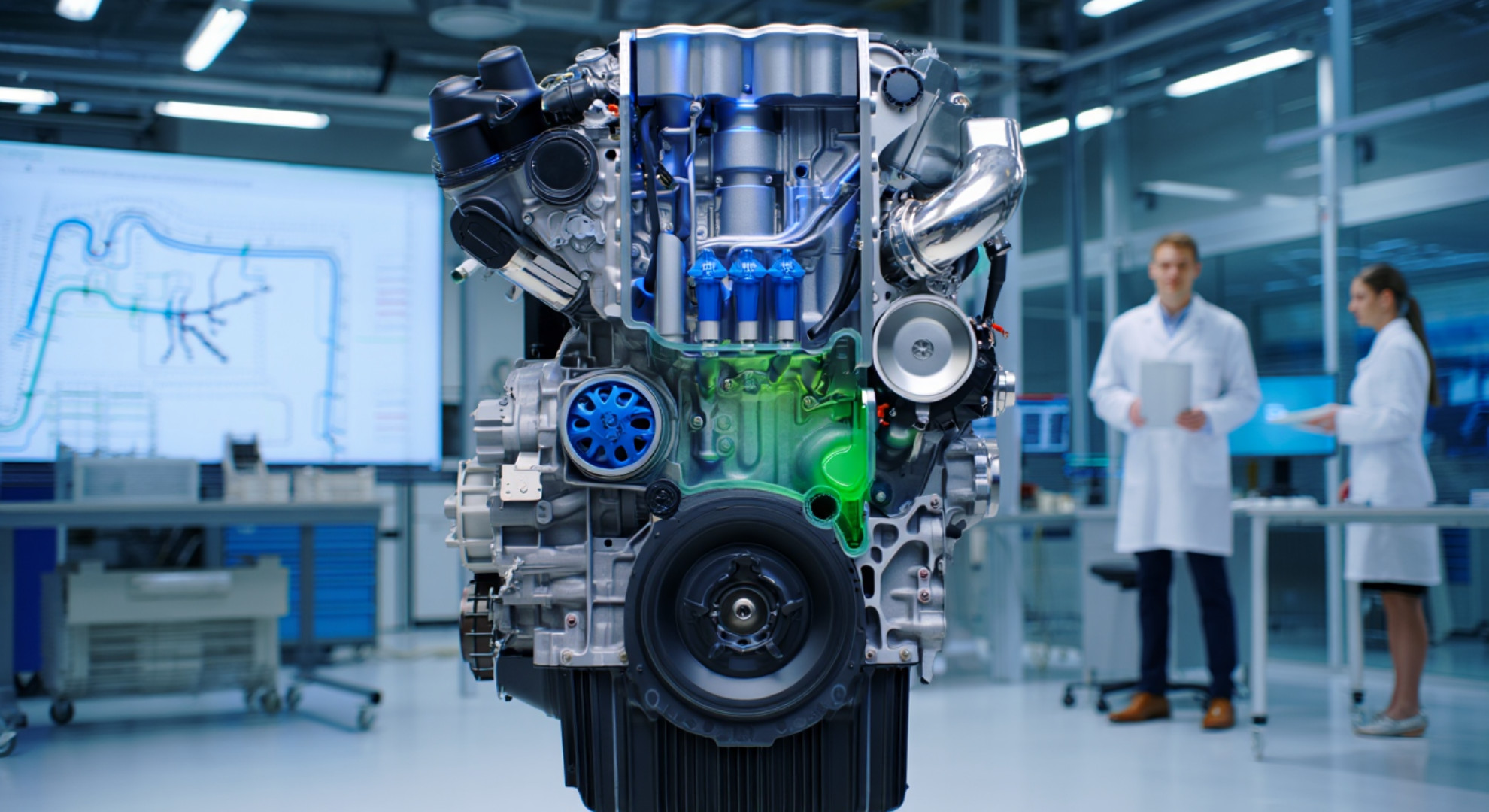
Just as the world seemed convinced that electric vehicles (EVs) would dominate the roads of the future, a team of engineers has unveiled a revolutionary breakthrough in diesel technology. This innovation promises ultra-clean emissions, dramatically higher efficiency, and running costs that could rival or even undercut those of electric cars.
The news has shocked both industry experts and policymakers, who have been steering heavily toward electrification. Could diesel, once seen as a fading technology, really stage a comeback?
How does the new diesel system work?
The innovation lies in a next-generation combustion process combined with advanced after-treatment systems. Engineers claim the new diesel engines:
- Cut CO₂ emissions by up to 80% compared to conventional diesels.
- Eliminate nearly all nitrogen oxides (NOx) and particulate matter.
- Deliver 50% greater fuel efficiency, extending driving ranges to well beyond 1,200 km on a single tank.
Instead of relying on traditional fossil diesel, these engines are designed to run on synthetic e-fuels or advanced biofuels, making them nearly carbon-neutral when paired with renewable energy production.
“This isn’t the diesel of the past. It’s a clean, efficient, and sustainable alternative that could keep combustion engines relevant for decades,” explained one of the project’s lead researchers.
Diesel vs electric: a surprising comparison
With this breakthrough, the balance between electric mobility and combustion technology could shift once again.
| Feature | Revolutionary Diesel Engine | Modern Electric Vehicle |
|---|---|---|
| Range | 1,200+ km per tank | 400–600 km per charge |
| Refueling/charging time | 3–5 minutes | 30–60 minutes (fast charging) |
| CO₂ emissions | Near-zero (using e-fuels) | Zero at tailpipe (depends on grid) |
| Infrastructure needed | Existing fuel stations | Growing but uneven charging network |
| Upfront cost | Lower to moderate | Higher (battery costs) |
This table illustrates why the innovation is sparking debate: if it delivers as promised, the new diesel could outperform EVs in practicality while offering a sustainable footprint.
What this means for car buyers
For consumers, the implications are huge. Many drivers remain hesitant about switching to electric vehicles due to concerns about charging infrastructure, battery lifespan, and purchase price. A clean diesel option with ultra-low emissions and fast refueling could look far more appealing, especially for those who travel long distances.
Fleet operators, truck companies, and rural drivers—groups often underserved by current EV infrastructure—might be among the first to adopt the technology.
Challenges and skepticism
Of course, major hurdles remain. Critics point out that producing synthetic e-fuels is still costly and energy-intensive. Unless renewable energy becomes more abundant, the environmental benefits could be limited.
There is also the issue of regulation: many governments in Europe and beyond are already planning to ban new combustion cars by 2035. Introducing a revolutionary diesel technology would require either policy changes or special exemptions.
Could this really “end the era of EVs”?
It may be too early to say. Electric vehicles have momentum, with billions invested in battery research, charging networks, and government incentives. However, the arrival of a clean diesel engine highlights that the future of mobility might not be as one-dimensional as many believed.
If e-fuel production costs fall, and if regulators allow the technology to coexist with EVs, diesel could once again become a serious competitor—especially in markets where infrastructure challenges make EV adoption difficult.
A disruptive alternative
For now, this breakthrough serves as a reminder that the race for sustainable mobility is far from over. Whether electric cars remain unchallenged, or whether a reborn diesel technology reshapes the landscape, one thing is certain: the automotive future will be defined not by a single technology, but by innovation and adaptability.
