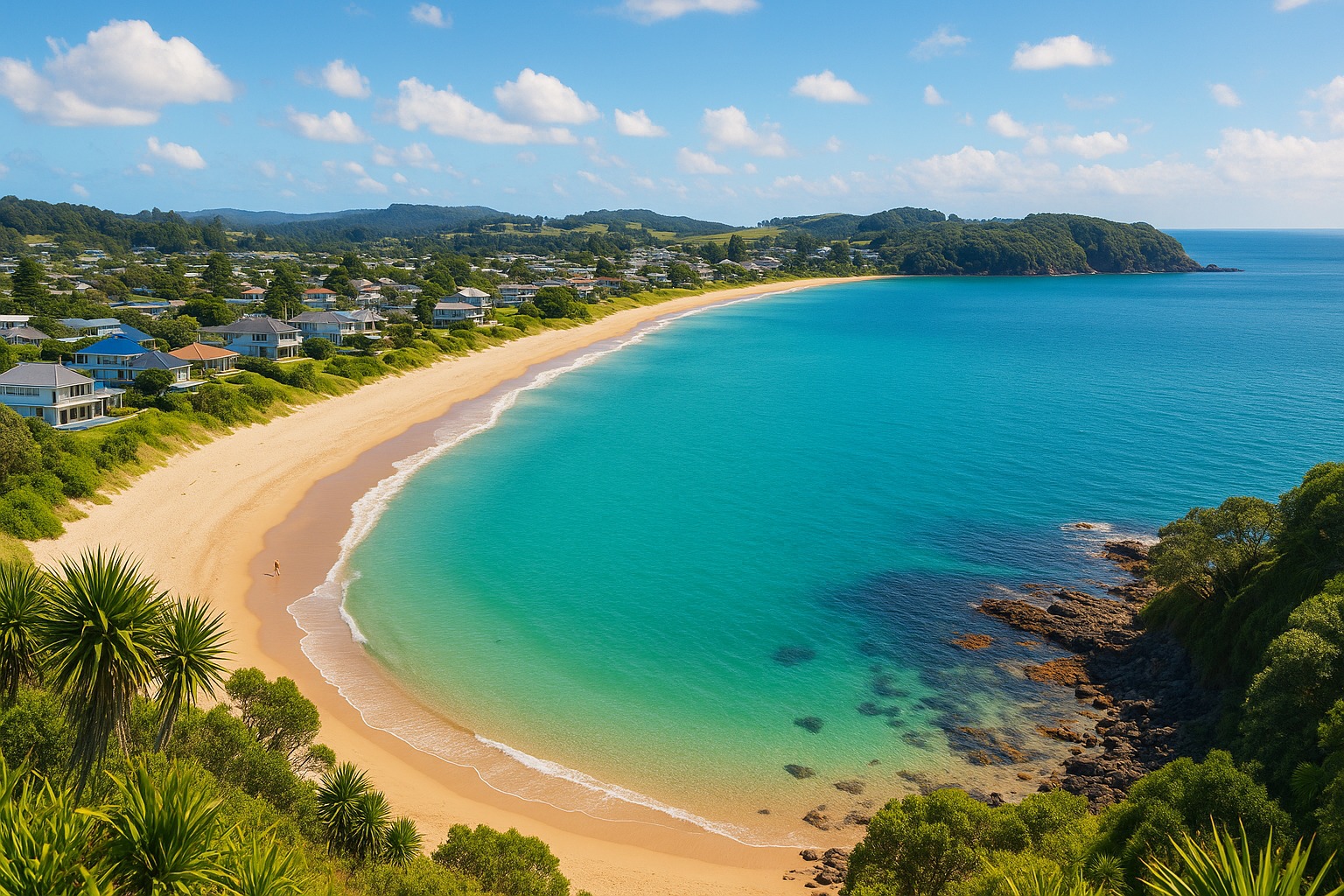
A quieter star in the far north
It has the laid-back vibe and the quiet rhythm that urban escapees crave. It has broad beaches where the soundtrack is gulls and tide instead of traffic.
There’s a small but growing art scene, a scatter of boutique vineyards, and cafés where the barista knows your name. Yet this Northland town still feels unhurried, pleasingly unpolished.
Locals talk about a place that’s accessible without feeling overrun, and confident without the gloss. Visitors compare it to Waiheke before the boom, when creativity and community led the way.
Welcome to Mangawhai
Tucked between rolling hills and surf-laced coast, Mangawhai sits a comfortable drive from Auckland yet a world away in spirit. It’s become a magnet for retirees and remote workers, plus families who want space without sacrificing culture.
Weekends bring a festival of sun, salt, and soft sand, with estuaries tailor-made for paddleboards and picnics. Midweek belongs to locals, who chat across market stalls and share tips for hidden tracks.
“It reminds me of an island before the rush,” says a longtime visitor, now a part-time resident. “You feel welcome, and you still feel like you’re discovering something.”
- Golden-sand beaches and sheltered estuaries
- A growing food-and-wine scene, including boutique vineyards
- A thriving creative community with markets and exhibitions
- Homes that can still list under the old seven-hundred-thousand mark, if you’re quick
Parallels with Waiheke, minus the premium
Like Waiheke, Mangawhai blends raw nature with a hum of culture, but without the ferry timetable or luxury bubble. The village core favors independents over chains, giving every corner a personality.
Sustainability isn’t a slogan; it’s baked into grassroots groups and low-impact projects. Walkways thread through dunes where dotterels nest, and surf clubs champion safer seas.
Remote work has reset the map, making weekday life on the coast suddenly practical. With fibre rolling in, a video call shares space with a lunchtime swim.
Affordability on a timer
Here’s the catch: momentum has arrived, and listings move fast. Sales have surged over recent months, and choice sections are being snapped up.
Value still feels within reach, especially beside Auckland’s overheated market. But every “just listed” sign invites the next wave of “just sold.”
“People want the beach-town life without the millionaire’s mortgage,” says a local agent. “They see potential, and they don’t want to miss the window.”
Culture, coast, and community
Mangawhai’s creativity thrives in studios tucked behind pohutukawa and in pop-up shows on weekends. Ceramicists, painters, and makers treat the town as both muse and marketplace.
Food here leans seasonal and local, with wood-fired kitchens and tasting rooms that spill into vineyard rows. Music nights fill breezy courtyards, while summer markets turn into social gatherings.
The surf can be forgiving at dawn, then punchier by afternoon, offering lessons for beginners and thrills for the bold. And if the bar is blown out, the estuary stays calm and clear.
Growth pains and guardrails
With attention comes a need for rules, from design guidelines to dune protection. Locals worry that unbridled development could trample the very magic that brought everyone here.
Parking and peak-season traffic already test patience, while infrastructure plays catch-up. The blueprint ahead rewards density in the right places and protects quiet in the rest.
The conversation is frank but hopeful, shaped by lessons from other hotspots. The shared goal: keep Mangawhai real, and keep it resilient.
A day that feels like a reset
Mornings might start with a flat white and a short walk to the surf. Midday belongs to coastal trails, artist studios, or a lazy estuary float.
Afternoons drift into tasting-room hours, where rosé meets warm wind and vineyard views fold into hills. Evenings glow with sunset over water, followed by stargazing made simple by dark skies.
“It isn’t a fantasy; it’s a routine,” says David, who now works remotely from his deck. “I log off and step into the ocean, and that never gets old.”
What makes it different
Mangawhai doesn’t try to be Waiheke — it writes its own story with similar notes. The charm lives in its lived-in edges, its everyday honesty, and its open-armed welcome.
There’s ambition in the air, but it’s measured, not manicured into gloss. That balance might be the town’s most valuable asset and its most fragile resource.
Community groups are already setting priorities that privilege nature and neighbourliness. If they hold the line, growth can look more garden than sprawl, more craft than copy.
The bottom line
If you’re chasing that island-style feeling — beaches, wine, community — without the nuclear price tag, Mangawhai makes a persuasive case. It’s accessible, authentic, and affordable enough to feel like a smart move.
Will it stay that way? Momentum suggests a cautious no, but there’s still time to be early without being first.
Go for the soft sand, stay for the human scale, and return for the warm hellos that follow your name. Just enjoy it lightly — and leave the wild heart exactly as you found it.
For years, Waiheke Island has been the gold standard for a laid-back coastal escape in New Zealand. Vineyards, boutique stays, white-sand beaches — and increasingly, eye-watering property prices. But further north, a quieter contender is beginning to attract attention. Some locals are asking whether this overlooked Northland beach town could be the “next Waiheke” — minus the premium price tag.
A Coastal Setting That Rivals the Best
Tucked along the east coast of Northland, Mangawhai has long been a low-key holiday spot for Aucklanders in the know. Wide surf beaches, a protected estuary, coastal walkways and rolling dunes give the area a natural appeal that feels both raw and refined.
Unlike more commercialised destinations, Mangawhai retains a relaxed, small-town atmosphere. There are no sprawling resorts or high-rise developments dominating the skyline. Instead, you’ll find modern beach homes mixed with classic Kiwi baches, local cafés and weekend markets.
Lifestyle Appeal Without the Crowds
Part of Waiheke’s charm has always been its balance between sophistication and simplicity. Mangawhai appears to be following a similar path — just at an earlier stage.
The town has seen:
- a steady rise in boutique eateries and wine bars
- an influx of remote workers seeking lifestyle change
- new architectural homes designed to maximise coastal views
Yet even in peak summer, it feels noticeably less congested than Waiheke. Parking is easier, restaurant bookings are less competitive, and beaches remain spacious.
As one local real estate agent puts it:
“People are discovering you can have the coastal lifestyle without paying island prices.”
Property Prices: Still a Gap
While Mangawhai has experienced price growth in recent years, median property values remain significantly lower than those on Waiheke Island. For buyers priced out of Auckland’s coastal hotspots, that difference is compelling.
The appeal is not just financial. Accessibility plays a role. Unlike Waiheke, which requires a ferry trip, Mangawhai is reachable by road in just over an hour and a half from central Auckland — making weekend escapes simpler.
Growth Potential — But at What Cost?
With increased attention comes inevitable development pressure. New subdivisions and infrastructure upgrades suggest that Mangawhai’s days as a “hidden gem” may be numbered.
The question is whether it can maintain its understated charm while accommodating growth. Waiheke’s transformation over the past two decades offers both inspiration and caution.
A New Chapter for Northland?
Mangawhai may not replicate Waiheke’s vineyard-centric identity, but it offers something equally compelling: space, scenery and a slower pace of life — still within reach of New Zealand’s largest city.
Whether it becomes the “next Waiheke” remains to be seen. But for now, it represents a rare combination in today’s market: coastal beauty, lifestyle appeal and relative affordability — a trio that rarely lasts unnoticed for long.
