Hair care does not always require expensive products, as some ingredients we have in the kitchen can be used to prepare homemade treatments that help improve its appearance. Among the most popular natural alternatives is the avocado, a fatty food that is commonly used in masks and preparations to nourish the hair fibers.
The avocado oil stands out for its content of fatty acids, in addition to other compounds found in this fruit, which is why it has become a common ingredient in conditioning products and treatments for dry or damaged hair. Its texture allows it to be used as a complement in routines focused on smoothing the mane and giving a shinier appearance.
If you want to try a homemade alternative, you can prepare avocado oil from its pulp and use it as a pre-wash treatment or in small amounts on the ends. Below, we explain what benefits it can provide, how to make it at home, and what precautions you should take before applying it—take note.
What benefits does avocado oil have for hair?
The avocado oil contains fatty acids and vitamin E, compounds that can help condition the hair, improve its softness and impart shine. When used as a hair treatment, it can contribute to reducing the dry-looking appearance of the fibers, especially in manes that have been exposed to heat from straighteners, hairdryers or chemical treatments.
Another of its uses is to help control frizz and facilitate detangling, as its oily texture allows the hair to feel more manageable. Applied in small amounts to the ends, it can improve their appearance and reduce the rough sensation, without the need to use too many products.
Additionally, it can function as an emollient treatment to protect the hair fiber from dryness and improve its appearance. However, there is no evidence that avocado oil accelerates hair growth or stops its shedding, so its benefits relate mainly to conditioning and the appearance of the mane.
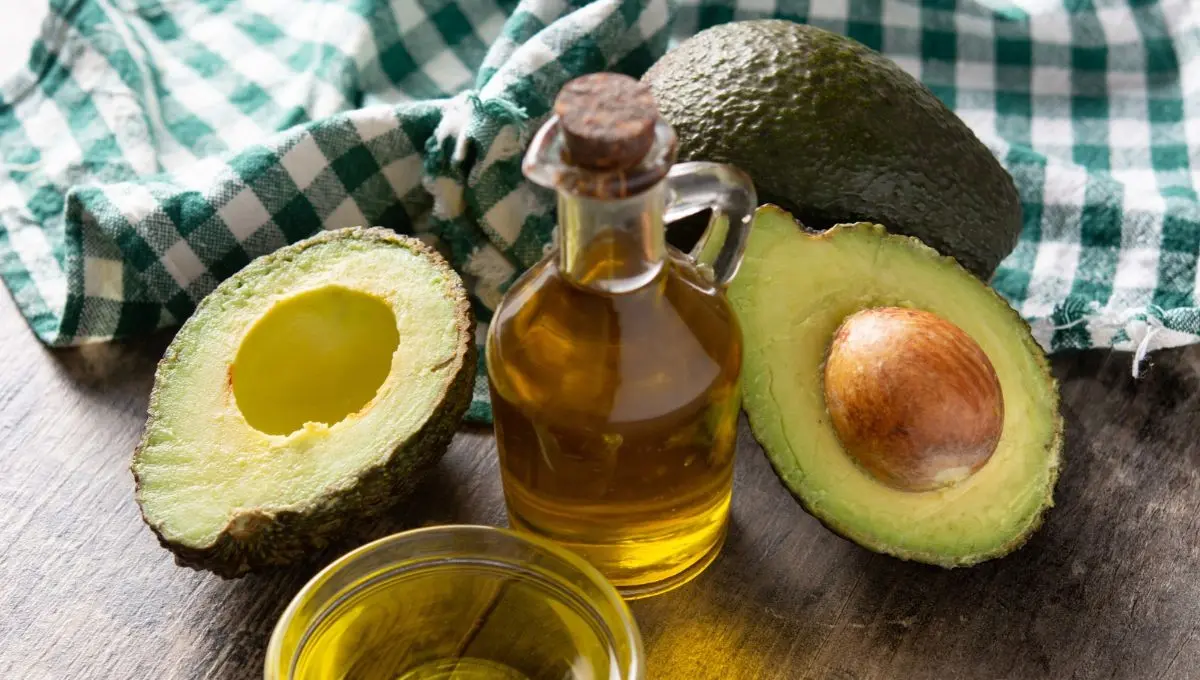
How to make homemade avocado oil for hair?
Ingredients:
-
3 or 4 ripe avocados
-
1 heat-resistant container
-
1 frying pan
-
1 fine sieve or cheesecloth
-
1 clean, preferably dark glass jar
Preparation:
1. Extract the pulp from the avocados. Cut the fruits in half, remove the pit, and with the help of a spoon scoop out all the pulp. Try to use ripe avocados to facilitate the procedure and make the most of their texture.
2. Mash until you obtain a homogeneous mixture. Place the pulp in a blender or container and mash it until you get a uniform puree, without large chunks. This will allow it to distribute better during cooking and facilitate the extraction of its fat.
3. Cook the pulp over low heat. Transfer the puree to a pan and heat it slowly, stirring every few minutes to prevent burning. For about 30 to 45 minutes, the mixture will lose moisture and you will begin to notice the oil separating from the pulp.
4. Filter the oil. When you observe that the fat has separated from the pulp, remove the mixture from the heat and let it cool slightly. Then pass it through a fine sieve or a clean cheesecloth and press carefully to extract the oil.
5. Store in a clean container. Place the obtained oil in a clean, dry glass jar, preferably dark, and keep it refrigerated to slow its deterioration. Since this is a homemade preparation without a controlled extraction or preservation process, try to use it soon and discard if it has a rancid smell, unusual changes in color or texture.