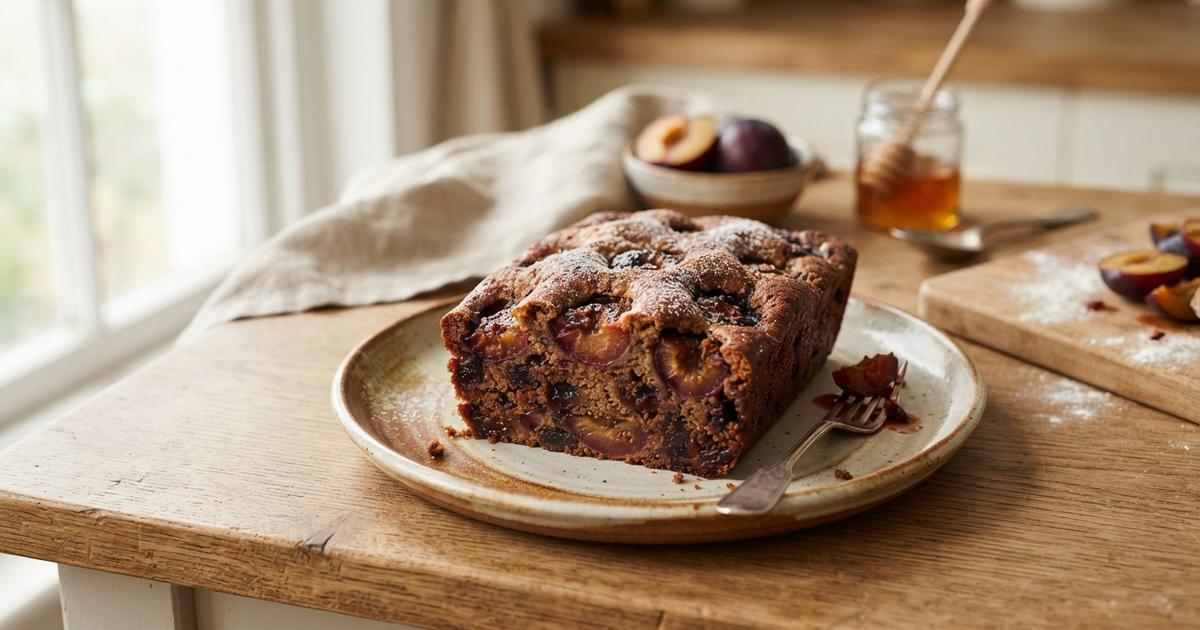
Discover the technique for crafting a dessert with the perfect moisture, the exact balance of sweetness, and the artisanal touch of plum compote that will surprise everyone at the table.
Plum pudding is one of those classic preparations that never go out of fashion, especially when we’re seeking a comforting bite during tea time. This recipe combines the natural sweetness of dried prunes with a tender texture and a golden color that captivates the eye before tasting the first bite. In addition to its flavor, prunes add extra value to our daily diet, as they are known for their high fiber content, which makes them a functional and delicious ingredient.
When baking this pudding, the house fills with a warm, cozy aroma. When you cut it, you’ll notice a soft crumb that contrasts with the pieces of fruit we will have hydrated beforehand to ensure a uniform texture. With a preparation time of one hour and low difficulty, this recipe is ideal for those seeking professional baking results without excessive complications. Learn below the secrets to mastering this preparation step by step.
The importance of the compote and the mixing technique
To achieve a superior result, we must pay attention to the chemical and technical fundamentals of home baking:
-
The compote as a moisture agent: When cooking the prunes with sugar and a little water, we are not only softening the fruit but creating a flavorful liquid base that will contribute juiciness to the final batter. It is vital to let this mixture cool before incorporating it into the beaten eggs to avoid altering the eggs’ structure in the batter.
-
Base whisking: The process of beating the eggs with sugar, honey, and vanilla until the mixture lightens is essential to incorporate air, ensuring a light and fluffy pudding despite the density of the fruit.
-
Folded motions: When adding the dry ingredients, using the spatula with gentle motions prevents the air from escaping, ensuring that the baking powder and baking soda act correctly during baking.
The finishing touch: lemon glaze
A good glaze is the perfect finish for puddings, providing a citrusy contrast that balances the deep sweetness of the prunes. The key here is the consistency: we seek a thick but sufficiently fluid mixture to cover the surface with a shiny and elegant layer. By adding warm water gradually, we control that the glaze does not lose its body, allowing it to set perfectly on the cold pudding when serving.
Plum pudding | Recipe
Ingredients
-
1 egg
-
1 teaspoon vanilla extract
-
50 grams of sugar (¼ cup)
-
60 milliliters of neutral oil (sunflower or soybean)
-
1 tablespoon honey
-
180 grams of all-purpose flour
-
1 teaspoon baking powder
-
1/4 teaspoon baking soda
-
60 milliliters of milk
-
100 grams of dried prunes
-
200 milliliters of water
-
2 tablespoons of sugar
-
1 cup confectioners’ sugar (140 g)
-
1 teaspoon lemon juice
-
Warm water to taste
Preparation
-
Set aside three or four prunes for garnish at the end. Place the rest in a pot with the two tablespoons of sugar and cover with water. Cook over medium heat for 15–20 minutes until they soften and the liquid reduces.
-
Remove from heat. Mash some prunes with a fork and chop the rest into larger pieces. Let this compote cool completely.
-
Preheat the oven to 180 °C. Grease and flour a 24 x 9 x 6 cm English pudding mold.
-
In a bowl, whisk the egg, the 50 grams of sugar, the honey and the vanilla essence until the preparation lightens in color.
-
Incorporate the oil and the cooking liquid from the prunes. Beat for another minute.
-
Incorporate the prune compote prepared earlier with the help of a spatula.
-
Add the milk and half of the sifted flour together with the baking powder, the baking soda and a pinch of salt. Mix with folding motions. Add the rest of the flour and integrate well.
-
Pour the batter into the mold, level the surface and bake at 180 °C for about 30 minutes.
-
Check doneness by inserting a skewer into the center; if it comes out dry, remove from the oven and let cool before unmolding.
-
Prepare the glaze by mixing the confectioners’ sugar, the lemon juice and warm water added gradually until achieving a thick and pourable consistency.
-
Unmold the pudding, brush it with the glaze and decorate with the prunes reserved at the start.
This pudding stands out for its nutritional profile as it is sodium-free, making it ideal to enjoy at any time of day. Remember that patience in cooling the cake before glazing is the secret to a flawless and professional finish.
This article has been generated with the help of AI and reviewed by an editor. For more information, please consult our terms and conditions
