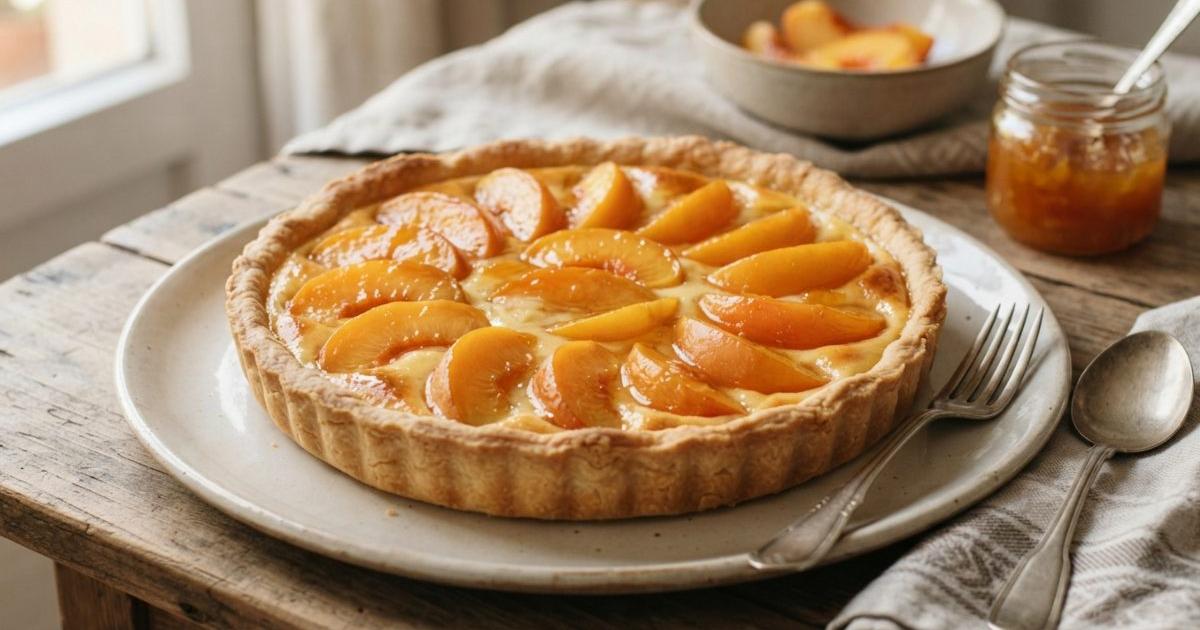
Learn to pair the crunchy texture of shortcrust pastry with the smoothness of a homemade custard and the characteristic sweetness of peaches in syrup for an irresistible dessert.
The peach tart is an undeniable classic of Spanish pastry, a dessert that evokes family sobremesas where the simplicity of the ingredients becomes a comforting experience. This dish has earned a special place on the table for its ability to balance the firmness of the base crust with the delicacy of the fruit, making it an ideal option for those seeking a sweet and elegant touch without excessive technical complications.
With the first bite, you will discover the contrast between the shortcrust pastry baked to perfection and the smoothness of the cream that accompanies it. The aroma of vanilla intertwines with the natural sweetness of the peaches, creating a harmony of flavors that feels both familiar and sophisticated. With a rating of 3.4 stars from our community, this recipe presents itself as an accessible baking project you can make at home by following precise steps to ensure the custard sets and the fruit’s shine stands out in every slice.
The Secrets of a Flawless Base and Cream
To make this dessert memorable, it is essential to pay attention to the technique that supports the entire structure:
-
Blind baking: when lining the mold with the shortcrust pastry, it is essential to prick the surface with a fork and place weight, such as beans, to prevent the dough from puffing irregularly during the first twenty minutes of cooking, thus achieving a uniform and crispy base.
-
The emulsion of the cream: when adding the egg yolks to the milk and sugar mixture, it is vital to do so without letting the preparation boil again, and maintaining constant whisking; this ensures the cream thickens with a smooth texture, preventing the eggs from coagulating incorrectly.
-
The drying of the fruit: before placing the peaches on the cream, make sure to drain them thoroughly on paper towels; this step removes excess syrup that, otherwise, could moisten the base too much and ruin the cake’s texture.
The Final Touch: Shine and Presentation
The finish of this cake not only serves an aesthetic purpose but also enhances the overall flavor profile:
-
The syrup and jam glaze: by mixing the syrup from the preserved peaches with the peach jam, we create a protective layer that adds a professional shine and boosts the fruit intensity of each slice, making the cake look as if it just came from a traditional bakery.
Peach Tart | RECIPE
Ingredients
-
1 sheet of shortcrust pastry
-
1 tablespoon of butter
-
800 g peaches in syrup
-
3 tablespoons peach jam
-
50 g sugar
-
1 tablespoon cornstarch
-
1 cup milk
-
2 egg yolks
-
1 tablespoon vanilla powder
Preparation
-
Grease a shallow pan with the tablespoon of butter and carefully line with the sheet of shortcrust pastry.
-
Trim the excess edges, pierce the base with a fork to avoid air bubbles and cover the surface with a weight of legumes.
-
Bake the base for 20 minutes until it takes on a firm texture.
-
While the base is in the oven, prepare the cream by mixing the sugar, the cornstarch and the vanilla in a bowl.
-
Pour the milk over the mixture, bring to a boil and keep the cooking over low heat for 4 minutes.
-
Remove from heat and, before the mixture boils, add the egg yolks whisking vigorously to integrate them.
-
Pour a thin layer of this cream over the baked crust.
-
Return to the oven for 30 minutes or until the cream has set properly.
-
Drain the peaches in syrup well and dry them on paper towels to remove excess liquid.
-
Mix the peaches syrup with the three tablespoons of jam until you obtain a uniform texture.
-
Cover the surface of the tart with the peaches placing them face down.
-
Glaze the top of the tart using the prepared syrup and jam mixture.
Although this tart is a delicious option, remember that it is a high-sugar and high-calorie dessert, so it is ideal to enjoy on special occasions. Being free of added saturated fats, it offers a lighter alternative within classical pastry to share at any gathering.
This article has been generated with AI support and reviewed by an editor. For more information, please consult our terms and conditions
