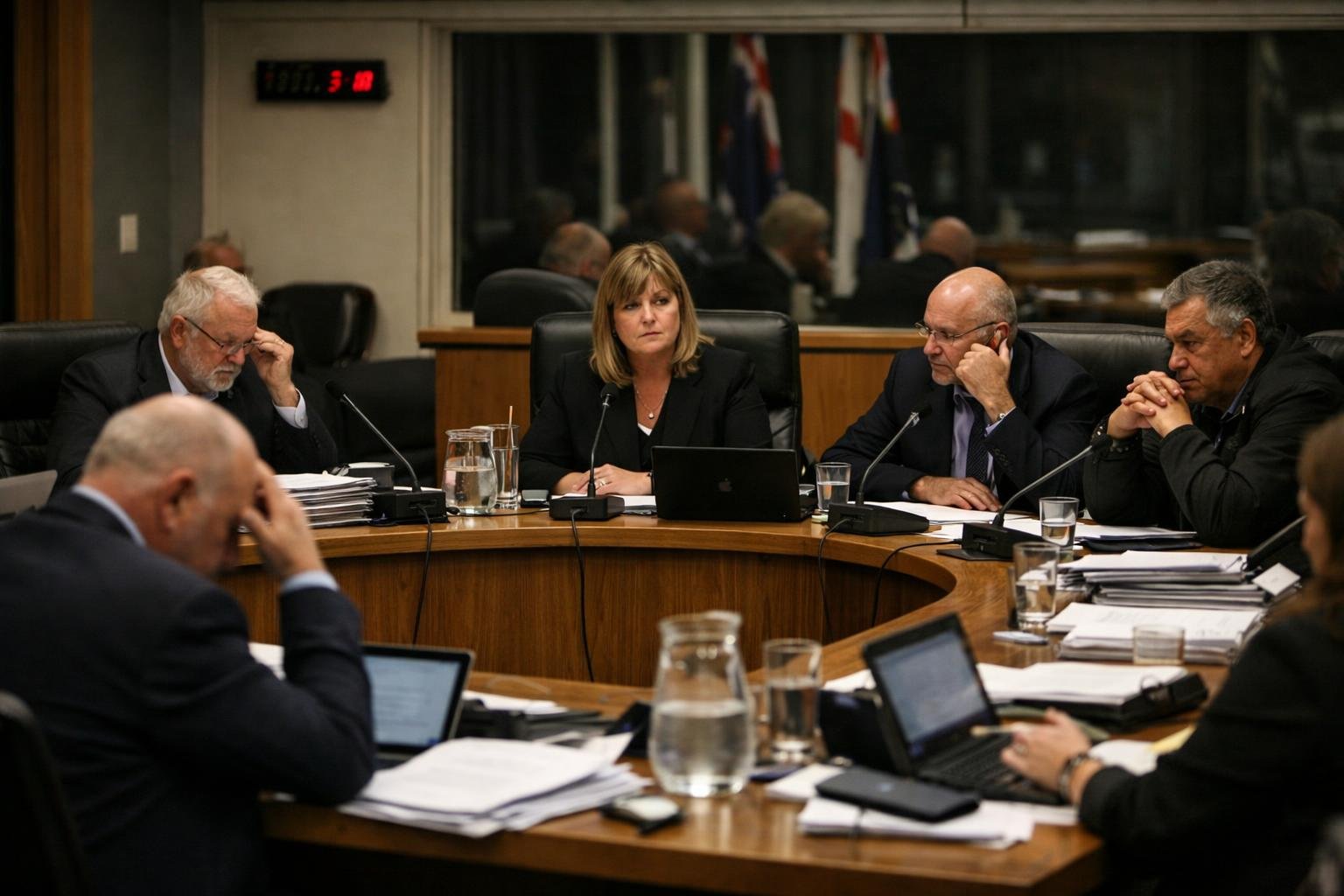
The chamber lights were still burning when the vote finally landed. After hours of procedural skirmishes, whispered huddles, and a last‑minute amendment that split the room, councillors in Whangārei signed off on the coming year’s spending plan by a narrow margin just before midnight. Relief and frustration arrived in equal measure.
“It isn’t perfect,” the mayor said, voice tired but steady, “but it keeps our city moving without breaking the bank.” In the public gallery, a few residents clapped softly; others simply exhaled.
What tipped the scales
The turning point was a compromise on rates and capital timing. A sharper rate rise had been on the table earlier in the week, but pushback from both councillors and residents forced a rethink. Staff returned with an option to front‑load maintenance on critical assets while phasing big-ticket projects over a longer horizon.
That thread-the-needle approach gave fence-sitters something to vote for. “We’ve bought time where we can, and acted where we must,” one councillor said. “It’s a pragmatic bridge between cost and caution.”
What’s in, what’s out
The final package preserves core services, pares back nice‑to‑haves, and nudges investment toward climate resilience and growth corridors. Key changes from the earlier draft are captured below.
| Area | Initial draft stance | Final budget stance | Likely impact |
|---|---|---|---|
| General rates | Higher single-year jump | Moderated, staged over the year | Softer hit for households |
| Roading maintenance | Incremental uplift | Targeted boost to high-risk links | Fewer potholes, quicker repairs |
| Water infrastructure | New plant fast-tracked | Phased upgrades, same total spend | Slower roll-out, cost control |
| Community grants | Flat at last year’s level | Modest, targeted increase | Support for small local groups |
| Library upgrade | Full refurbishment this year | Split across two years | Reduced disruption, lower spike |
| Climate resilience | Pilot projects only | Expanded shoreline and flood works | Future-proofing vulnerable areas |
| Fees and charges | Across-the-board rise | Selective increases | Larger users pay a bit more |
| Debt levels | Front-loaded borrowing | Smoothed borrowing curve | Lower interest costs over time |
Only one list, promised and delivered: the pressure points the council wrestled with all evening.
- Inflation chewing through construction budgets, storm recovery still on the books, and a clear message from ratepayers to keep any rate rise manageable.
Voices from the chamber
“It was a tough call,” the mayor said. “We’re balancing basic fairness for households with the basic physics of infrastructure.”
A councillor who opposed the package argued the council blinked at the wrong moment. “Deferring assets doesn’t make them cheaper. We’re pushing costs onto the next set of ratepayers.”
From the gallery, a small business owner offered a quieter take: “If the roads are passable and the rates aren’t a shock, that’s a win this year.”
How households will feel it
For most residents, the changes will show up in two ways: steadier service levels and a gradual rather than abrupt increase in the rates bill. Pothole crews should be more visible on priority routes. Stormwater hot spots get earlier attention before winter deepens. Libraries and community facilities continue to operate, with a few projects eked out to avoid a one‑year spike in spending.
Fees will rise in certain targeted areas—especially where the council can shift costs to heavy users—while staying flat for everyday interactions like basic library services. That cross‑subsidy logic drew some heat, but it kept broader household costs from climbing too fast.
Why the mood was tense
Two forces pulled hard in opposite directions. On one side, a backlog of essential maintenance has become impossible to ignore after consecutive rough winters. On the other, household budgets are thin, patience thinner. The room crackled each time someone suggested trimming community programmes or shelving flood works. “We can’t do less of the basics and promise more resilience,” one staffer warned during questions. “Those are the same thing.”
The late hour didn’t help. Amendments piled up—some symbolic, some surgical. A proposal to cut the modest increase for community grants failed, but only after an impassioned plea about the “social glue” those dollars buy. A bid to bring forward an extra tranche of water upgrades fizzled when staff cautioned that contractor capacity just isn’t there yet.
The political reading
The vote count, close as it was, maps onto familiar lines: fiscal hawks demanding deeper savings now, service‑first councillors arguing for investment before costs balloon further. The centre coalesced around a do-the-core-well mantra—fix roads, protect pipes, pace the rest. That’s not flashy politics, but it is something like governance in a storm.
“It’s the middle path,” said one councillor after the meeting, shrugging into a coat. “Not exciting, not easy, but honest about what we can afford.”
What to watch next
- Staff will publish a plain‑English summary explaining how the staged rate rise will work and who is likely to see the largest changes.
- Procurement for roading and stormwater will move quickly, with performance dashboards promised to the public.
- A mid‑year check‑in is baked into the plan, giving councillors a chance to recalibrate if construction inflation softens—or worsens.
Even as yawns took over the chamber, there was a quiet sense that the hardest work lies ahead, in spreadsheets and trenches rather than speeches. A budget, after all, is a promise. And the test is whether the city’s everyday essentials—the roads, the drains, the places neighbors meet—actually feel a little more dependable by the time the next late‑night vote rolls around.
