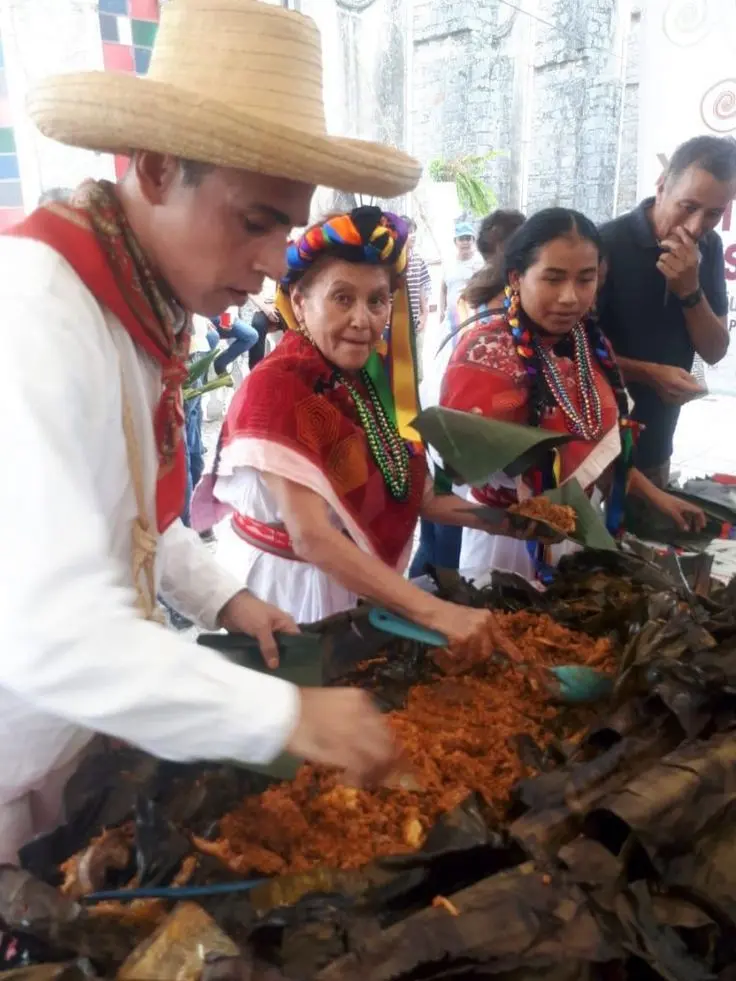
In Mexico, the Day of the Dead celebrations are experienced in different ways according to the customs of each region. While some families place pan de muerto, sugar skulls and typical dishes from their communities, in the Huasteca the Xantolo is carried out, a festival in which traditional food, music and offerings are fundamental to remember those who have already passed away.
During this celebration, families prepare altars adorned with marigold flowers, votive candles and foods that they offer symbolically to their loved ones. The tradition also becomes an opportunity to come together, share recipes passed down through generations and keep alive the customs that form part of the region’s cultural identity.
But what is Xantolo, how is it celebrated in the Huasteca, and what are the traditional dishes that are prepared during this festival? Next, we tell you everything you need to know about this Day of the Dead celebration, its customs and the gastronomy that forms part of its offerings. Keep reading!
What is Xantolo and what dishes are prepared during Xantolo?
The Xantolo is the name given to the celebration of the Day of the Dead in the region of the Huasteca, which encompasses communities in states such as Hidalgo, San Luis Potosí, Veracruz and Tamaulipas. This festival combines Indigenous traditions with religious elements and is distinguished by its offerings, music, dances and typical dishes. During these dates, families prepare altars adorned with arches of flowers, photographs and candles, in addition to placing foods to symbolically welcome their deceased loved ones and honor their memory.
One of the dishes most representative of this celebration is the zacahuil, a tamal of large dimensions prepared with corn masa slightly mashed, lard, chiles and meat from pork, chicken or turkey, according to the recipe of each community. The mixture is traditionally wrapped in banana leaves and is cooked for several hours in an oven. Because of its size, it is usually prepared collectively and shared among many people, which also represents communal life and the gastronomic wealth of the Huasteca.
In addition to the zacahuil, the offerings of the Xantolo may include other types of tamales, regional bread, chocolate, traditional beverages and foods that were the deceased’s favorites. In some localities, the bolim, a tamal that may carry meat, as well as the bocoles, small thick pieces of corn dough cooked on a comal, are prepared. These foods are placed on the altars as a symbolic way to welcome the loved ones and are shared among family members and community members, contributing to preserving the culinary traditions that pass from generation to generation.