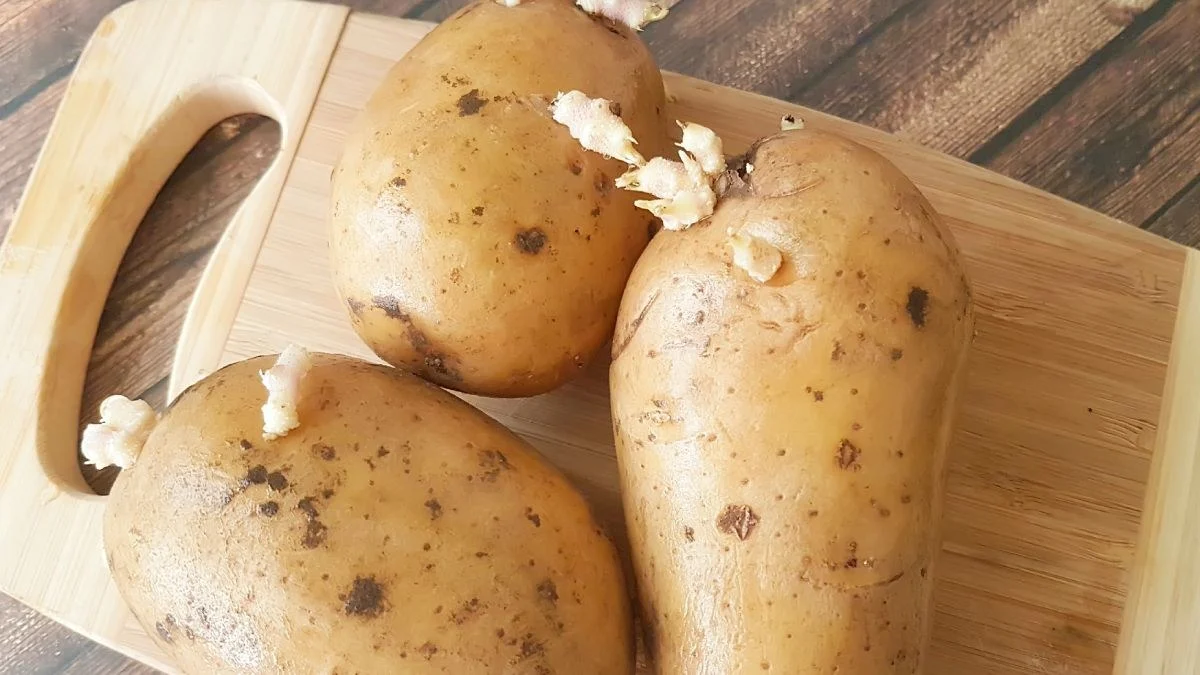
You bring home a 10 kg bag of potatoes, you store it in the kitchen cupboard and, a few weeks later, white sprouts are already appearing on half of the tubers.
Among producers, autumn harvests are however stored for months. The difference mainly depends on three parameters: darkness, a stable coolness between 6 and 10 °C, and circulating air. When applied at home, these principles allow storage potatoes to be kept for up to three months.
Why Your Potatoes Sprout So Quickly
A potato is not a dormant vegetable. After harvest, it goes through a vegetative rest phase, dormancy, whose duration varies by variety. Once this period ends, the tuber readies itself to produce a new plant: the eyes awaken and sprouts appear.
Heat accelerates this awakening. According to the agricultural services at Iowa State University, above 10 °C, well-stored potatoes begin to sprout after two to three months. In a heated kitchen, near the oven or above the refrigerator, the deadline arrives much sooner. The time elapsed since harvest also matters: a bag bought late in the season contains tubers closer to the end of their dormancy than a bag from the autumn harvest.
Light poses another problem. Exposed too long, potatoes turn green. The French potato industry body CNIPT reminds that this greening is accompanied by solanine, a substance that makes them bitter and indigestible.
How Farmers Store Their Harvest for Months
In professional settings, preservation starts even before storage. Maryland university agricultural services describe a healing stage: for 10 to 14 days, tubers are kept at 10 to 15 °C with high humidity, giving the small cuts from harvesting time to close. Then comes sorting, because a soft or damaged tuber can contaminate the rest of the pile.
Potatoes then move into dark, ventilated buildings, kept at the recommended temperature. According to Arvalis, the technical institute for major crops, good management of this temperature and humidity, with effective ventilation all the way to the core of the pile, greatly facilitates controlling sprouting. When the outlet allows, storage at 4 or 5 °C further slows the start of sprouts.
For long-term storage, the industry also uses anti-germination products. Since the ban on chlorprophame in 2020, five solutions are approved in France, among which peppermint oil, orange oil, and ethylene. None of these are replicable at home, but the three pillars—darkness, stable coolness, and ventilation—are perfectly achievable.
The Method to Apply at Home
- Sort at the time of purchase. Remove soft, damaged, greened, or already sprouted tubers, and cook them first.
- Do not wash them. Moisture on the skin promotes rot during storage. If they are very muddy, let the dirt dry and brush it off dry.
- Store them in complete darkness: cellar, pantry, unheated garage, or a closed cupboard away from any heat source.
- Aim for a stable temperature between 6 and 10 °C. CNIPT sets the ideal between 6 and 8 °C.
- Choose a container that allows air to pass: wooden crate, basket, jute bag, or kraft paper bag.
- Keep them away from onions, which the industry discourages storing nearby, and away from fruits that ripen.
- Inspect the stock weekly and remove any tuber that becomes soft or starts to sprout.
Is the Refrigerator Really Forbidden?
That’s the rule everyone knows: never put potatoes in the fridge. In reality, it depends on the location. Below 6 °C, says CNIPT, starch can turn into sugar. The potatoes then taste sweeter and brown more when cooked, especially in frying. The cold zone of the fridge, between 0 and 4 °C, should thus be avoided.
The vegetable drawer, however, usually sits around 6 to 8 °C, which is precisely the range recommended by the interprofession, and it lists it among suitable places along with the cellar. In the United Kingdom, the FSA health agency even lifted its warning in 2023: after reviewing a study by its toxicology committee, it considers that refrigerator storage does not significantly increase the potential for acrylamide formation during cooking.
If your potatoes have taken on a sweeter taste, not all is lost: according to Iowa State University, a few days at room temperature before cooking often restore their flavor.
Mistakes That Make Them Sprout Faster
- The cupboard near the oven, dishwasher, or above the refrigerator. It’s often the warmest spot in the kitchen, ideal for waking the sprouts.
- The sealed plastic bag. Humidity condenses there and rot sets in. American agricultural services instead recommend perforated plastic bags to keep some moisture.
- The basket on the worktop. Exposed to light, potatoes turn green within a few days.
- The cold zone of the refrigerator, which makes them sweeter and causes them to darken when cooked.
How Long Can They Really Last?
Under good conditions, freshly harvested storage potatoes easily last two to three months before sprouting, and sometimes much longer in a truly cool cellar: Maryland agricultural services mention six to eight months between 4 and 10 °C with high humidity, for a properly cured harvest. Autumn is therefore the best time to buy a large bag, since the tubers have just come out of the soil.
For a bag bought without knowing its harvest date, or for early potatoes with thin skins, count on a few weeks. And if a few sprouts appear despite everything, a slightly sprouted tuber remains usable provided you remove the sprouted part liberally; if it is very sprouted or green, better to throw it away.
The Apple in the Bag: A Bonus, Not a Miracle
There remains the generations-old trick: slipping an apple into the middle of the potatoes. It has a scientific basis. The apple releases ethylene, and this gas is among the anti-germination agents approved in France. According to Arvalis, it acts as a plant hormone: it slows the appearance of sprouts, then their elongation rate.
But the effect of one fruit in a bag has nothing to do with continuous and measured diffusion in a sealed building. Opinions also diverge: CNIPT recommends the trick, while Iowa State University’s agricultural services advise against storing potatoes with fruits, whose ethylene would promote germination according to them. You can try it, without expecting decisive results. For producers and at home, the primary anti-germination measure remains a cool, stable temperature in darkness.
Source: CNIPT
