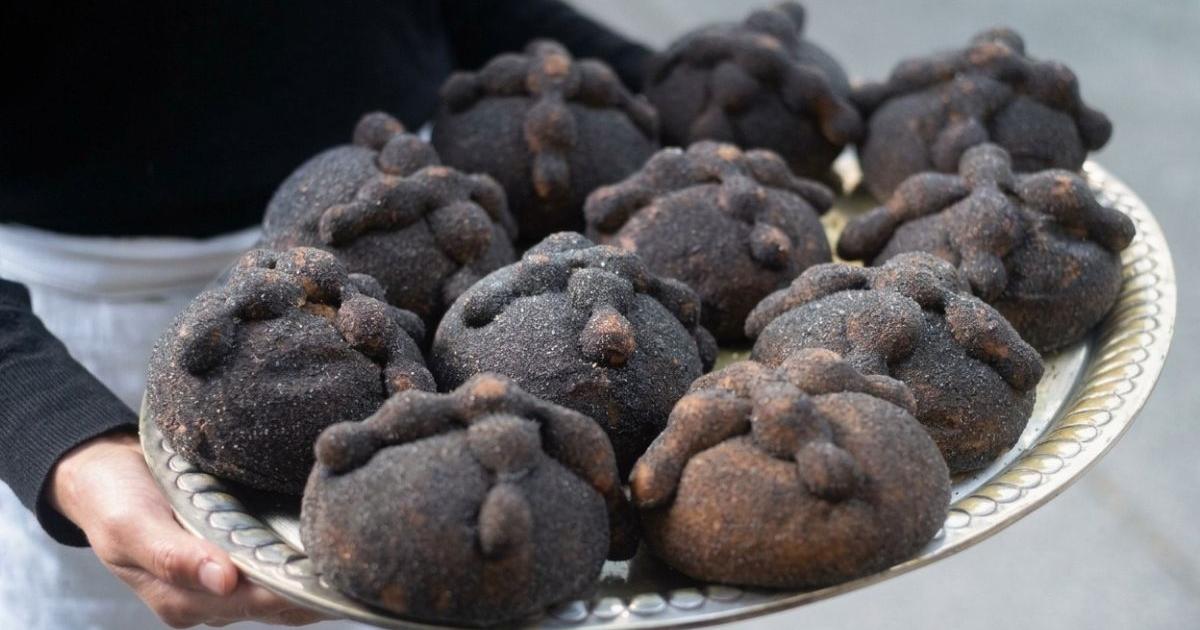
The bread of the dead is one of the most representative foods of the offerings for the Day of the Dead, but there are different versions that give this tradition a twist. One of them is the black Day of the Dead bread, a preparation that stands out for its dark crust and that draws attention for its appearance and toasted notes.
Although its name and its color can generate a great curiosity, the ashes used in this variety are not from deceased people, but can be obtained from the totomoxtle, the dry leaves that wrap the corn cobs. These are toasted until carbonized and then ground to obtain a fine powder that, mixed with sugar, serves to decorate the bread.
If you want to prepare a different version to place on your Day of the Dead altar, you can make this bread at home with baking ingredients and a little patience to respect the fermentation times. Below we share a recipe inspired by traditional preparations of black bread of the dead so you can prepare it at home, keep reading.
500 grams of wheat flour
150 grams of sugar
10 grams of salt
10 grams of dry yeast
100 grams of butter at room temperature
4 eggs
150 milliliters of warm milk
Zest of 1 orange
1 teaspoon of orange blossom essence or vanilla
4 leaves of totomoxtle, clean and dry, untreated
50 grams of melted butter
100 grams of sugar
1 or 2 teaspoons of fine totomoxtle ash prepared for food use
Prepare the totomoxtle ash. Place the dry leaves on a clean comal and toast them over low heat until they are completely black and brittle. Let them cool, grind them until you obtain a fine powder, and sift them. Use only clean, untreated leaves, and reserve the ash for the coating.
Activate the yeast. Dissolve the yeast in the warm milk with one tablespoon of sugar and let rest for about 10 minutes, until foam forms on the surface. The milk should be warm, not hot, to avoid temperature affecting the yeast activity.
Mix the dry ingredients. Place the flour, the rest of the sugar and the salt in a large bowl, and combine everything with a spoon. Create a hollow in the center to add the liquid ingredients in the next step.
Incorporate the liquid ingredients. Add the eggs, the yeast mixture, the orange zest and the orange blossom essence or vanilla. Gradually incorporate the flour until a dough forms and then add the room-temperature butter in small portions.
Knead until you obtain an elastic texture. Work the dough for about 10 to 15 minutes, until it is smooth and elastic. Although it may be sticky at first, avoid adding too much flour, as this can make the bread dry after baking.
Let the dough rest. Shape it into a ball and place it in a lightly greased container. Cover with a clean cloth and let it ferment in a warm place for one to two hours, or until it doubles in size.
Shape the breads of the dead. Gently press the dough to remove excess air and divide it into portions. Reserve a little to form the strips that represent the bones and the small central pieces; then place the decoration on each bread and arrange them on a baking tray.
Allow the breads to rise a second time. Cover the tray with a clean cloth and let the pieces rest for about 30 to 45 minutes. This step helps the dough to rise again and have a fluffier texture when they come out of the oven.
Bake until they are cooked. Preheat the oven to 180 °C and bake the breads for 25 to 30 minutes, depending on their size, until they are cooked and lightly golden. Remove them and let them cool long enough to be able to decorate them without the coating melting.
Prepare the black coating. Mix the sugar with one or two teaspoons of totomoxtle ash for food use, until you obtain the desired dark tone. Lightly brush the breads with the melted butter and sprinkle the mixture on top to give them their characteristic finish.
Place the bread on your offering. Once they are completely cold, arrange the breads on your Day of the Dead altar along with the other foods and elements you usually offer. If you plan to consume them later, remember that the ash used must come from clean, food-grade plant material; do not use ashes from campfires, household coal, or materials of unknown origin.
