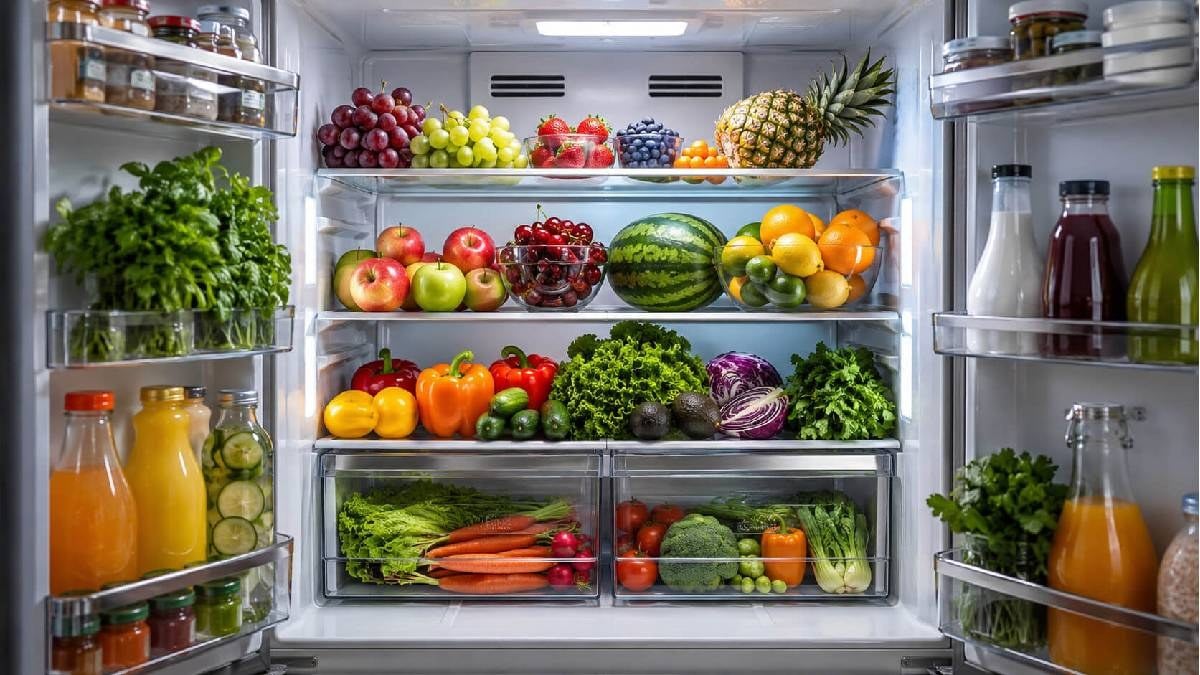
Each French person throws away on average 30 kg of food per year, a good portion of which is fruit and vegetables discarded before they have even been cooked. The good news? Most of the time, it’s not inevitable: it’s just that we store them badly. Here are 5 simple tips to double their shelf life, and above all, why they really work.
We’ve all known that moment of loneliness: you open the crisper, full of hopeful expectation, and you find a salad turned into compost and tomatoes that have turned to powder. Before blaming yourself, know that a large part of the problem comes from an invisible gas and a few habits we all have, without realizing it. Here’s everything you need to know.
1. Keep apples and bananas away from the rest (because of a gas)
It’s the most counterintuitive trick, and yet the most effective. Some fruits like apples, pears, bananas, or avocados naturally release a gas: ethylene. This gas is a true ripening hormone, which speeds up the aging of anything nearby.
Concretely, if you let your bananas touch your kiwis or your salad, you’ll make them age at lightning speed. The solution: store these “emitters” away from sensitive fruits and vegetables. And if you want to ripen a too-hard avocado, instead place it near a banana: there, the gas becomes your ally.
2. Take your tomatoes out of the fridge (really)
We’ve long believed that cold preserves everything. For the tomato, it’s the opposite. Tomatoes are sun fruits: below 12 °C, they lose their aroma and their flesh becomes mealy, that unpleasant “cotton” texture that everyone hates.
Why it works: the cold blocks the compounds that give flavor and irreversibly damages texture. The right place for tomatoes is at room temperature, away from direct light. They will taste better and keep longer. The same logic applies to basil, which turns black in the fridge.
3. Cut off the greens on your carrots and radishes
If you come home from the market with beautiful carrots with greens, cut them as soon as you get home. It’s not just an aesthetic concern for the fridge.
Why it works: as long as they’re attached, the greens keep sucking water and nutrients from the root. Result: your carrot softens twice as quickly. By removing them, you stop this drain. Bonus for reducing waste: don’t throw away the greens; they make excellent pesto or soup.
4. Paper towel for lettuce, kraft paper bag for mushrooms
The number one enemy of leafy vegetables is moisture. A salad that “sweats” in its closed container rots in a few days. The trick: place a sheet of paper towel at the bottom of the container. It soaks up excess water and keeps the leaves crisp much longer.
For mushrooms, it’s exactly the opposite of the usual reflex. Never trap them in an airtight container or a plastic bag: they need to breathe. Deprived of air, they become slimy and moldy. A simple kraft paper bag in the refrigerator, and they keep for several more days.
5. A squeeze of lemon to prevent browning
An avocado cut, a half-eaten apple, and ten minutes later everything turns brown and unappetizing. This phenomenon has a name: enzymatic oxidation. When exposed to air, natural enzymes turn the flesh brown.
Why lemon works: its acidity strongly slows this reaction, and its vitamin C acts as an antioxidant. A simple squeeze of lemon juice on the slice, and your fruit keeps its color and freshness much longer. It’s unbeatable for a fruit salad prepared in advance.
The right reflex to keep in mind
Ultimately, keeping fruits and vegetables twice as long comes down to a simple idea: every product has its own needs. Manage ethylene gas, avoid moisture when needed, and let it circulate when necessary. Nothing complicated, just the right habits. And the payoff is less waste, groceries that last longer, and around a hundred euros saved per year. Where do we sign?
