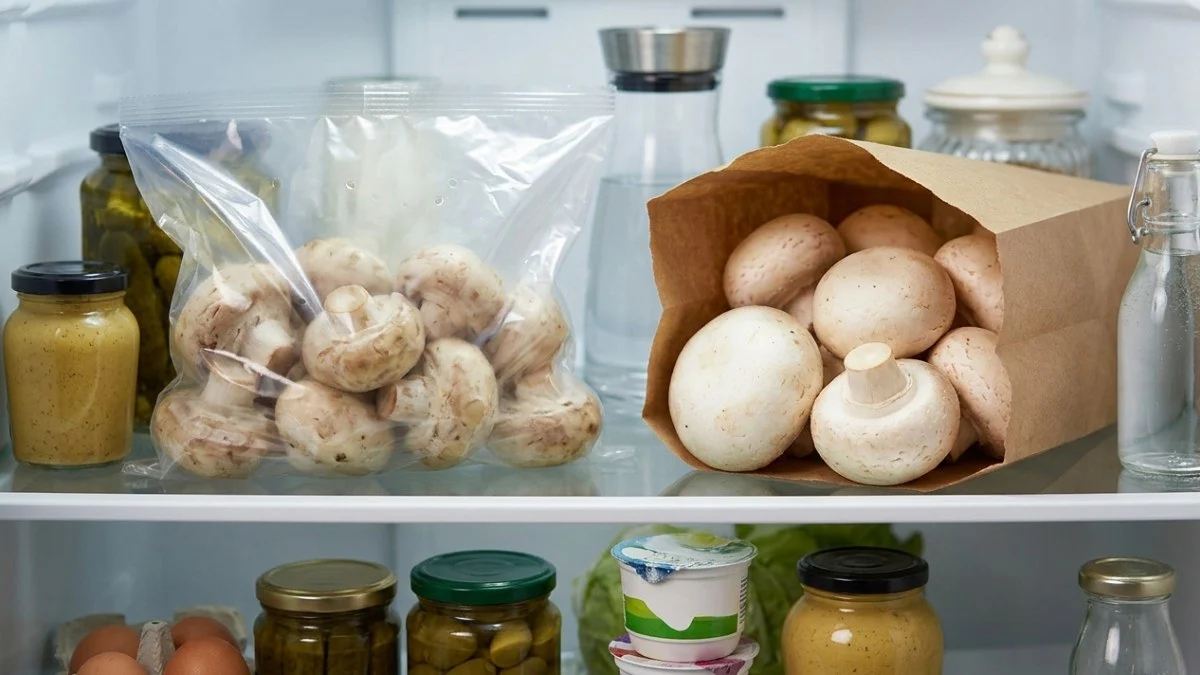
You had planned a mushroom sauté, but the mushrooms left forgotten in the fridge have become sticky and soft? Packaging can contribute to this disappointing surprise. For fresh mushrooms bought loose, a simple paper bag is a good solution. You just need to use it as soon as you return from shopping, before the first signs of spoilage appear.
They seemed flawless on the display. A few days later, when it was time to prepare the dinner, their surface no longer looked appetizing. We often blame the fridge or the product quality. Yet the way you store them also deserves a look: a closed plastic bag can trap moisture around the mushrooms and promote their degradation.
No need for an expensive accessory to do better. The right reflex is to adapt the packaging to the purchase: paper for loose mushrooms, or the original packaging when they are sold in a tray. These tips apply to store-bought fresh mushrooms, notably white button mushrooms.
Why do mushrooms become slimy in the refrigerator?
Cold slows food spoilage, but it does not preserve them indefinitely. Mushrooms remain particularly perishable. After harvest, they continue to respire, and the conditions in which they are packaged matter for preserving their quality.
Experts from the University of New Hampshire note that their respiration is high and that the packaging should allow sufficient air exchange. Poor ventilation can favor fermentation and the appearance of a slimy texture. Moisture trapped in a sealed bag is therefore a problem to avoid.
Conversely, leaving mushrooms completely exposed is not an ideal solution either: they can dry out. The whole challenge is to protect them without locking them in a humid atmosphere. The right packaging limits these two pitfalls, but does not restore a product that is already damaged.
For loose mushrooms, choose a paper bag
In its recommendations on mushroom storage, Penn State Extension advises refrigeration and a paper bag, or the original container. The organization notes that a plastic bag can trap moisture and promote spoilage, while mushrooms left out of a bag risk drying out.
If you buy them loose, plan for a clean paper bag intended for contact with food. Place them inside without washing them first, then put the bag in the refrigerator. If they are already in a suitable paper pouch provided by the retailer, there is no need to handle them further.
Avoid putting that bag back into a hermetically sealed plastic bag: you would recreate precisely the conditions you are trying to avoid. Also reserve a place for it where the mushrooms won’t be crushed by other groceries.
To stay organized, you can note the purchase date on the paper. This little marker does not give a sell-by date, but it helps avoid confusing the bag bought yesterday with the one that has been waiting for several days.
Should you remove mushrooms from their tray?
Not necessarily. The Mushroom Council, a U.S. industry organization, recommends keeping mushrooms in their original packaging or in a porous paper bag. A commercial tray should not automatically be equated with a plastic grocery bag tied at home.
When it is intact, follow the storage instructions on the packaging. After opening, a paper bag helps store the remaining mushrooms, as also advised by the Mushroom Council. Keep any useful instructions, especially if the product requires quick use after opening.
Therefore, it is not necessary to transfer each tray at the time of purchase. The useful move is mainly to avoid sealing loose mushrooms or leftovers in an airtight bag, in order to better protect them.
Wait to clean them until cooking
You may be tempted to wash all your vegetables as soon as you get home from shopping to save time. For mushrooms you want to keep, it is better to postpone cleaning until you prepare them. Penn State’s Fresh Produce Guide recommends storing them unwashed.
This does not mean water is forbidden. In its preparation and storage tips, the Mushroom Council suggests removing debris with a slightly damp paper towel, or briefly rinsing the mushrooms under running water before drying them.
A prolonged soak should be avoided: the organization discourages soaking them or letting them soak, so they do not become waterlogged. A quick cleaning just before cooking is enough, without preparing in advance the entire amount purchased.
How long can you really keep them?
Recommendations do not all give the same duration. Penn State Extension mentions up to three days in the refrigerator in a paper bag. Iowa State University indicates up to a week in the original packaging or in a paper bag. These different benchmarks invite caution with claims of extended shelf life.
Freshness at the time of purchase, the condition of the mushrooms, and the storage conditions all count. For simple planning, plan to cook them within the first days after shopping, rather than relying on the longest duration.
Also check your refrigerator. Anses recommends a temperature between 0 and 4 °C in its coldest zone. A thermometer helps you monitor the appliance’s operation; for storage, follow the manufacturer’s guidelines and those of the products. The paper bag obviously does not replace proper cold storage.
A slimy surface is a warning sign, not a defect to rinse
Penn State’s guide warns against soft, slimy mushrooms, with abnormally damaged areas or a rancid smell. If your mushrooms have become distinctly gooey, do not try to salvage them by washing before cooking. Discard spoiled products.
Color, however, should be interpreted according to the variety. Brown button mushrooms are not white mushrooms that have aged poorly. The Mushroom Council also notes that visible gills under an open cap do not, by themselves, mean the mushroom is bad.
When shopping, look for firm flesh, a fresh appearance, and a dry surface without being desiccated. You are starting from a product in good condition, rather than hoping the packaging will compensate for already degraded freshness.
The habit to pick up on your next grocery trip
If mushrooms regularly end up forgotten at the back of the fridge, choose to use them as soon as you buy them: in an omelette, in a sauce, or a sauté for one of the upcoming meals. Buying the necessary amount is more effective than trying to postpone their storage to the maximum.
For other delicate products, also check our article dedicated to preserving zucchinis. For mushrooms, start with this simple gesture: keep a paper grocery bag handy for loose purchases, and clean only what you will cook.
