Discover the scientific reason behind the traditional whitewashing of fruit trees, how it protects the bark from insects and sun, and the step-by-step guide to preparing it safely.
Painting or whitening the trunk of the fruit trees —a technique traditionally known as whitewashing— is an ancient gardening and ecological farming practice that has been passed down through generations. As Grandma Ofelia wisely teaches in her popular garden tips, applying this white layer at the base of citrus trees and other fruit trees is one of the best preventive methods to keep trees healthy and vigorous.
Although at first glance it may seem like a simple aesthetic issue, the clean mix based on hydrated lime (or lime putty) performs fundamental protective functions against pests, fungi, and abrupt temperature changes.
¿Cómo funciona el encalado y por qué protege a los árboles?
1. Protective barrier against pests and crawling insects
The lime putty has a highly alkaline pH. When applied to the bark, it creates a hostile surface that prevents insects such as ants, aphids, snails, caterpillars, and borers from climbing toward the crown or laying their eggs in the cracks of the trunk.
2. Prevents cracks from sunburn (heat stress)
The white color of the lime acts as a natural thermal shield. It reflects ultraviolet rays during the sun’s most intense hours and prevents the young bark from overheating, drying out, or suffering sunburn. By preventing the wood from cracking, it blocks the entry point for bacteria and larvae.
3. Fungicidal and antiseptic properties
The moisture that accumulates in the cracks of the bark is often the ideal environment for the development of lichens, moss, and harmful fungi (such as gummosis in citrus). The lime absorbs the excess moisture and disinfects the surface of the trunk.
Paso a paso:
-
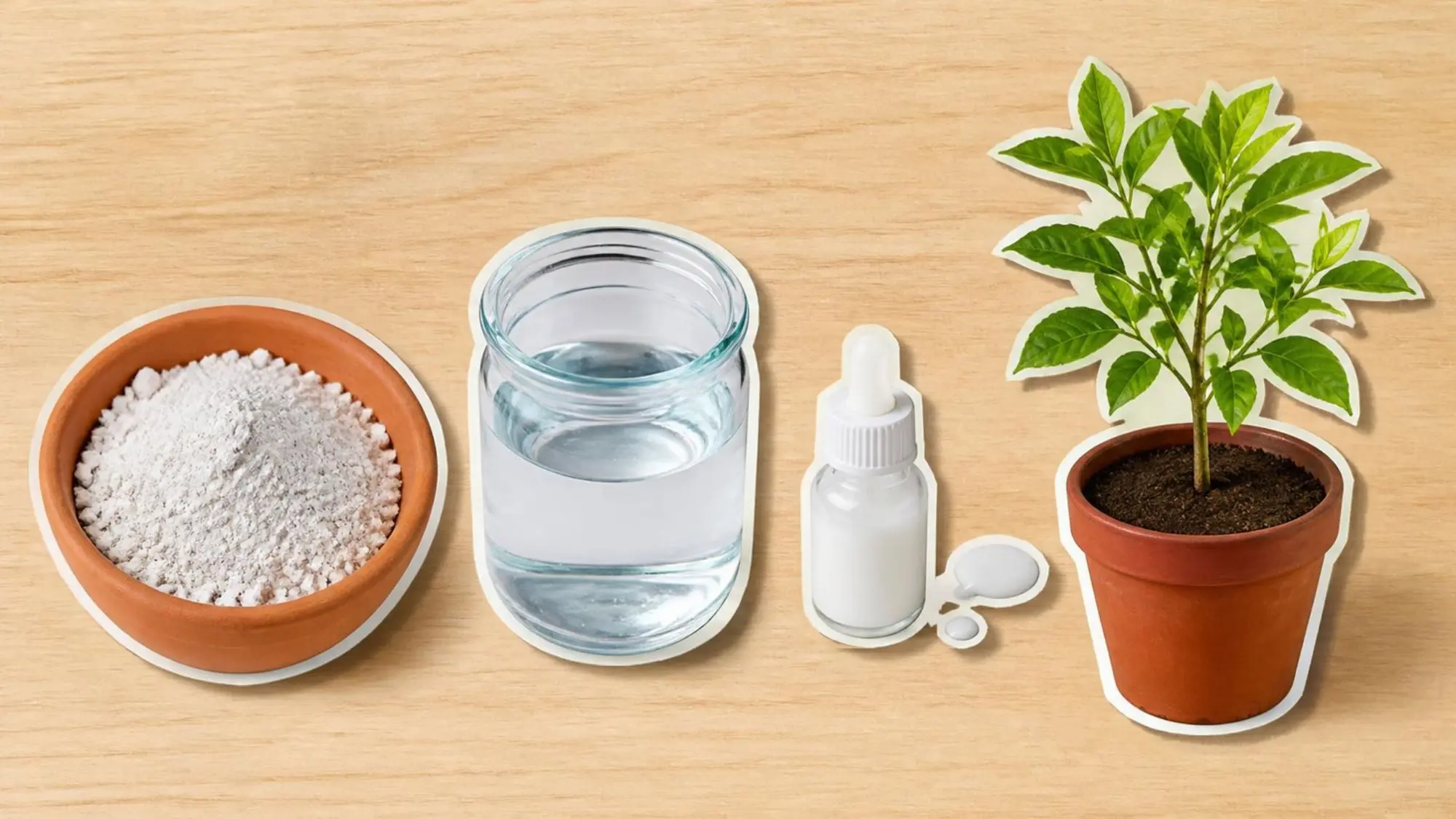
In a bucket or plastic container, mix 1 part lime to 2 to 3 parts water until you obtain a consistency similar to thin yogurt or thick paint.
-
Gently clean the tree trunk with a soft-bristled brush to remove loose soil or dried moss.
-
With a wide brush, paint the trunk from the base (ground level) up to the first fork of the main branches (about 60 cm to 1 meter high).
-
Let it air dry. You will see that as it dries, the color turns into a bright chalky white.
Precaución útil
-
Never use synthetic paints, varnishes, or solvent-based oils, as they seal the bark pores, “suffocate” the tree and can be highly toxic to the plant.
-
Handle the lime with care (wear gloves and protective goggles), as the dry powder can irritate the skin and eyes before it is mixed with water.
