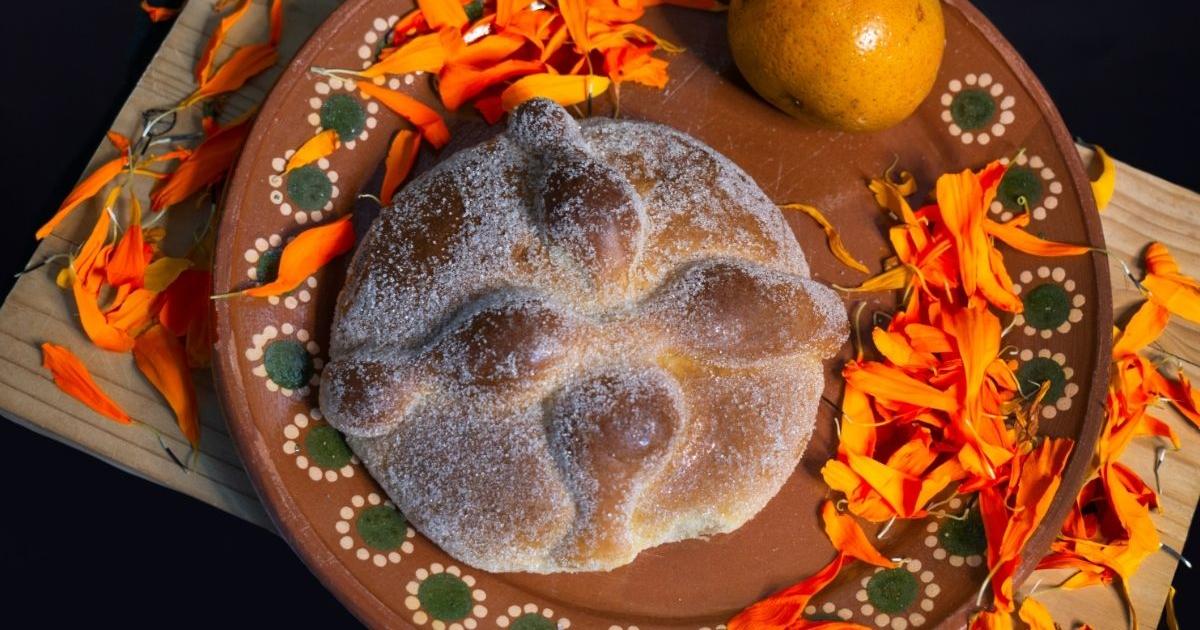
When October comes to an end, the craving for a good pan de muerto begins to make itself felt in many Mexican households. Its sweet aroma, the touch of orange and the sugar coating make it a temptation hard to resist, especially when accompanied by a cup of coffee or hot chocolate.
Although traditionally it is prepared in the oven, there is also an alternative for those who want to enjoy it at home without this appliance. With a wide skillet, a lid, and some basic baking ingredients, you can craft a homemade version that preserves its distinctive shape and a soft texture.
This recipe is not only delicious but is ideal if you are looking for an easy-to-make preparation to share during October and November without the need for an oven. You only need to respect the resting times of the dough and cook the bread over very low heat so that it cooks evenly without burning on the outside.
2 cups of all-purpose flour (approximately 250 g).
¼ cup of sugar (50 g).
1 egg.
¼ cup of warm milk (60 ml).
40 g of butter at room temperature.
1 teaspoon of instant dry yeast (approximately 3–4 g).
1 teaspoon orange zest.
½ teaspoon orange blossom essence or vanilla.
1 pinch of salt.
A little melted butter to glaze.
Enough sugar to coat the bread.
Activate the yeast. Mix the warm milk with one teaspoon of sugar and the yeast. Let it rest for 5 to 10 minutes, until the mixture begins to foam. If you use instant yeast that can be incorporated directly into the flour, you can also follow the package directions.
Prepare the dough. In a bowl, mix the flour, the remaining sugar and the salt. Add the egg, the activated yeast, the orange zest and the orange blossom water or vanilla. Bring together until you obtain a dough and begin to knead.
Incorporate the butter. Add the butter gradually while kneading for about 10 to 15 minutes, until you obtain a soft, elastic, and slightly sticky dough. If it sticks too much to the hands, let it rest a few minutes before adding more flour, to prevent the bread from becoming dry.
Let the dough rest. Shape a ball, place it in a lightly oiled container, and cover it with a clean cloth. Let it rest in a warm place for about 1 hour or until it noticeably increases in size. The time may vary depending on the ambient temperature.
Shape the breads. Separate a small portion of dough to make the bones and the small ball that characterizes pan de muerto. Divide the rest into portions, shape balls and place on each one two strips of dough crossed to simulate the bones; finish with a small ball in the center. Let rest another 20 to 30 minutes, covered and in a warm place.
Cook in a skillet. Lightly grease a wide, heavy-bottomed skillet and place the bread, leaving enough space between the pieces. Cover and cook on very low heat for about 15 to 25 minutes, depending on size. If the base browns too quickly, reduce the heat; check that the center is well cooked before removing it. If your skillet is small, cook the breads in batches.
Decorate with butter and sugar. Let the breads cool for a few minutes and brush the surface with melted butter. Sprinkle sugar to lightly coat them and wait for them to finish cooling before serving.
The secret to obtaining a soft bread lies in kneading well, respecting the resting times, and avoiding adding too much flour. It is also important to cook it on very low heat and keep the pan covered so that heat distributes more evenly. Since skillet cooking can vary depending on the thickness of the pan and the size of the pieces, check that the interior is cooked before turning off the heat.
