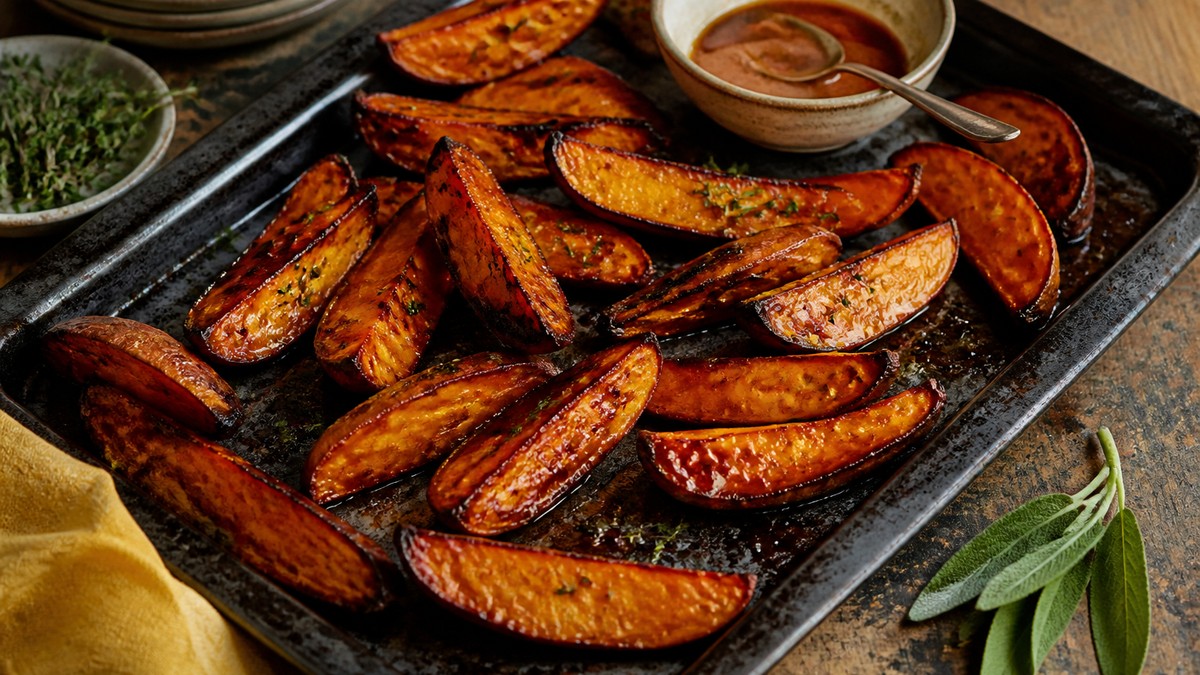
Roasted kūmara can be glorious at the edges. The usual fix is another knob of butter, but there is a better way to deepen the flavour: whisk a spoonful of mild miso into the glaze. It brings salt, savouriness and a faint fermented sweetness without making the tray taste obviously Japanese.
This version gives you caramelised corners, soft centres and a glossy coating that clings rather than pooling on the baking paper. It is easy enough for a weeknight, but the sesame, spring onion and lime finish makes it feel right for a shared lunch as well.
What you need for one generous tray
Choose orange or gold kūmara if you want a creamy middle. Red-skinned kūmara works too, although it stays a little firmer and benefits from two or three extra minutes in the oven.
- 1 kg kūmara, scrubbed
- 1 tablespoon white or shiro miso
- 1 tablespoon runny honey or maple syrup
- 1 tablespoon neutral oil
- 15 g butter, melted
- 1 teaspoon rice vinegar or lime juice
- 1 teaspoon sesame oil
- 1 small garlic clove, finely grated
- 2 teaspoons sesame seeds
- 2 spring onions, thinly sliced
- 1 lime, cut into wedges
The recipe serves four as a side, or two with a fried egg and a crunchy cabbage salad. Miso brands vary in saltiness, so there is no need to season the raw kūmara. Taste a finished piece first, then add flaky salt only if it needs it.
Roast hard first, glaze later
Heat the oven to 220°C conventional or 200°C fan bake. Put a heavy roasting tray in the oven while it heats. A hot tray begins browning the kūmara as soon as it lands, which helps prevent the soft, steamed texture that comes from starting on cold metal.
Cut the kūmara into chunky wedges about 3 cm thick at their widest point. Leaving the skin on gives the pieces more structure and creates chewy, browned edges. Dry them well with a tea towel, then toss with the neutral oil.
Carefully spread the pieces over the hot tray in one layer, with a cut face down. Give them space. Roast for 20 minutes without moving them, then turn and cook for another 10 minutes. At this point a knife should meet a little resistance in the centre, and the undersides should have proper brown patches.
While they roast, stir the miso, honey, melted butter, vinegar, sesame oil and garlic in a small bowl. Add one teaspoon of warm water and whisk until smooth. The glaze should fall slowly from the spoon; if it sits like a paste, loosen it with another teaspoon of water.
Pour the glaze over the nearly cooked kūmara and turn each wedge gently. Return the tray to the oven for 8 to 10 minutes. Watch the edges during the final few minutes because the honey can move from burnished to burnt quickly. The finished pieces should be tender enough to crush with a fork, with sticky, dark-gold corners.
How miso changes the flavour
A tablespoon does more than add salt. White miso contains enough sweetness to round out the earthy side of kūmara, while its savoury character makes the butter taste fuller. That is why 15 grams of butter is plenty for the whole tray. More fat would make the surface greasy and soften the crisp patches you worked to create.
The rice vinegar matters too. It is a small amount, but it keeps the glaze from becoming cloying. Lime juice gives a brighter result, while apple cider vinegar makes the dish taste a touch more familiar.
Scatter over the sesame seeds and spring onion as soon as the tray comes out. A squeeze of lime should go on at the table, not before roasting, so its fresh aroma is still there when you eat.
Useful swaps and ways to serve it
For a vegan tray, replace the butter with another tablespoon of neutral oil and use maple syrup. The glaze will be slightly lighter but still glossy. If you like heat, stir in half a teaspoon of chilli crisp or a pinch of chilli flakes. A teaspoon of grated ginger works well when the kūmara is going beside grilled salmon.
You can also add cauliflower florets for the last 20 minutes of roasting. Keep them at one end of the tray and give them only a light coating of glaze; they absorb salt faster than kūmara. For extra crunch, finish with chopped roasted peanuts instead of sesame seeds.
Leftovers keep for three days in the fridge. Reheat them on a bare metal tray at 200°C fan bake for 8 minutes. The microwave is quicker, but it turns the caramelised coating soft. Cold pieces are surprisingly good sliced into a sandwich with spinach and a sharp yoghurt dressing.
The most important detail is timing the glaze. Put it on too early and the sugars scorch before the centres soften. Add it near the end and you get the contrast that makes this tray worth repeating: creamy kūmara inside, savoury lacquer outside, and no need to bury either under butter.
