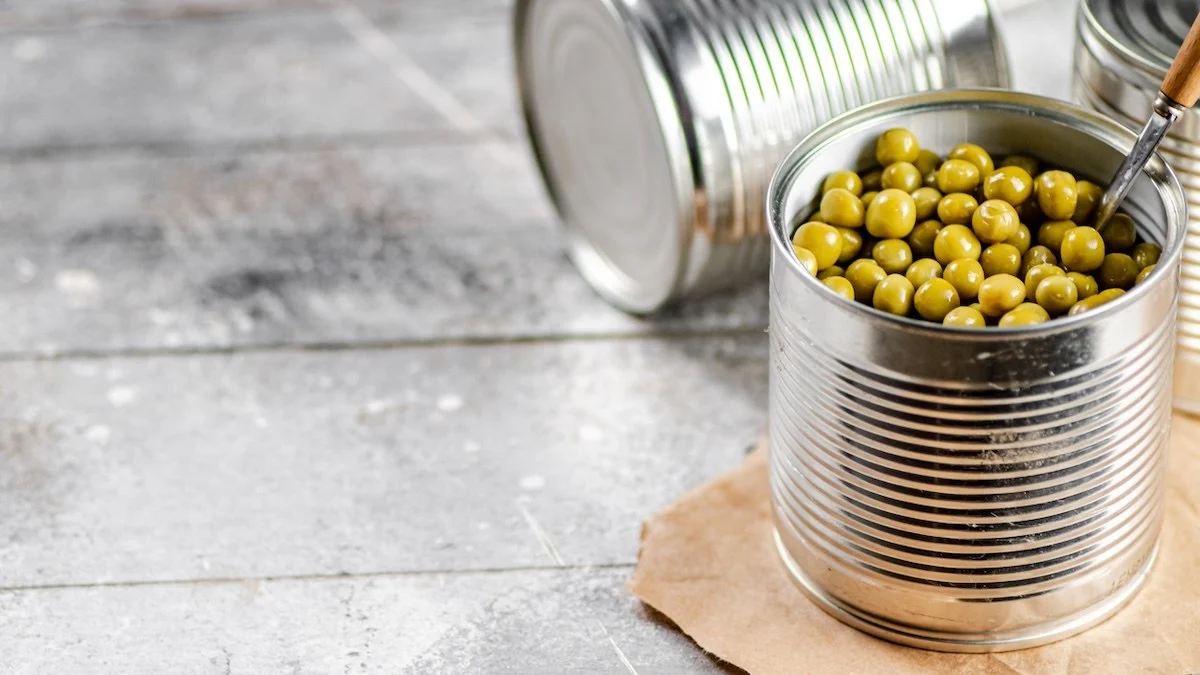
A bit of corn left over from a salad, half of tomato pulp that was extra in the recipe, a remaining portion of red beans or even coconut milk or peas: it happens to all of us not to finish a can, and we all do this gesture without thinking about the consequences. We then try, as best as we can, to close the metal lid and place the can in our fridge. An apparently practical habit, but which poses a real problem for the quality of the foods it contains and also for our health.
What actually happens inside an opened can
While it remains closed, a can is designed to protect its contents in a completely airtight way, for a long time. But as soon as you pull on that famous ring, everything changes. The inner varnish that lines the metal, intended to prevent any contact between the food and the wall, gets scratched or cracked upon opening. The food is then exposed directly to the metal. Verdict: when in contact with air, iron begins to oxidize, quickly giving that unpleasant metallic taste.
This consequence is even faster with certain acidic foods such as fruit in syrup or tomatoes, whose natural acidity accelerates the chemical reaction. In parallel, tiny metal particles can migrate into the food when you leave the can open.
An opened can = open access for bacteria
Beyond a deterioration in flavor, there is also a hygiene issue. A canned product, even carefully resealed, never closes hermetically. The food will dry out on the surface and absorb the surrounding refrigerator odors. But more importantly, it becomes much more vulnerable to bacterial growth than if it were protected in a sealed container. This is especially important for foods that are less acidic or not acidic at all (such as corn or legumes, for example).
The right move? Transfer within minutes of opening
The solution is simple to implement and only takes a few extra seconds after preparing your recipe. As soon as the can is opened, simply pour its contents into an airtight container before placing it in the fridge. Glass is preferable if possible because it is 100% neutral and does not transfer taste or chemicals into your food. A clean jar or an airtight glass container are therefore your best allies. Otherwise, a high-quality food-grade plastic container will do the job.
Stored this way (in a clean, well-sealed container), the leftovers from canned goods can be kept safely in the fridge for 3 to 4 days.
The bonus trick to avoid waste
Even with all the precautions in the world, there are some canned products that mold faster than others, notably coconut milk or tomato paste. So to avoid throwing them away, the best solution is to pour the rest into ice cube trays and place everything in the freezer. Once frozen, the cubes are perfect individual portions, ready to drop directly into your future dish.
What to remember
The habit of immediately storing an opened can in the refrigerator may seem harmless, yet it exposes you to a double risk: an alteration of the taste due to the metal’s oxidation, and bacterial growth facilitated by the absence of a seal. The correct action remains the same. Immediately transfer into an airtight container, preferably glass, and consume the leftovers within 3 to 4 days maximum.
Thus avoiding food waste while preserving the quality of your foods.
