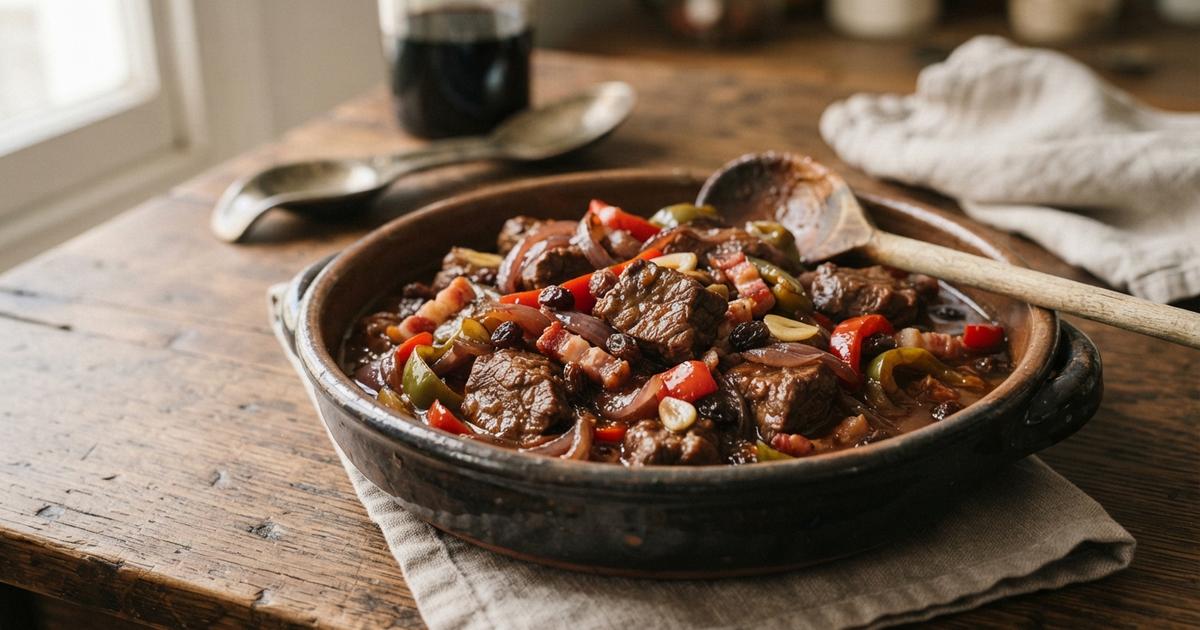
Discover how to achieve the velvety texture and deep flavor of this classic stew, learning to balance the intensity of port with the tenderness of slow-cooked meats.
The beef ragù is one of those dishes that define home cooking, where patience is the main ingredient. This stew, which combines the robustness of the meat with a slightly sweet and complex touch, is a traditional preparation designed to be enjoyed at family gatherings. With this recipe, designed for 4 servings, you will learn to transform simple cuts into a delicacy full of nuance, ideal for those seeking the comfort of a well-executed homemade meal.
At the first bite, what stands out is the balance between the tenderness of the beef and the depth imparted by the wine reduction. The texture is velvety and the aroma that fills the kitchen as it slowly cooks promises a comforting experience. It is a dish that, despite its elegance, is prepared with simple techniques that allow each ingredient to release its essence without hurry. Below, we share the step-by-step guide to mastering this classic.
The Importance of Technique in Braising
For the ragù to reach its optimum point, it is essential to pay attention to the searing and reduction processes, which ensure that flavors meld properly.
-
The searing of the meat: is the crucial step to retain the internal juices; by browning the beef with the fat from the pancetta, we create an outer layer that will enhance the final flavor of the sauce.
-
The sweating of the vegetables: cooking the onion, garlic, and peppers slowly allows them to release their natural sugars, forming an aromatic base that will serve as the body of our stew.
-
The reduction of the alcohol: when adding red wine and port, it is vital to let the alcohol evaporate completely before covering the pot, avoiding bitterness dominating over the fruity nuances of the recipe.
The Final Touch: The Creaminess of the Ragù
The magic of this dish lies in the patience during the final simmer, where the ingredients transform into a dense and glossy sauce.
-
The role of flour: by incorporating a small amount of flour at the end, we achieve a sauce with a smooth, velvety consistency that coats every piece of meat and vegetable perfectly.
-
The contrast of the raisins: the port hydrating the raisins not only adds a subtle sweetness but also balances the saltiness of the pancetta, creating a sophisticated contrast that elevates the dish to a higher level.
The Original Beef Ragù | Recipe
Ingredients
-
500 g beef for stewing, cut into chunks
-
100 g fresh pancetta or bacon, cut into lardons
-
1 large onion, diced
-
1 large red pepper, diced
-
1 large green pepper, diced
-
2 garlic cloves, sliced into quarters
-
50 g raisins
-
125 ml port wine
-
4 tablespoons olive oil
-
250 ml beef stock
-
2 teaspoons sugar
-
1 small glass of red wine
-
1 teaspoon flour
-
1 bay leaf
-
Salt
-
Whole peppercorns
Preparation
-
Soak the raisins in the port wine until the moment they are incorporated into the meat.
-
In a pot over medium heat, add the lardons and, when browned, add the beef previously seasoned.
-
Brown the meat for 3-4 minutes and remove it from the pot to set aside.
-
In the same oil used to cook the beef, brown the garlic, taking care not to burn it.
-
Add the onion and peppers to sweat them slowly over low heat.
-
Return the beef and the lardons to the pot.
-
Pour in the red wine and sauté for a couple of minutes until the alcohol has completely evaporated.
-
Stir in the beef stock, black pepper and the bay leaf.
-
Cover the pot and simmer over low heat for one hour.
-
After this time, add the raisins with the port, the sugar and the flour.
-
Adjust the salt to taste and stir all the ingredients well.
-
Let the sauce evaporate and thicken by cooking on low heat for another half hour.
This stew is an excellent option for those seeking a dish with character and depth. Although it is high in fats and sodium, it offers a good source of fiber thanks to the generous amount of vegetables, making it a complete dish that invites lingering after-dinner conversations.
This article has been generated with the support of AI and reviewed by an editor. For more information, please consult our terms and conditions
