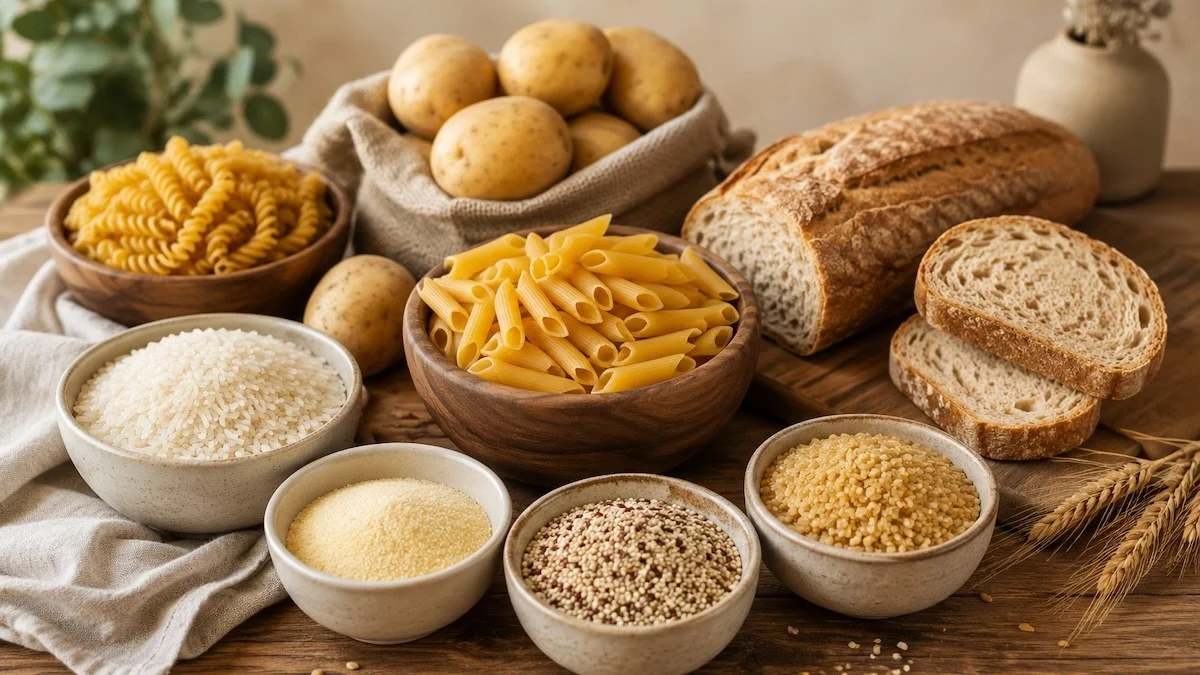
For years, the potato has carried a label it doesn’t truly deserve: that of a heavy, calorie-dense starch to be reserved for winter meals or days when you’re not watching calories. A shortcut that has led many people to simply remove it from their healthy plates. Of course, if you add melted cheese and cream, you massively raise the caloric tally… But when cooked the right way, the potato has everything it takes to become a slimming ally!
The real caloric matchup: Potato vs Rice vs Pasta
Let’s do a simple calculation: steamed, the potato tops at 80 kcal per 100 g. Cooked pasta, by contrast, hovers around 125 calories for the same amount. White rice climbs even higher, around 144 kcal. When scaled to an average plate of 200 g, the gap becomes quite striking: about 160 kcal for the potato versus nearly 250 kcal for the same portion of pasta. Figures that really shake things up, don’t they?
In other words, at equivalent plate volume, the potato fares much better than its usual rivals. It’s not magic: it’s simply because it is made mostly of water, which mechanically lightens its caloric density.
Why it sticks to the body without weighing down the calorie tally
What may seem most surprising, even completely illogical, is how such a low-calorie food can also feel so filling. The reason lies in its high water and fiber content, which slows digestion and prolongs the sensation of fullness. Result? A reasonable portion is enough to get you through the afternoon without a snack, while a similar amount of pasta may leave you hungry sooner.
This starch is by no means a nutritionally neutral food. It provides fiber, vitamin C, B vitamins, and above all, a good amount of potassium, a mineral that plays an important role in regulating blood pressure. Enough to more than compensate for its somewhat dull and bland image.
The reflex to adopt: cooking it in advance to help the microbiota
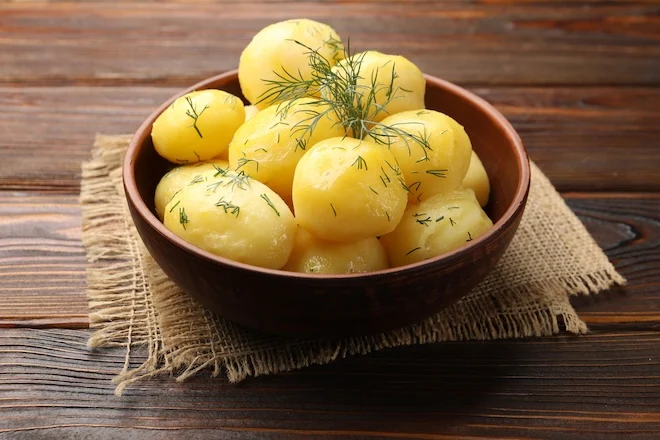
The cooking method remains obviously decisive: it’s better to forget frying and heavy sauces, and instead opt for boiling, steaming, or baking to keep this food lighter.
The most effective move but too often ignored: prepare it in advance and let it cool before consuming. This simple cooling step converts part of its starch into “resistant starch,” a form of fiber that nourishes the good gut bacteria and limits blood sugar spikes after the meal. A potato salad prepared the night before therefore checks more boxes than a simple quick summer dish (and not only).
Three habits to adopt for selecting and storing it
When possible, it is recommended to keep the potato skin. Well washed and cooked, this natural skin adds fiber without any extra effort.
In terms of storage, we all sometimes see sprouts appear on our potatoes… Don’t panic and don’t throw them away right away! A slightly sprouted tuber remains edible, provided you remove the sprouted part before cooking. But caution: the greened or heavily sprouted areas contain solanine, a substance to avoid. Cut them away more generously or discard the starch if it’s too affected.
The potato, star starch: what to remember
The potato remains a starch, not a vegetable. It does not replace a serving of broccoli, spinach, or any other green vegetable! But calorie-wise, it far outscores rice and pasta, while offering lasting fullness and real nutritional advantages. When simply cooked or served cold from time to time, it even becomes a little boost for digestion. A way to bring it back onto the menu with no guilt and without breaking the bank. The potato really does bring the power!
