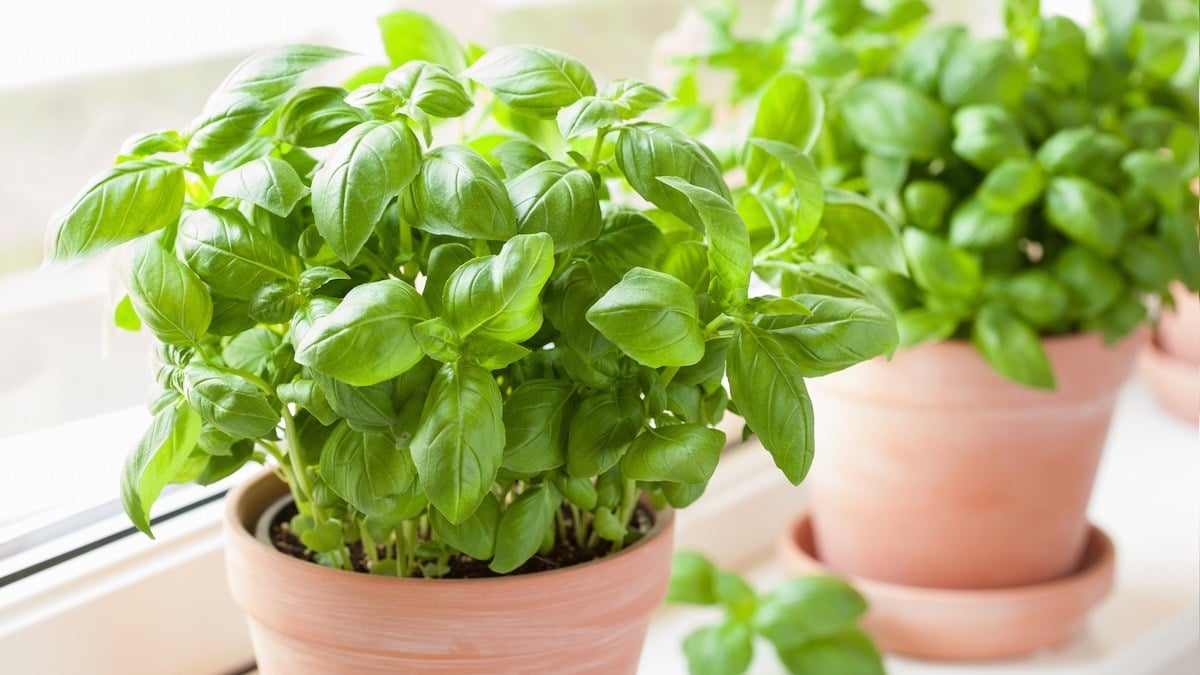
You buy a pot of basil, you place it on the windowsill thinking you’re doing the right thing but then: ten days later (or even less), it is all black, all limp and completely wilted. So you start over, but you still reach the same result despite your best intentions. This infernal cycle, the vast majority of French people know by heart. And if the problem isn’t due to your lack of a green thumb but to a succession of very precise mistakes that you make without realizing it? We come to your rescue (and especially to that of your beautiful basil).
Why does store-bought basil die so quickly?
Before even talking about storage, you must understand the actual state of the basil you buy in supermarkets. These little pots are grown most of the time under intensive conditions. They are sown very close together to maximize visual density, then harvested young to shorten delays and kept under artificial light until they are put on shelves. Result? Plants that look vigorous but are actually exhausted, poorly rooted and unable to withstand the shock of their new environment.
In short, supermarket basil isn’t meant to last, only to look good on display. But rest assured, it isn’t a fatality! To make it last longer, you’ll need to act quickly and intelligently right from the purchase. Here are the best pro tips to help you keep a basil plant alive at home.
Mistake No. 1: Putting it in the refrigerator
This is probably the most common reflex, and yet the worst of all. Basil is a tropical plant of Mediterranean origin that suffers as soon as the temperature drops below 10°C. The refrigerator, with its average around 4°C, causes what is known as cold damage: the leaf cells necrose, pigments degrade and the leaves blacken within a few hours. This characteristic blackening that you attribute to a lack of water or to the plant’s age is actually cold burn.
Thus, we absolutely skip the fridge for basil! A definitive rule that will help keep it alive much longer.
Mistake No. 2: Watering from the top
Basil does not like having wet leaves. Water stagnating on the leaves promotes mold development and thus accelerates blackening. The pros who keep plants healthy always water from the bottom. They place the pot in a dish filled with water and let the soil draw up what it needs by capillarity, at its own pace. The clump remains moist deep down without ever saturating the surface or wetting the stems.
Remember to check that your pot has a drainage hole. Basil sitting in stagnant water will have its roots rot in just a few days. And a plant without healthy roots cannot feed itself, no matter your efforts, case closed.
Mistake No. 3: Placing it in the wrong spot
Basil loves light! It needs at least six hours of direct sunlight per day. A north-facing windowsill, a kitchen with no natural light, or a dark corner on the worktop will condemn it to a slow death from lack of photosynthesis. And we don’t want that for poor little basil plant.
On the other hand, beware of the opposite extreme! Full sun behind a window in the height of summer can create a magnifying glass effect that burns the leaves. The ideal is a window facing east or southeast, with bright light but not directly scorching during the middle of the day.
Repotting and Aerating: the wholesalers’ technique for saving a basil plant
Good wholesalers don’t sell basil as an herb to be consumed but as a plant to be cared for. And for that, they apply a simple rule as soon as they receive the plants: immediate repotting.
Right from purchase, divide the pot into two or three small distinct clumps and replant each of them in an individual pot with well-draining soil. The roots, cramped in the original pot, can then develop properly and feed the plant with water and nutrients. A basil plant well rooted in an appropriately sized pot resists temperature and light variations infinitely better.
Regularly pinch off the flowering tops as soon as they appear. When basil goes to seed, it stops producing leaves and concentrates all its energy on reproduction. By removing the flowers before they open, you’ll keep the plant in a vegetative growth phase and your leaf harvest will continue to progress for weeks. A simple gesture that is easy to adopt at home!
Preserving cut basil leaves: the water-glass method
Did you cut more leaves than necessary? Don’t panic, you don’t have to throw them away. However, don’t leave them lying in the open air and above all, don’t put them in the fridge! Gather them into a small bouquet, stems down, and place them in a glass with a bottom of room-temperature water. Lightly cover the leaves with a loose plastic bag to limit evaporation and keep everything at room temperature, away from drafts. Change the water every two days to keep the leaves alive. They will stay flexible and fragrant for up to 10 days with this technique!
In short: the five tips to apply at home
Basil doesn’t die because you lack a green thumb. It dies because it is poorly watered, poorly housed, and placed in conditions that don’t suit it. Get it out of the fridge right away, repot it as soon as you buy it, water it from the bottom, expose it to daylight, and pinch off its flowers. These four simple steps will transform a doomed pot of basil into a plant that lasts all summer, believe us!
