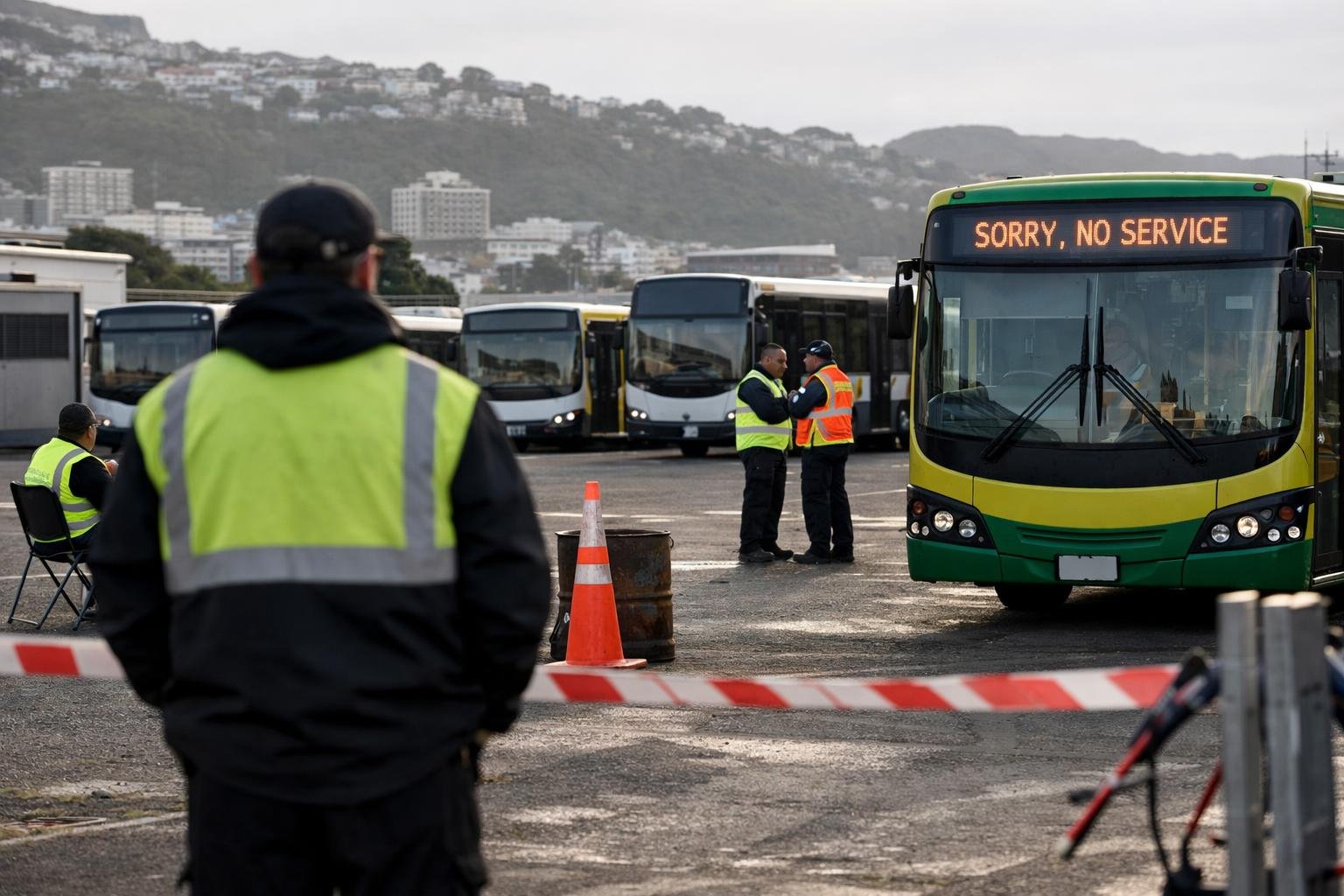
Friday is likely to feel different in Wellington. Quieter bus stops. Crowded platforms. A few more bikes flashing by on the shoulder. With drivers planning to walk off the job, the city will still move—but not in quite the same rhythm. Here’s how to thread your way through it without losing your day.
What’s happening and when
A region-wide bus driver strike is planned for Friday, affecting services from the first morning trips through the evening peak. Expect substantial cancellations, especially during peak hours, across Wellington City, the Hutt Valley, Porirua, Kāpiti Coast, and the Wairarapa.
Operators and routes won’t all be hit equally. Some trips may still run, and a few short-notice services could appear, but the headline is simple: plan for fewer buses and longer waits, and assume your usual connection may not arrive.
“Drivers are making a point, not trying to punish riders,” one veteran operator said earlier this week. “We love our jobs, but we need a fair deal.”
Why drivers are walking off the job
This action centers on three familiar flashpoints:
- Pay that drivers say lags behind the region’s cost of living
- Split shifts and unpredictable rosters that stretch a day without adding much paid time
- Safety and staffing levels, especially on late services
As union representatives have put it, “We’re seeking fair pay, predictable hours, and safer conditions. That’s good for drivers and for the network.” Management, for its part, argues budgets are tight and any lift must be sustainable across the network. “Our focus is to keep essential trips moving while we work toward a settlement,” a regional transport spokesperson has stressed in past disputes.
How services will feel on the ground
Morning and afternoon peaks will bear the brunt. Feeder routes into rail hubs could be especially thin, and popular corridors—think CBD spines and major suburban links—may see rolling gaps.
Two ripple effects to expect:
- Rail platforms and ferry terminals busier than usual, with queues forming earlier.
- More cars on arterial roads, nudging up travel times through chokepoints like the Terrace Tunnel, Aotea Quay, and the Petone foreshore.
“If even half the buses drop out, Lambton Quay jams up fast,” a CBD retailer noted. “Foot traffic clusters at the lights, and people sprint for the next option.”
Your plan for Friday at a glance
- Leave earlier than normal, especially if you’re connecting to rail or a ferry.
- Check the Metlink app and website before you set out—and again right before you depart.
- If you can, work remotely or shift your hours to miss the peaks.
- Pair up: share a ride, cycle in groups, or walk the last kilometre instead of waiting.
- Keep a backup: if the stop looks packed, pivot to the nearest rail station or ferry.
Alternatives that actually help
Trains will be doing heavy lifting. Expect standard fares and, where possible, extra carriages at peak. Ferries are a smart lateral move for Eastbourne and CBD-adjacent commuters. Micromobility—bikes, e-bikes, and scooters—can shrink those last-mile gaps faster than you think, especially on the waterfront and Hutt River trails.
Here’s a quick comparison to weigh your options:
| Option | Expected frequency (Fri) | Approx. cost | Reliability outlook | Pro tips |
|---|---|---|---|---|
| Metropolitan trains | Peak: every 10–20 min | Normal Metlink fares | High (not affected by bus strike) | Arrive early; platforms will be crowded. |
| East by West ferry | Regular timetable | Mid-range, by zone | High, weather permitting | Buy tickets in advance; queues at peak times. |
| Rideshare/carpool | On demand | Variable surge pricing | Moderate (road congestion) | Share costs; use HOV lanes where available. |
| Cycling/e-scooter | Anytime | Free or rental fees | High (route dependent) | Use protected paths; bring lights/rain gear. |
| Walking (short hops) | Anytime | Free | Certain (you control it) | Plan direct routes; comfortable shoes. |
Note: Frequencies and prices are indicative; check live updates and operators’ sites on the day.
Schools, clinics, and events
If you’re tied to the clock—exams, hospital appointments, court times—build in extra margin. Many institutions allow a brief grace period when transport falters, but don’t count on it without calling ahead. Parents may find school runs slower if after-school buses are thin; coordinating shared pickups could save you a scramble just before 3 p.m.
“We’ve told staff to be flexible,” one manager said. “If someone arrives at 9:20 instead of 9:00, they’ll make it up. Pragmatism goes a long way.”
How to stay in the know
- Metlink app and website: live cancellations and platform assignments
- Operator social feeds: short-notice extras or depot-specific updates
- Local radio and traffic dashboards: congestion hotspots in real time
- City council channels: pop-up bike parking, curb changes, or wayfinding
Refresh your plan the night before and again the morning of. If a bus you counted on disappears, pivot quickly—walking 10 minutes to catch an earlier train often beats waiting 25 for a maybe.
What happens next
Strikes end; networks reset. Bargaining usually resumes within days, sometimes hours. The core issues—pay, rostering, and retention—aren’t going away, and neither is the region’s need for a reliable, resilient bus backbone. The best outcome is a deal that keeps drivers in the seat and passengers on time.
Until then, travel light, keep your options open, and give yourself permission to arrive a little differently. On Friday, flexibility is your fastest route.
