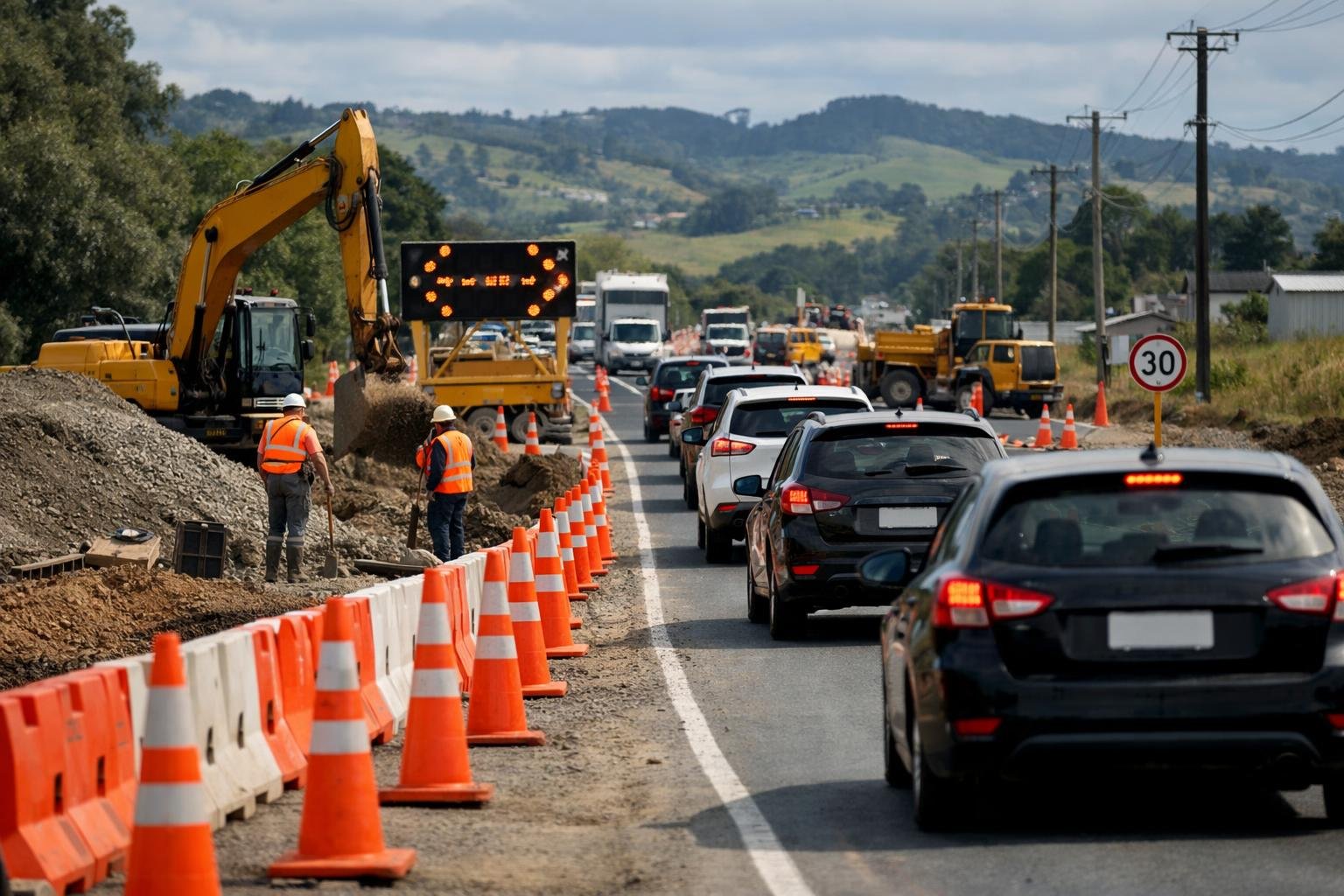
Drivers on State Highway 2 have watched cones inch along the asphalt for months, wondering why a seemingly straightforward job keeps stretching. The answer isn’t a single misstep. It’s a stack of small, often invisible realities that compound into longer timelines—and they’re as much about the ground and weather as they are about governance and gear.
“It looks like nothing’s happening,” is a common refrain in weekday traffic. Crews counter that “you can’t see compaction or curing,” a reminder that progress on a highway doesn’t always look like fresh blacktop.
The gap between drawings and dirt
On a schedule, a road is a sequence of tasks. On site, it’s a living system. Utilities appear where records say they shouldn’t. Subgrade soils pump under load after rain. A single buried cable in the wrong place can push a week of tasks out of sequence, especially on a corridor that must remain open.
Engineers plan for risk with contingencies. But when several low‑probability issues land together—wet weeks, soft ground, a supplier delay—the buffers vanish.
Five forces stretching the calendar
- Weather windows: Asphalt and concrete need dry, stable conditions to last. The Bay’s showers don’t just halt paving; they also reset curing clocks.
- Traffic management: Working beside live lanes requires extra staging and slower cycles. Every safe lane switch costs time but prevents crashes.
- Scope creep: Start with resurfacing; discover drainage that fails design standards. Fixing it now avoids rework but adds tasks.
- Supply and staffing: Specialist crews and materials (barriers, aggregates, signal hardware) run on tight national pipelines. One late delivery cascades.
- Consents and culture: Environmental conditions, noise curfews, and partnership with mana whenua introduce necessary checks that shift the pace.
“Safety first, then speed,” is how site teams put it. It’s not a slogan—it’s liability, ethics, and engineering.
Why more night work isn’t a magic lever
Night shifts seem like the obvious solution. But the reality is mixed.
- Noise limits protect nearby homes; many activities can’t run after dark.
- Visibility and temperature reduce productivity and quality on some tasks.
- Concrete and seal coats have curing and bonding requirements that don’t care what the clock says.
- Every shift change adds setup, inspections, and briefings. Multiply that by two and you grow idle time.
In short: some work benefits from nights, but not the foundational steps that determine longevity.
The ground is the governor
Much of the delay lives below your tyres. When geotechnical tests suggest firm subgrade but excavation reveals variable clays or perched water, teams must stabilise using lime, cement, or geogrid. That adds plant, testing, and waiting periods. Skipping it courts rutting and potholes within a season. “Build it once” beats “fix it twice.”
Keeping lanes open slows the build—and that’s deliberate
Closing a highway speeds construction. Keeping it running slows everything down: shorter work zones, more temporary surfacing, intricate barrier shifts, and frequent inspections. The payoff is community mobility—ambulances, school runs, freight—continuing during works. That choice is policy, not procrastination.
What changed from the early promise?
Early messaging often assumes a best‑case sequence and crisp summers. Reality forced a pivot. Here’s how the framing has evolved:
| Aspect | Early messaging | On‑the‑ground reality |
|---|---|---|
| Timeline | Single‑season programme | Multi‑season, staged by segment and risk |
| Scope | Resurfacing + safety barriers | Drainage overhaul, utilities relocation, intersection tweaks |
| Work hours | Extended nights and weekends | Selective nights; noise, safety, and curing limits |
| Traffic impacts | Two lanes “most of the time” | Frequent single‑lane sections and rolling closures |
| Progress signals | Visible paving equals progress | Subsurface prep and testing dominate early weeks |
| Communication | Periodic notices | More frequent updates and live traffic tools |
The pivot isn’t unique to this corridor. It’s how complex upgrades mature once crews “open the patient.”
What better communication should look like
Trust erodes when promises shrink. It builds when uncertainty is owned upfront. Stronger practice includes:
- Publishing ranges instead of single finish dates, with explicit risk drivers.
- Explaining dependencies in plain language: “Drainage must pass tests before paving begins.”
- Visual timelines for each segment, not the whole corridor.
- Clear thresholds for change: “Two consecutive wet weeks shift milestones by X days.”
- Human‑scale updates: what will tomorrow’s commute feel like?
“It’s not delay if it’s design, and it’s not drift if it’s risk management,” as one project lead likes to explain. The public can handle bad news; what they resent is surprise.
What motorists can reasonably expect next
Expect spurts of visible action—paving, barrier installs—punctuated by quiet periods while materials cure or test results clear. Anticipate rolling speed limits and lane changes that seem to leapfrog; that choreography is how crews keep throughput while reaching buried assets.
If there’s a silver lining, it’s durability. Every extra day poured into drainage and base strength pays back in fewer closures later. That’s not just an engineering win; it’s a community win.
And if patience wears thin, remember: the best sign of progress is sometimes the most boring—fresh drains, firm subgrade, and test sheets that say “pass.” The shiny asphalt comes last.
