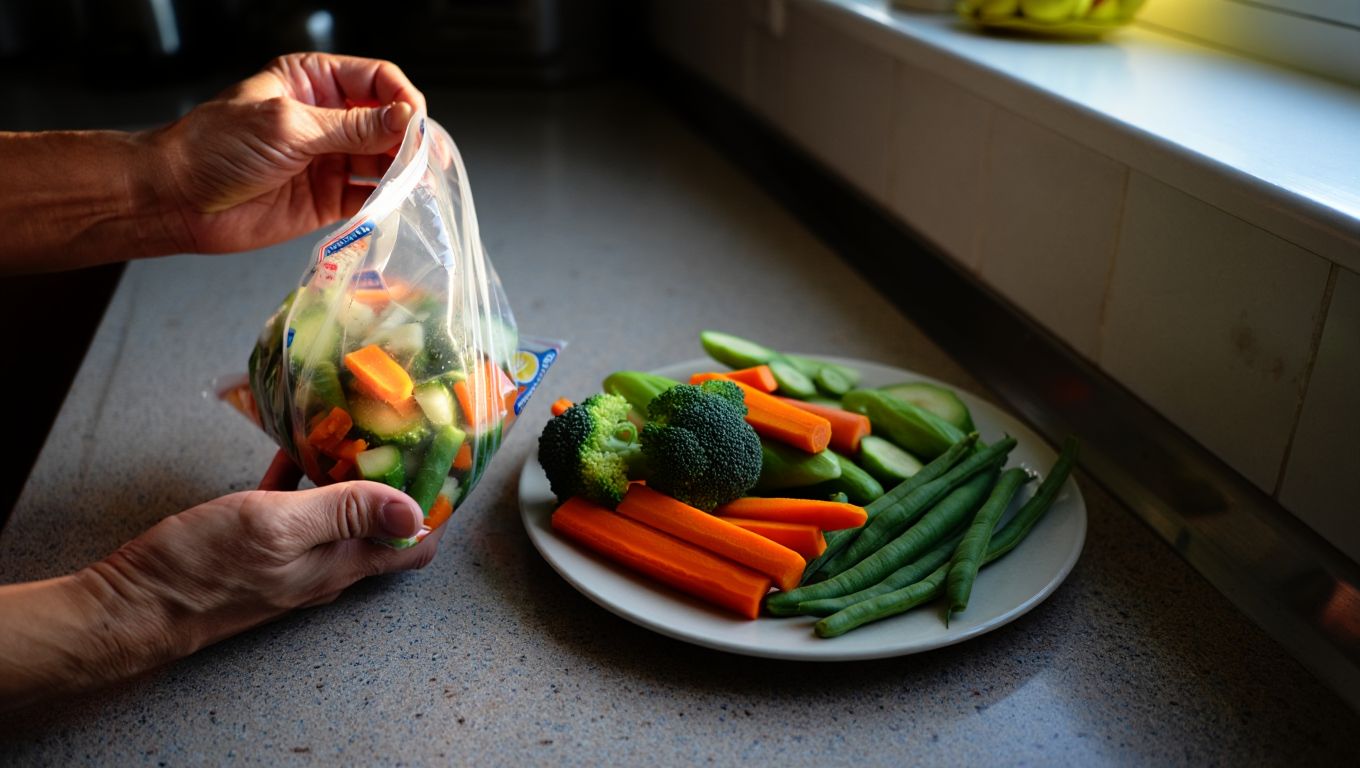
Steam curls up from a weeknight skillet. Inside: green beans so bright they look like summer, peas that snap, corn that tastes like sunshine. They came straight from the freezer, not the farmers market—and that surprises a lot of people.
Dietitians have been saying this quietly for years: you don’t have to sacrifice nutrition or flavor to save real money. In many cases, frozen vegetables are harvested at their sweetest moment and locked in time faster than “fresh” produce that’s been riding trucks for days.
How the freezer preserves nutrients
Farmers typically pick vegetables for freezing at peak ripeness. Within hours, processors wash, briefly blanch, and flash-freeze them. That quick chill halts enzymes that would otherwise nibble away at vitamins and color. Yes, blanching causes small losses in heat-sensitive nutrients like vitamin C and some B vitamins—but after that, the clock practically stops.
By contrast, the “fresh” bunch that looks lovely in the store has likely spent days—or even a week—traveling, sitting in distribution centers, and resting in your crisper. During that time, natural respiration slowly drains vitamin C, folate, and delicate plant compounds.
- “Freezing is more like pressing pause,” say dietitians. “Storage is like slow motion play.”
Minerals (like potassium and iron), fiber, and carotenoids (such as beta-carotene in carrots) tend to hold steady in the freezer. Spinach, broccoli, peas, Brussels sprouts, and mixed veg are frequent standouts. The big exceptions? Delicate leafy salads that you plan to eat raw—freezer crystals disrupt their structure, so they’ll never be as crisp uncooked.
The price and waste math
If you’ve ever tossed a slimy zucchini, you know the real cost of “fresh” includes waste. Frozen vegetables flip that equation. You pay for what you eat, you use only what you need, and you get months—not days—before quality slips.
Grocery checks tell the story. A bag of plain frozen broccoli often costs as little as half the per-cup price of florets sold fresh, especially out of season. And because trimming and spoilage losses are lower, the “edible cost” skews even more in favor of the freezer aisle.
- “Budget-friendly doesn’t have to mean nutritionally second-rate,” as one nutrition pro likes to put it.
Fresh vs. frozen at a glance
| Factor | Fresh Vegetables | Frozen Vegetables |
|---|---|---|
| Nutrient retention | Highest right after harvest; declines over days in storage | Small blanching loss, then stays stable for months |
| Vitamin C/folate | Can drop notably during transport/storage | Often well preserved post-freeze |
| Fiber/minerals | Stable | Stable |
| Cost per edible cup | Higher, especially out of season | Often lower, sometimes about half |
| Prep time | Washing, trimming, chopping | Ready to heat; no trimming |
| Waste | Spoilage common | Use what you need; minimal waste |
| Shelf life | Days to a week | 8–12 months at 0°F (-18°C) |
| Add-ons | Rarely any | Watch for sauces/salt; choose plain |
| Texture | Best for raw salads | Best for cooked dishes |
Choosing smarter bags and better bites
Not all freezer finds are equal. Plain is your friend. Skip the heavy sauces and “butter” glazes that add sodium and saturated fat you didn’t ask for. Look for “IQF” (individually quick frozen) on the label; it helps keep pieces separate and cook evenly. And think about how you’ll cook them: gentle heat preserves color and bite.
One quick list to keep you on track:
- Buy plain, single-ingredient bags; check sodium; favor IQF; use high heat for quick sauté/roast; keep steam-in-bag times short; and season boldly with olive oil, lemon, herbs, garlic, or chili to lift flavor without extra salt.
“Seasoning is the difference between ‘freezer taste’ and ‘wow, that’s dinner,’” as dietitians like to remind clients.
When fresh shines brighter
There are times when the produce aisle wins. If you’re building a crisp salad with lettuce, cucumbers, or tomatoes, fresh texture rules. Hyper-seasonal treats—like just-picked asparagus or sweet corn in midsummer—can be spectacular and worth the splurge. And for raw snacking (think carrot sticks or snap peas), fresh often offers more crunch.
Still, for soups, stews, stir-fries, casseroles, grain bowls, omelets, and pasta, freezing’s textural trade-offs mostly disappear. In those dishes, you’ll notice the seasoning and doneness more than whether the broccoli started the day in a bag.
Cooking techniques that keep the “green”
Use methods that minimize water and time. A hot skillet with a slick of oil will reawaken frozen veg fast—spread in a single layer, don’t overcrowd, and let the edges char a little for flavor. Roasting straight from frozen works, too: high heat, wide pan, no foil, and a toss halfway through. If you steam or microwave, stop while vegetables are still vivid and tender-crisp.
Pro tip: Don’t thaw unless a recipe tells you to. Thawing can weep moisture and soften texture; cooking from frozen preserves structure and reduces nutrient loss.
The bottom line for your plate and wallet
If you want more vegetables in your day without watching them wilt—or watching your grocery bill climb—frozen is a smart, evidence-backed shortcut. You’re getting produce that was picked at its sweetest and held in stasis, with nutrients largely intact and a price tag that often undercuts the fresh bin. That’s not a compromise; that’s strategy.
“Eat more plants, spend less, waste less,” as one dietitian summarizes. “The freezer just makes it easier to keep that promise.”
