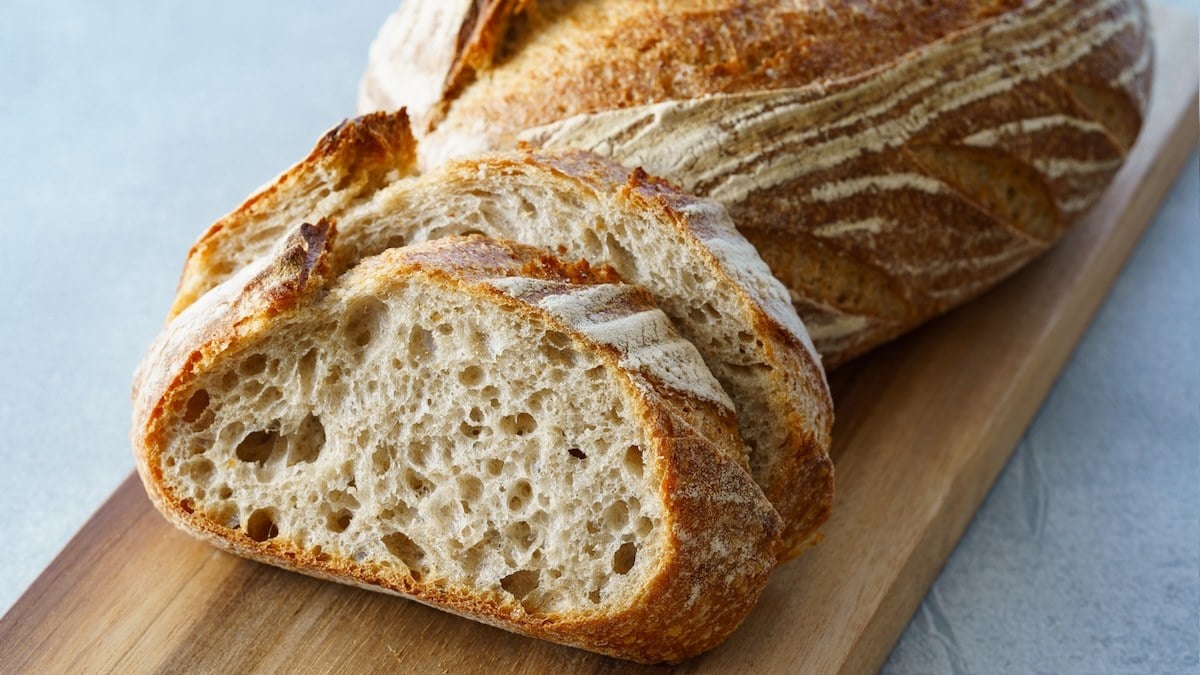
Fresh morning bread is one of the great pleasures of life in France. A crust that crackles, a soft crumb, an irresistible aroma… And then comes the (un)pleasant surprise the next day: the baguette is as hard as wood, the loaf has lost all its soul, and you find yourself battling a knife to try to coax something edible from it. This scenario is as familiar to bakers as it is to you, and that is precisely why they have developed simple methods to slow this inevitable aging. But the good news is that we’ve uncovered their little secrets and we’re sharing them with you so you can apply them at home without overthinking.
Why does bread go stale so quickly?
Staling of bread is not a question of moisture evaporating; it’s another chemical phenomenon called starch retrogradation. To put it simply, during baking, the starch molecules absorb water and swell to give the crumb its wonderfully fluffy texture. But as soon as the bread cools, those same molecules gradually reorganize into a more rigid and crystalline structure, pushing water toward the crust. Result? The crumb hardens, the crust softens, and the bread loses all its texture within a few hours.
This process is accelerated by a surprising factor: the refrigerator. Contrary to what many think, putting bread in the fridge is the worst thing to do! Between 0 and 4°C, starch retrogradation accelerates and your bread goes stale up to six times faster than at room temperature. A trap into which the majority of French people fall. And, of course, we explain how to store your bread better at home.
The Bakers’ Method: Wrapping Well and Storing Properly
The number one secret of professionals boils down to a single word: wrapping. A bread left to air loses moisture quickly and starts to stale on the surface. A bread poorly wrapped in plastic becomes soft and loses all the crust’s crunch. The right technique is the perfect compromise between the two.
For room-temperature storage up to two days, you should wrap your bread in a clean, dry cotton towel. The fabric will then allow the bread to breathe slightly while limiting moisture loss. That’s exactly what bakers do for their day-old unsold loaves! Avoid hermetic plastic bags that trap moisture and soften the crust in just a few hours.
To go up to five days of storage, the solution is immediate freezing. Artisanal bakers freeze part of their production in slices or portions the day after baking, before retrogradation has progressed too far. You simply take out the desired amount and reheat it in the oven at 160°C for 5 to 8 minutes to restore a bread almost identical to the day of baking. Freeze quickly, reheat gently. A trick that will save your bread (and your wallet).
Which packaging to choose according to the type of bread?
All breads do not keep in the same way. Bakers systematically adapt their method according to the product, and you too can do so at home.
1. The traditional baguette
It’s the most delicate of them all. Its thinness and delicate crust cause it to go stale very quickly. The ideal is to consume it within hours of purchase (and in general, that’s what people do). But if you don’t finish it, freeze it cut in half as soon as you get home.
2. Country breads and sourdough loaves
These breads are much more resilient. Their natural acidity slows microbial development and their denser crumb holds moisture better. Wrapped in a clean, dry towel, they easily keep three to four days at room temperature.
3. Whole-grain and multigrain breads
For this last category, it’s a bit between the two. Rich in fiber, they absorb more moisture and dry a little less quickly than white baguette. A wooden or metal bread box is the ideal container for this type of bread as it naturally regulates the ambient humidity.
The Move That Saves a Stale Loaf: A Quick Pass Through the Oven
Even with the best storage methods, a loaf can go stale before you finish it. To counter this problem, bakers have an infallible trick! Briefly pass it under cold water, just long enough to moisten the surface a little (no need to drown it…), then bake it at 200°C for 8 to 10 minutes. The steam generated by the water will rehydrate the crumb from the inside while the crust browns again. The result is unequivocal: bread almost as fresh as on day one.
Anti-staling reflexes in brief
The worst mistake you can make with your bread is putting it in the fridge. Forget it! Instead, opt for the cotton towel for short-term storage and go for quick freezing for longer storage. If, unfortunately, the damage is already done, apply the little trick of a bit of cold water followed by a bake in the oven—it’s miraculous. You can have bread (almost) fresh every day!
