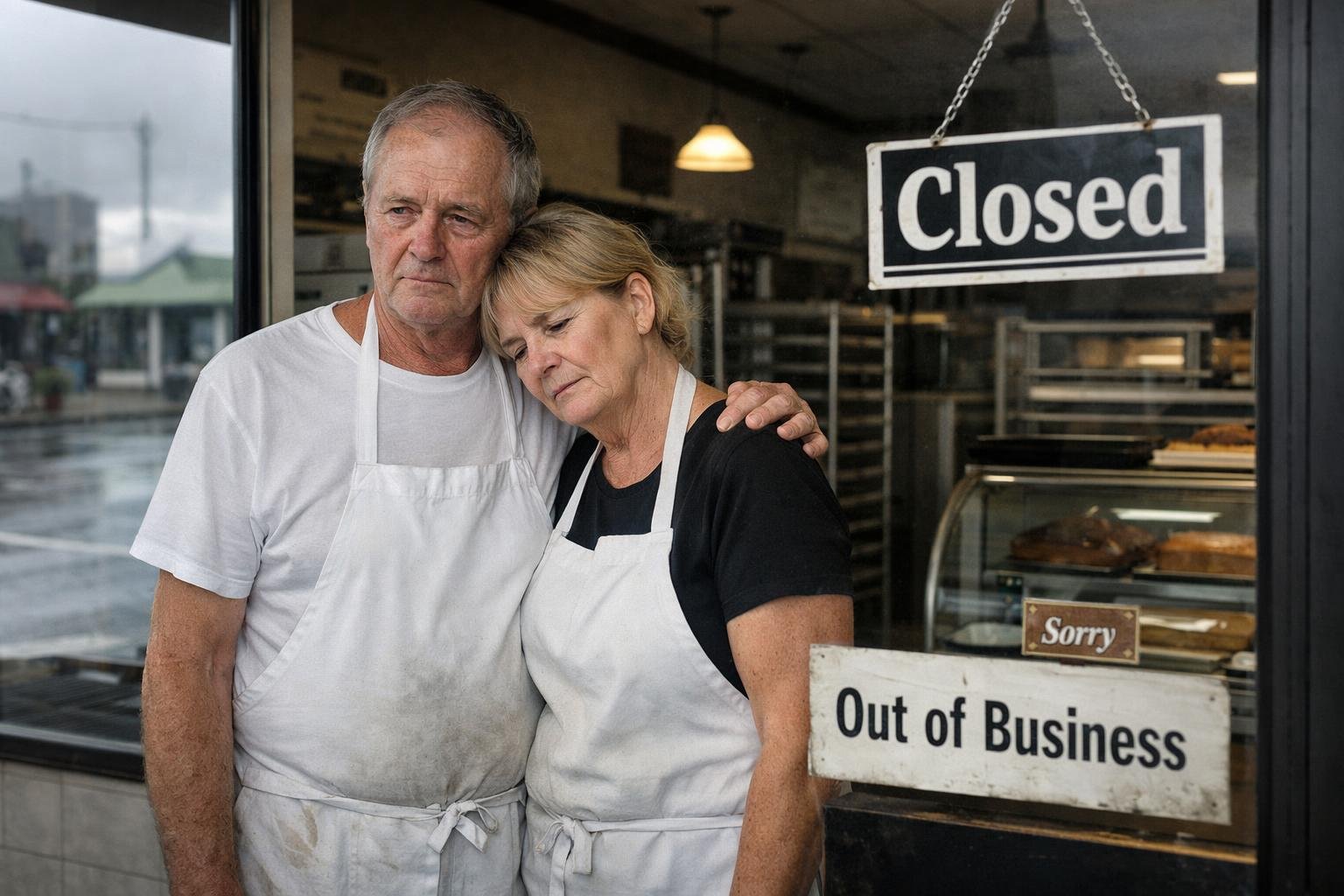
The line formed before sunrise, as it often did, but there was a different feel on Tainui Street. Hugs in the cold. A few damp eyes. The last trays of cheese scones vanished in minutes; the final custard squares were spoken for by 7:15. Inside, the old deck oven hummed as it always had, steady and unhurried, turning out one more morning of comfort for a town that knows a hard day’s work.
“We always said we’d know when it was time,” co-owner Rob Keating murmured, wiping flour from his hands. “Turns out the calendar knew before we did.”
A craft measured in dawns
For 38 years, the family-run shop on Greymouth’s main drag opened when most of the Coast was asleep. Rob and Janine Keating learned each other’s rhythms across countless 2 a.m. starts: one weighing dough, the other rolling pastry, both listening for the small sounds—steam valves, tins cooling—that tell a baker the day is going to be alright.
In the 1980s, miners came in still flecked with coal dust, buying pies by the box for the mid-shift. Later, tourists discovered the caramel slice. Kids grew up and came back with their kids for gingerbread men with raisin eyes. The place wasn’t fancy. It didn’t have to be.
“This shop taught us patience,” Janine said. “Dough won’t be hurried. Neither will a community.”
Why the oven finally cooled
The decision to close, the couple said, was equal parts heart and arithmetic.
Costs have climbed sharply. The price of butter, cream, and flour surged; electricity hikes bit into margins; new compliance and maintenance on aging gear got harder to absorb. Staffing, already a nationwide headache, became a weekly puzzle.
“We tried shorter hours. We tried raising prices a little,” Rob said. “We hate the thought of a five-dollar scone. And the numbers still didn’t sing.”
Health and time mattered, too. After nearly four decades on concrete floors, hands and backs keep the score. “We want to be grandparents who can still kneel in the garden,” Janine added with a smile. “That felt like a good north star.”
The bakery by the numbers
Below is a snapshot of what changed from the first year to the last.
| Metric | 1986 | 2024 |
|---|---|---|
| Staff on roster | 8 | 5 |
| Daily pies baked (avg) | 420 | 300 |
| Loaves baked per day | 180 | 120 |
| Price of steak pie | $1.90 | $6.50 |
| Opening hours (Mon–Fri) | 5:30 a.m.–5:00 p.m. | 6:30 a.m.–2:00 p.m. |
| Saturday trade | Until 1:00 p.m. | Seasonal |
| Local deliveries | 12 stops | 4 stops |
“People look at the price tag and think it’s all profit,” Rob said, tapping the ledger. “By the time you pay for butter, wages, power, rates, and a new bearing for a 30-year-old mixer, you’re talking cents.”
What the closure means for Greymouth
- Fewer early-morning options downtown, which could shave foot traffic off nearby retailers.
- One less training ground for young workers learning punctuality, customer service, and knife skills.
- Fundraisers lose a go-to for donated trays; several schools say they’ll rotate bake days among parents.
- The town keeps its supermarkets and cafés, but loses a hub that blurred lines between regulars and strangers.
- A reminder that small-town resilience depends on shared effort, not just sentiment.
Voices from the counter
“I got my first job here and learned more from Janine in two weeks than any hospitality course,” said Mia, now a barista up the road. “Her rule—‘taste everything before it leaves’—made me care.”
Tom, a retired miner, clutched a warm paper bag. “They fed whole shifts. When Pike River happened, they fed us then too—no charge. That’s who they are.”
Principal Aroha Ngata from a nearby school summed it up simply: “When we called for raffles or sausage sizzles, they didn’t ask for forms. They asked, ‘How many trays?’ That’s community.”
Recipes, heritage, and the path ahead
Not everything ends with the final batch. The Keatings plan to share several house favorites—yes, including the famed custard square—in a small community cookbook raising funds for a youth kitchen at the rec centre. “We believe in teaching the next hands,” Janine said. “A recipe doesn’t work without a person behind it.”
The shop’s equipment will be sold, but the deck oven might get a second life with a local charity kitchen if movers can coax it through the side door. The landlord is fielding interest from a café, a bike-hire outfit, and a florist. Footfall is footfall, yet locals quietly hope the aroma of fresh bread won’t vanish forever.
Lessons from a slow craft
If you spent time in the queue here, you learned a few things. Heat loves patience. Good pastry hides no secrets—just butter, time, and a cool bench. People soften when they meet over food. And a small business is more than a till; it’s a promise kept, early, day after day.
“Some days the town carried us,” Rob admitted. “Other days we carried it. That’s a fair trade.”
On the last morning, someone chalked thank you in big looping letters across the footpath. Staff slipped out the back for a photo, flour dust sparkling in the shaft of light above the bench. The bell over the door gave a tired, loyal chime. Then the trays were stacked, aprons untied, and the oven—after one last sheet of ginger crunch—went still.
No grand speeches. Just a careful sweep of crumbs, a final wipe of the counter, and the quiet knowledge that the smell of warm bread will live where it always has: in memory, on a cold Coast morning that asks for something simple and warm.
