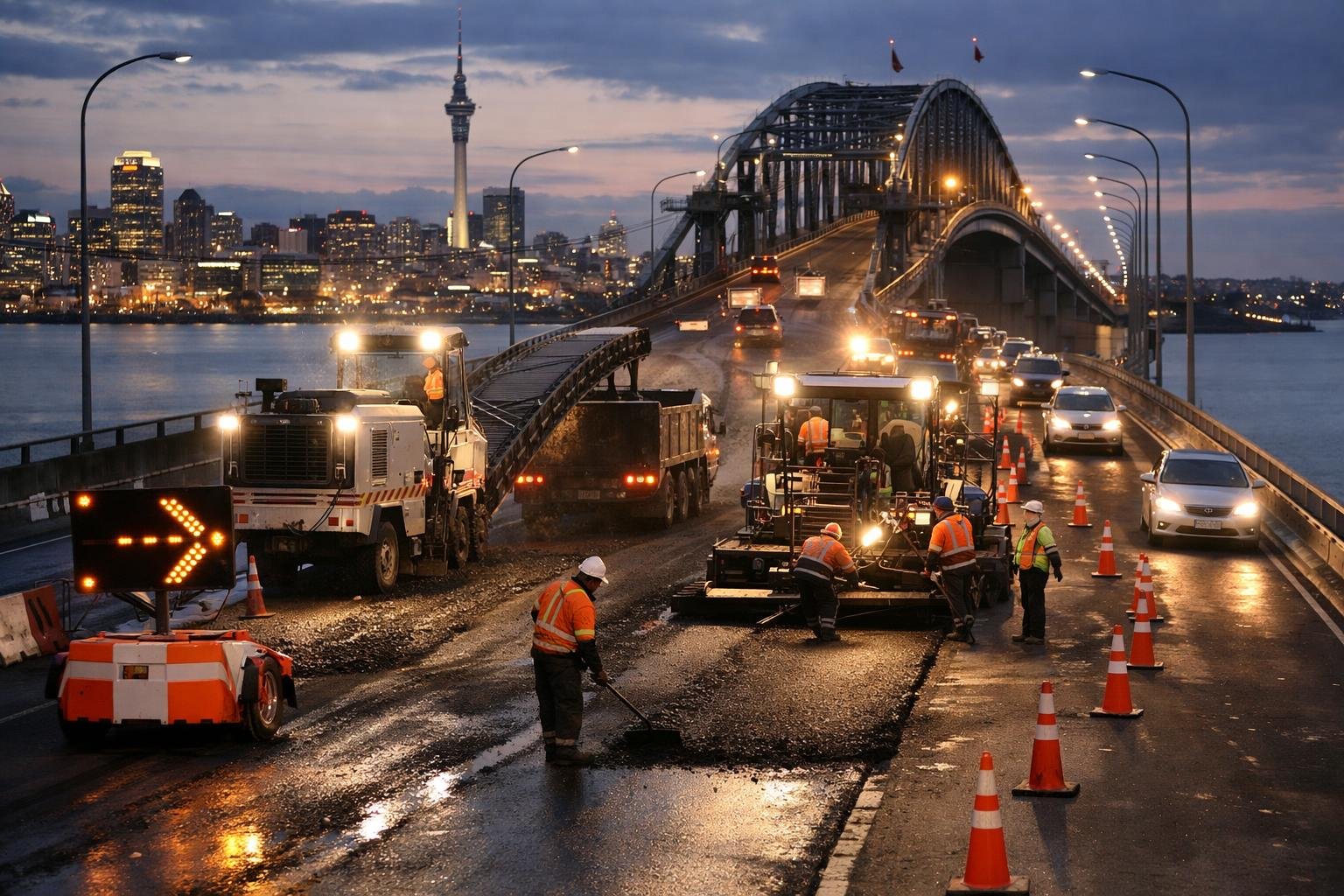
Crews will be on the water’s edge and the steel spine of the city this week, laying down new surface while most of us sleep. A key traffic lane will be narrowed for about three weeks, with additional rolling closures at night, as contractors refresh the deck that carries thousands of daily crossings. Expect a different rhythm on the bridge—and a gentler right foot.
Why it’s happening now
The deck needs fresh waterproofing and a new wearing course to protect the steel and keep stormwater from sneaking into joints. It’s not flashy work, but it’s foundational.
“This is routine yet critical maintenance,” said a Waka Kotahi spokesperson. “By working overnight, we keep daytime disruption low and extend the life of the structure.”
Resurfacing in cooler evening temperatures also helps the material cure evenly. Add in lighter traffic volumes, and late hours become the safest window for lane shifts and machinery.
What drivers will notice
Barriers will be in place around the clock, narrowing one lane and slightly pinching shoulders. Overnight, additional lanes may close in stages. Variable speed limits will drop through the work zone; mobile signs will lead you in and out like runway lights.
Contractors will operate grinders, rollers, and sprayers. That means light glare and some noise, especially during the first few evenings as old surface is milled.
The commuter playbook
- Aim earlier or later than the classic peaks. If you must cross during night works, build in at least 10 extra minutes and follow posted speeds and cones. Keep merges smooth, headlights dipped, and distractions down. If your plans are flexible, consider a bus or ferry on nights with the heaviest activity.
“Honestly, I’m shifting to buses for my late shifts,” said Emma Li, a nurse from Northcote. “One less thing to stress over when the cones are out.”
How this period compares
Here’s a simple view of what changes during the works. Times are indicative and depend on weather, incidents, and lane configuration.
| Factor | Before works | During works (daytime) | During works (overnight) |
|---|---|---|---|
| Lanes available | Full, with movable barrier | One lane narrowed behind barriers | Rolling closures; fewer lanes at times |
| Posted speed over span | ~80 km/h | 60–70 km/h in work zone | 50–70 km/h depending on active work |
| Typical crossing time | 3–6 minutes off-peak | 4–8 minutes | 6–12 minutes |
| Visibility/distractions | Normal | Barriers and signs in place | Work lights, crews, machinery |
| Neighbourhood noise | Low | Low–medium | Medium–higher during milling |
“Night shifts let us get in, seal, and stripe before the morning rush,” said site supervisor Pita Rongonui. “Weather is our biggest variable—if rain shows up, we pivot and protect the deck.”
Alternatives that actually help
If you travel late, the Northern Express and other frequent bus services often glide past bottlenecks thanks to priority lanes leading to the approaches. Ferries can be a surprisingly calm option after dusk on certain routes, with reliable timetables outside stormy conditions.
Cycling over the span isn’t available on the roadway, but shoulder routes to park-and-ride hubs let you split your trip: pedal, lock, then ride. For rideshares, set pickup spots well away from the on-ramps to avoid sudden stops in coned areas.
For residents and nearby businesses
Overnight machinery can carry, especially milling equipment that chews up the old surface. Crews will use acoustic barriers where practical and schedule the loudest tasks early in the shift.
“If noise becomes persistent, we want to hear about it,” the Waka Kotahi spokesperson added. “Our team can adjust sequencing, equipment placement, or timing to reduce impact.”
Businesses that count on late deliveries should give drivers a heads-up. Expect tighter merges and slower approaches on both sides of the span.
Safety is the non‑negotiable
Narrowed lanes protect crews working a few feet from live traffic. Stay within the temporary limits, maintain space, and resist last‑second lane changes. Enforcement teams will be present; breakdown services are on standby to clear stalled vehicles quickly.
A few evergreen reminders apply doubly in a coned corridor: look ahead through the merge, don’t out‑accelerate the car next to you, and skip the rubbernecking. Your steady line is someone else’s safety buffer.
Timeline and what comes next
The narrow lane and barrier setup will remain for roughly three weeks, covering multiple cycles of milling, sealing, and line marking. Overnight work is scheduled for dry windows; forecasts may move dates around the edges. If rain interrupts, crews will secure the site and return the bridge to its safest configuration by morning.
When the cones go, drivers should notice a smoother, quieter surface under tire. The improved seal buys years of durability, delaying bigger, more disruptive interventions.
“Think of it as re‑proofing a raincoat,” Rongonui said. “Do it well, and the storms roll off.”
