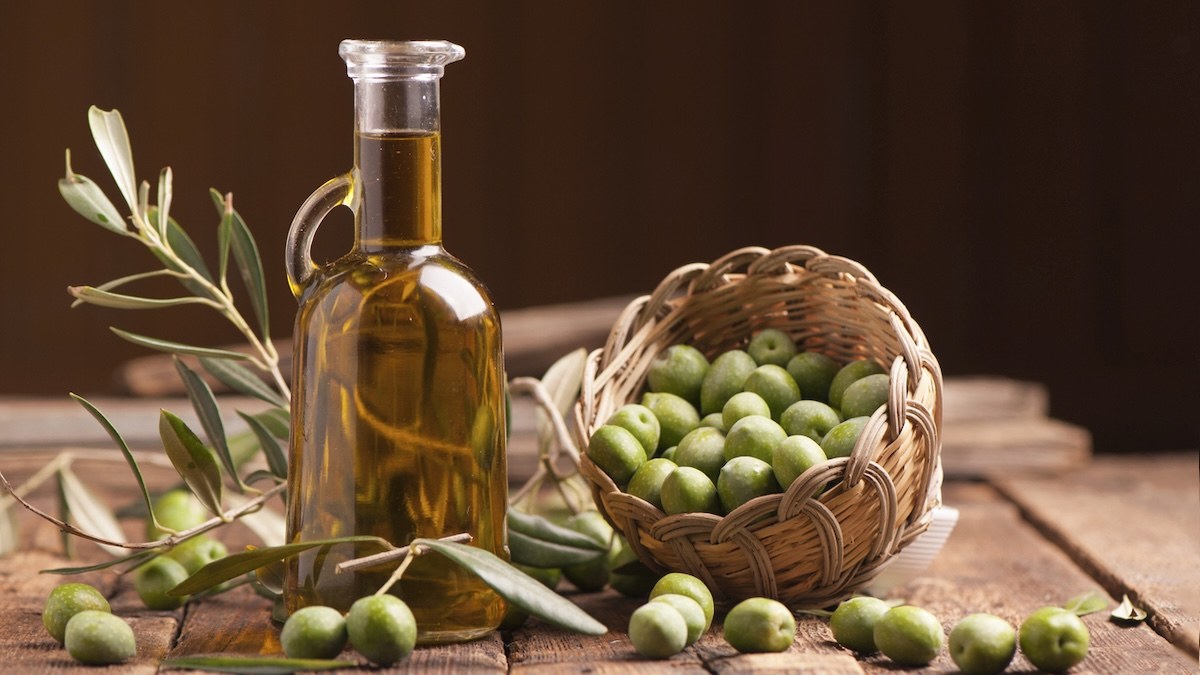
It sits proudly on your work surface, next to the stove, clearly visible and within easy reach. Practical, aesthetic and sometimes decorative, even with its beautiful glass bottle. Except that this location, as comfortable as it is for you to grab it, is the worst possible place to store your beloved olive oil. And this mistake that almost all French people make is quietly destroying at once its aromas, its nutritional benefits, and… your budget. Here is an explanation.
Pourquoi l’huile d’olive est-elle si fragile ?
Quality extra-virgin olive oil is a living substance. Cold-pressed from fresh olives, it concentrates powerful phenolic compounds that confer its anti-inflammatory and antioxidant properties so celebrated by Mediterranean studies. But these same molecules are extremely sensitive to three factors: light, heat, and oxygen.
As soon as it is exposed to one or more of these three factors repeatedly or for prolonged periods, olive oil oxidizes. This chemical process, also called rancidity, gradually degrades the unsaturated fatty acids that make it famous. And rancid oil is not only less pleasant at the table, it also means the guaranteed loss of its health benefits, or worse: it can produce compounds potentially pro-inflammatory. In other words, the exact opposite of what you expect from olive oil. So how can this problem be addressed? We’ll show you how to protect your oil.
Also read: Why more and more people eat eggs in the evening to sleep better
L’ennemi numéro 1 : la chaleur de la cuisine
Placing your bottle of olive oil next to the cooking fires is the most common and most troublesome mistake. The heat emitted by a gas stove or an induction hob (even when off) creates temperature fluctuations. And these greatly accelerate oxidation!
The golden rule is as follows: olive oil should ideally be stored between 14 and 18°C in a place that does not undergo repeated temperature changes. A cupboard away from heat sources, a pantry, or even a closed kitchen drawer are more than enough to protect your olive oil. Above all, no refrigerator! Too cold can cause temporary solidification of the oil and thus alter its texture (even though its properties are overall preserved from cold).
L’ennemi numéro 2 : la lumière (y compris celle du soleil)
Many of us choose pretty transparent bottles to decorate our kitchen while delighting our taste buds. Aesthetic mistake that will cost on the palate… Light, whether natural or artificial, is a very formidable accelerator of oxidation for oils rich in polyphenols.
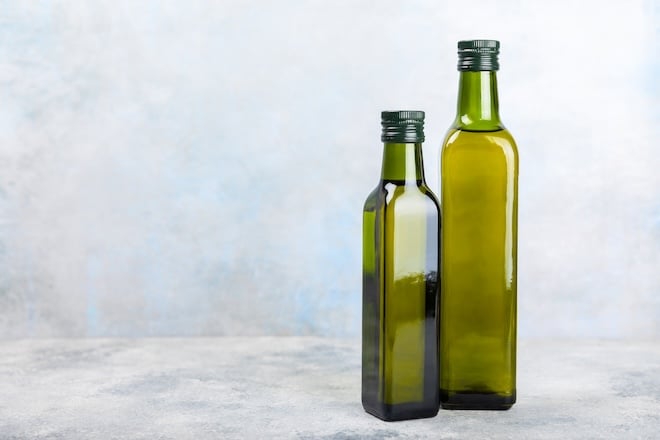
Besides, serious producers know it well: that is why they routinely package their best oils in dark tinted glass or opaque metal cans. So if your oil is sold in a transparent bottle, we strongly recommend transferring it to an opaque container as soon as you get home, or storing it away from any light source (a closed cupboard solves the problem at little cost). A sure way to protect your olive oil.
L’ennemi numéro 3 : l’oxygène et les bouteilles mal fermées
With every contact with air, your oil degrades a little more. A bottle left open between uses, a cap screwed on halfway, a pourer not closed… So many oversights that cost your favorite olive oil dearly because oxygen reacts with the fatty acids and generates peroxides, the primary culprits of rancid taste and the loss of antioxidants.
To address this problem, always seal your bottle hermetically after each use. And if you buy in bulk, opt for several small containers rather than one large to limit the volume of air in contact with the oil with successive openings.
Comment savoir si votre huile d’olive est déjà rance ?
Three simple clues allow you to detect rancid oil without laboratory analysis, rest assured. A rancid olive oil gives off a pencil, glue, or old rag odor. Scents far from the fruity, herbaceous, or slightly peppery notes of a fresh quality oil. On the palate, rancid oil can leave a greasy and flat sensation without the characteristic bitterness (the sign of its richness in polyphenols). Finally, if the color shifts from its bright yellow-green to a paler yellow or even brownish, that’s a bad sign.
Récapitulatif des bonnes pratiques de conservation pour l’huile d’olive
A good olive oil deserves to be treated with as much care as a good wine. The three simple conditions that make all the difference are therefore: protection from heat, light, and air. To apply them without overthinking, we store our bottle of olive oil in a closed cabinet in an opaque container preferably, and above all, well sealed. Thus, it will retain all its aromas and health benefits for 12 to 18 months after opening. There’s no point in buying a high-quality extra virgin olive oil if you store it poorly, except to make a hole in your wallet and waste a beautiful product.
