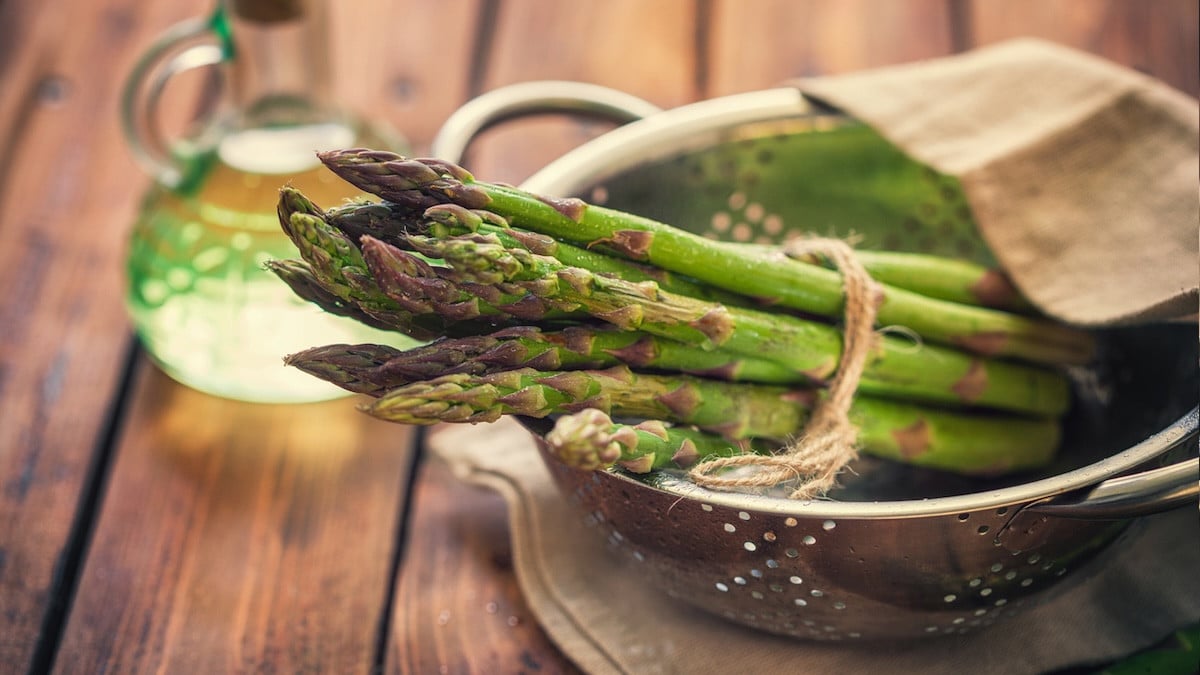
Every spring, it’s the same story. We treat ourselves and buy green or white asparagus at the market (sometimes at a king’s ransom…), but they end up on our limp, waterlogged plates, lacking flavor. The fault lies in poorly mastered cooking. Yet several top chefs all share the same secret: perfect cooking takes 4 minutes. Well, provided you follow several steps. We’ll reveal them to you so you never ruin your beautiful asparagus again!
Asparagus: why you almost always get the cooking wrong
If most recipes recommend boiling the asparagus for 10 to 20 minutes, it is actually far too long. At that duration, the vegetable fibers collapse, the natural sugars evaporate into the cooking water, and the antioxidants disappear. Result? Soft, flavorless asparagus that resemble nothing. A bit of a pity when you know the price per kilogram…
The problem stems from a confusion between cooking and tenderizing. The asparagus doesn’t need to be tenderized, it simply has to be cooked, meaning that you must preserve its structure while becoming digestible and flavorful. In fact, raw asparagus are just as delicious! If you haven’t tried them yet, we recommend giving that culinary experience a try.
The method of star chefs: 4 minutes in two steps
This technique, celebrated in many professional kitchens, from Paul Bocuse to Alain Passard, is really very simple to apply at home.
Step 1: Preparation, often rushed but essential
First, you must peel your asparagus starting from the lower third using a peeler without pressing too hard and cut off the woody part at the base (about 3 cm). This first step guarantees a very even cooking: the tip, being more tender, will not be overcooked, while the bottom, being firmer, will catch up.
Step 2: The boiling water must be as salty as the sea
Bring a large pot of water to a boil and salt it generously. Chefs often speak of water “barely less salty than the sea” (about 10 g of coarse salt per liter of water). This salt content is not there to season. It naturally preserves the color of your asparagus and speeds up the coagulation of surface proteins, which seals the flavors inside.
It’s like pasta: if the water isn’t salty enough, your pasta won’t be perfect!
Step 3: 4 minutes on the clock, not a minute more or less
Once your asparagus are peeled, plunge them into the well-salted boiling water. From this moment on, count exactly 4 minutes for medium-sized green asparagus and 5 minutes for the whites (their flesh is a bit denser). While cooking, prepare the next steps and fill a large bowl with cold water and ice cubes.
Step 4: the thermal shock, the essential move everyone forgets
As soon as the timer ends, immediately plunge the asparagus into ice water for 2 minutes. It is this brutal thermal shock that will stop the cooking exactly to the second and fix the chlorophyll, responsible for that bright green that will tempt you at the plate.
What this cooking method changes in practice
An asparagus cooked according to this method, recommended by starred chefs, offers a tenderness and a light bite that are very appreciated. The flavor is crisp, slightly sweet with a mild bitterness at the end. It is also the ideal cooking if you want to quickly sauté the asparagus in browned butter (60 seconds on high heat, top time), glaze them with honey, or serve them cold in vinaigrette. In short, the best way to enjoy asparagus after all!
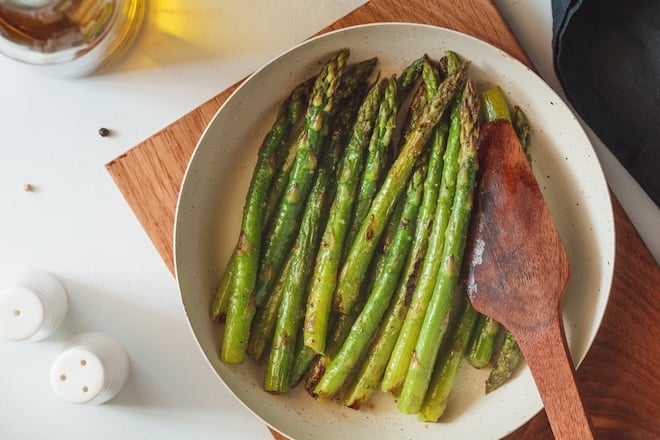
The chefs’ final tip on cooking asparagus
Several chefs, including Alain Passard, a figure in vegetable cuisine, keep the cooking water from asparagus to make a broth or a base for sauce. This water, loaded with flavors, is a seasoning in its own right. A way to waste nothing and to make the most of this precious vegetable.
The next time you buy asparagus, don’t forget everything we’ve just said and follow this four-minute cooking. It’s an infallible technique to transform an ordinary vegetable into an extraordinary culinary experience!
