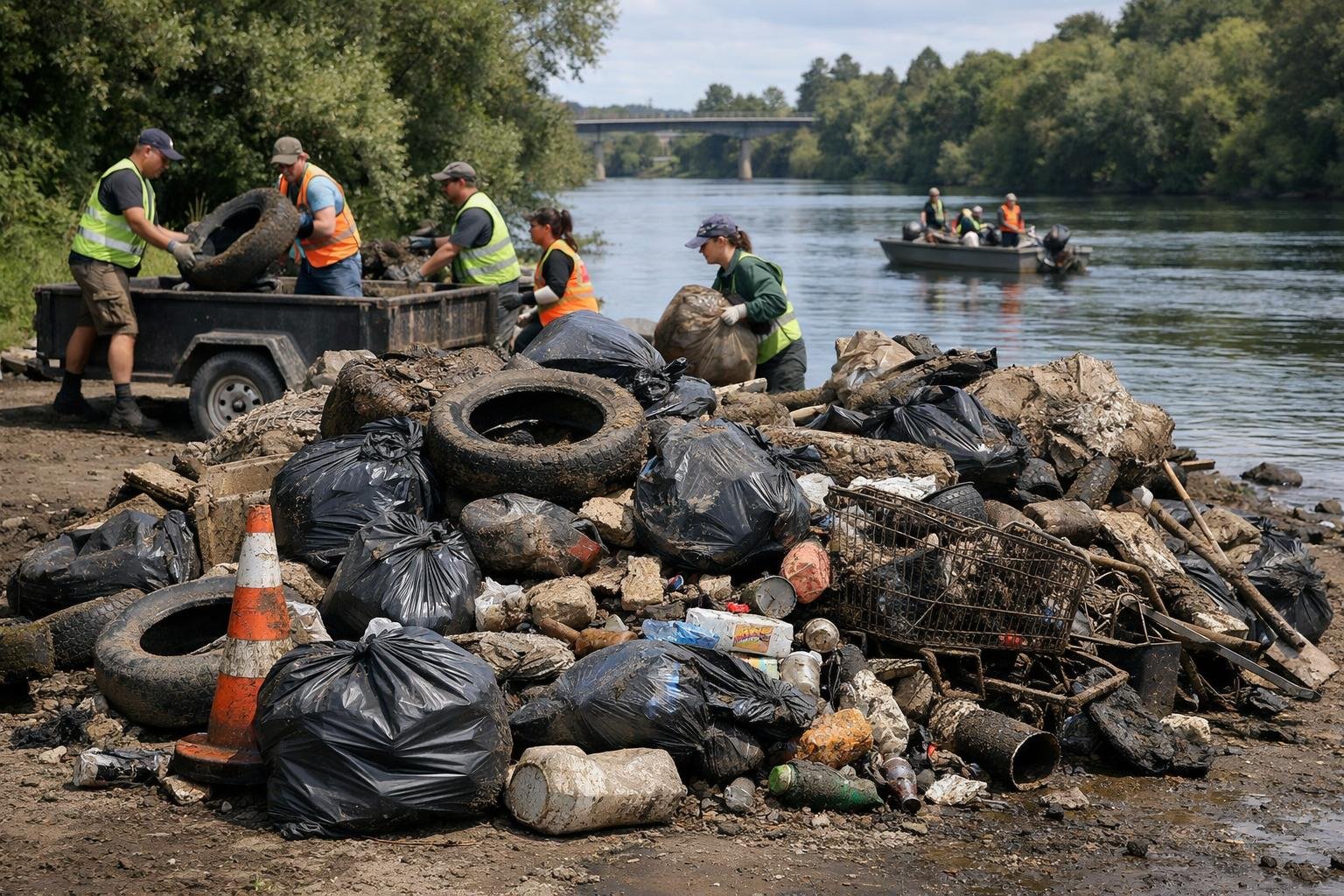
At first light, the river looked quiet, almost shy. Mist lifted, oars dipped, and dozens of gloved hands gripped the gunwales of small boats edging into the shallows. By noon, the quiet was gone, replaced by the clatter of wheel rims on trailers and the scrape of tangled wire across the concrete ramp. It wasn’t glamorous. It was effective.
Over one intense weekend, community crews set a new benchmark for waste removal along Aotearoa’s longest waterway. More than 450 volunteers—rangatahi, retirees, paddlers, farmers, office workers—hauled out an estimated 8.4 tonnes of debris from urban banks, rural bends, and back-eddies where trash likes to hide. The clean-up stretched across more than 15 kilometres, with teams on footpaths, in kayaks, and from small jet boats.
What they pulled from the water
Tires—159 of them. Shopping trolleys, eight. A sun-bleached e‑scooter. Nets, fishing line, and a lot of single-use plastic: bottles, food wrappers, vape pods. There were the oddities too: a cracked mailbox, a stack of floor tiles, and a 1960s beer can, its typography remarkably intact after decades in the mud.
“You can’t unsee it once you start,” said the event coordinator, Kiri Adams. “Pulling out one bag leads to two. Then someone spots a rim half-buried in silt and suddenly you’ve got six people on a rope, laughing and heaving. It’s hard work, but it feels like progress.”
A Waikato‑Tainui river representative called the turnout “a powerful reminder of kaitiakitanga in action,” adding, “When the awa is healthy, our people are healthy.”
Kayaker Les R., who’s paddled the same stretch for twenty years, shook his head at the pile of scrap. “We’ve had good years,” he said, “but this is the first time I’ve thought, okay, we might actually be getting ahead of it.”
By the numbers
Compared with last year’s community push, this operation raised the bar while refining what gets recycled or reused.
| Metric | This Year | Last Year |
|---|---|---|
| Volunteers | 457 | 312 |
| River length covered | 15.6 km | 10.2 km |
| Total waste removed | 8.4 t | 5.1 t |
| Metal recovered | 3.2 t | 1.9 t |
| Tires collected | 159 | 104 |
| Items recycled/reused | 61% | 45% |
| Volunteer hours | 2,180 | 1,360 |
Why it matters
The river supplies drinking water, irrigation, recreation, and spiritual connection for thousands. When stormwater tosses street litter into tributaries, it doesn’t just vanish; it breaks down into microplastics and works its way into sediments and fish. Native species—tuna (longfin eel), inanga (whitebait), and kākahi (freshwater mussels)—pay the price first.
“Plastic threads tangled in kākahi beds are a red flag,” Adams said. “They trap silt, smother habitat, and make spawning grounds less usable. Every kilo we keep out of the water is a win for the food web.”
The clean-up also surfaces patterns that policy can tackle upstream—literally. Heavier concentrations of drink containers were found near busy car parks and bridge approaches, while agricultural plastics clustered at certain rural access points. It’s data, not just debris.
How they did it
The operation leaned on a simple formula: small teams, short hauls, and smart sorting. Boats staged from multiple ramps to avoid bottlenecks. Marshals logged GPS pins for big items, prioritising high-flow areas before the day’s breeze turned. Onshore, coloured bins triaged everything—metal to scrap, bottles to recycling, organics to compost, and truly unsalvageable material to landfill.
One innovation stood out: quick “bank scans” with pole‑mounted cameras before wading. That reduced disturbance of nesting birds and cut wasted time searching blind pockets.
What locals can do next:
- Pack out what you pack in; if bins are full, take it home and report overflow to the council app.
The human ripple
Beyond the tonnage, participants talked about the mood. There was the shared grunt of hauling a cable spool, the cheer when a cart finally popped free of the clay, the quiet moments when someone paused to watch a shag arrow under the surface. It’s rare to feel the river push back—then give.
“I came for an hour,” said Nisha, a first-time volunteer who stayed the whole day. “I left with muddy shoes, sore arms, and a sense that my small bit counted. That’s… new.”
What’s next
The organisers aren’t coasting on the record. Plans are already underway for seasonal micro‑cleanups targeting sites the data flagged as chronic hotspots—stormwater outfalls, bridge shadows, and the slackwater behind pontoons. A trial of riverbank litter traps is in the works, along with expanded partnerships with scrap merchants to improve the recovery rate for metals and e‑waste.
Policy will matter too. Smarter street bin placement near bridge approaches, anti‑litter grates in key drains, and stronger incentives for container returns could shrink next year’s pile before it forms. Schools and marae have asked for teaching kits that link fieldwork to classroom science—turning a muddy Saturday into long-term stewardship.
If there was a theme to the weekend, it was this: the river doesn’t need heroes so much as habits. Many hands, short distances, and a resolve to keep showing up. By day’s end, the ramp was almost clear, the last trailer taillights fading. The water caught the sky again, and for a moment the current looked lighter.
