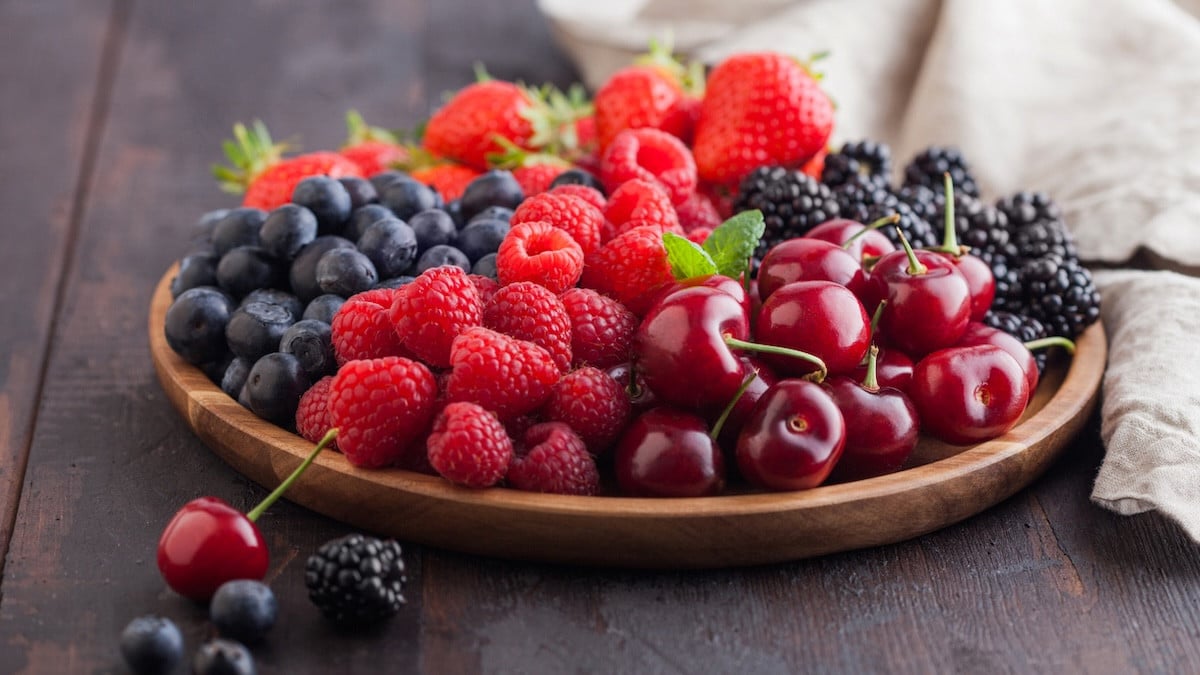
We often forget it in favor of other, more common red fruits, yet this little ruby is bursting with natural compounds that are increasingly drawing researchers’ attention for their action on fats in the blood and thus cholesterol. Here’s why pomegranate deserves a real place in your morning routine!
Cholesterol: What Are We Really Talking About?
Cholesterol isn’t your enemy in itself; your body needs it to function. But you must know how to distinguish between its two major forms: LDL, sometimes nicknamed “bad cholesterol,” and HDL, the “good” one. When LDL is too high, it can oxidize and gradually deposit on the walls of your arteries, forming plaques that reduce their flexibility and diameter. This phenomenon called atherosclerosis increases the risk of heart attack or stroke.
Adopting a more plant-based diet is one of the first levers recommended by health professionals before considering pharmacological treatment. That’s where certain fruits come into play, starting with pomegranate.
Pomegranate, a Powerful Ally Concentrated in Protective Molecules
Behind its thick rind and burgundy color, the pomegranate hides arils (the juicy little seeds) particularly rich in polyphenols. Among them, punicalagins and anthocyanins are the stars: they are powerful antioxidants found in very high amounts in pomegranate, compared with most other red fruits that also contain them but to a lesser extent.
Their role? To block the oxidation of LDL particles because it is when LDL oxidizes that it becomes dangerous. To try to explain a little more clearly: white blood cells eat this oxidized LDL and then transform into foam cells, i.e., cells “swollen” with fat droplets. They eventually accumulate in the arteries and thus clog them. But by neutralizing this process, the polyphenols of the pomegranate help prevent the accumulation in certain body cells called macrophages, which gradually form these plaques clogging the arteries.
This is a bit technical, we admit, but what matters to remember is that the pomegranate is filled with protective molecules that help prevent “bad cholesterol.”
What the Studies Say: Modest but Real Effects
Science is cautious and that’s rather reassuring. Early clinical studies suggest that pomegranate could modestly improve cholesterol in some patients, notably thanks to its polyphenolic components. A meta-analysis published in the Journal of Nutrition in 2024 highlighted that regular consumption of pomegranate juice could help reduce blood pressure and improve the lipid profile, two effects mainly attributed to the action of polyphenols on vascular function and inflammation.
Other scientific studies have revealed that consuming pomegranate can reduce LDL cholesterol and increase HDL cholesterol, thus restoring a better balance between the two, fighting cardiovascular diseases and helping prevent LDL cholesterol oxidation thanks to its antioxidant content.
Attention, we still remain cautious: we are talking here about measurable variations in a sample of the population, this is clearly not a miracle treatment. Pomegranate is a valuable supplement to a healthy lifestyle, not a substitute for medical supervision.
How to Easily Integrate It into Our Breakfast?
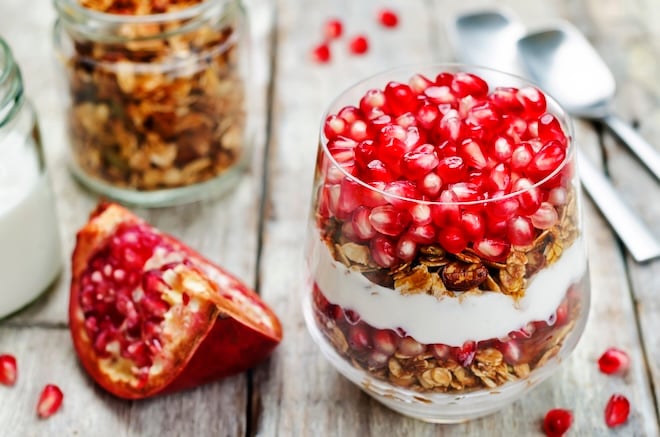
No need to upend all your habits or revolutionize your morning routine either! A small handful of arils is enough to provide a concrete dose of antioxidants first thing in the morning. Here are a few simple and tasty ideas:
- In plain yogurt, with chia seeds and a drizzle of honey
- On a porridge with whole oats flour : the combination of the two fibers (oats and pomegranate) is particularly interesting for digestion and blood sugar
- On a slice of whole grain bread with cream cheese or cottage cheese for a heartier version
- As a topping on buckwold flakes to vary the pleasures
Another very important tip: always prefer the whole fruit to juice. Juicing concentrates sugars and almost eliminates all the fibers, which are actually a big part of the benefit.
Pomegranate Doesn’t Do Everything, But It Is Part of the Solution
No single food can by itself balance an imbalanced lipid profile. What matters is the consistency of your plate over time: more vegetables, whole grains, and legumes, and less saturated fats. All of this, accompanied by a minimum amount of regular physical activity. In this logic, integrating pomegranate into the breakfast (instead of a pastry, for example) clearly goes in the right direction. It is a simple, quick, tasty move, supported by scientific research.
If your cholestérol is high or if you are following cardiovascular treatment, always talk to your doctor before betting on a particular food. They are the best person to help you tailor your dietary habits to your personal situation.
