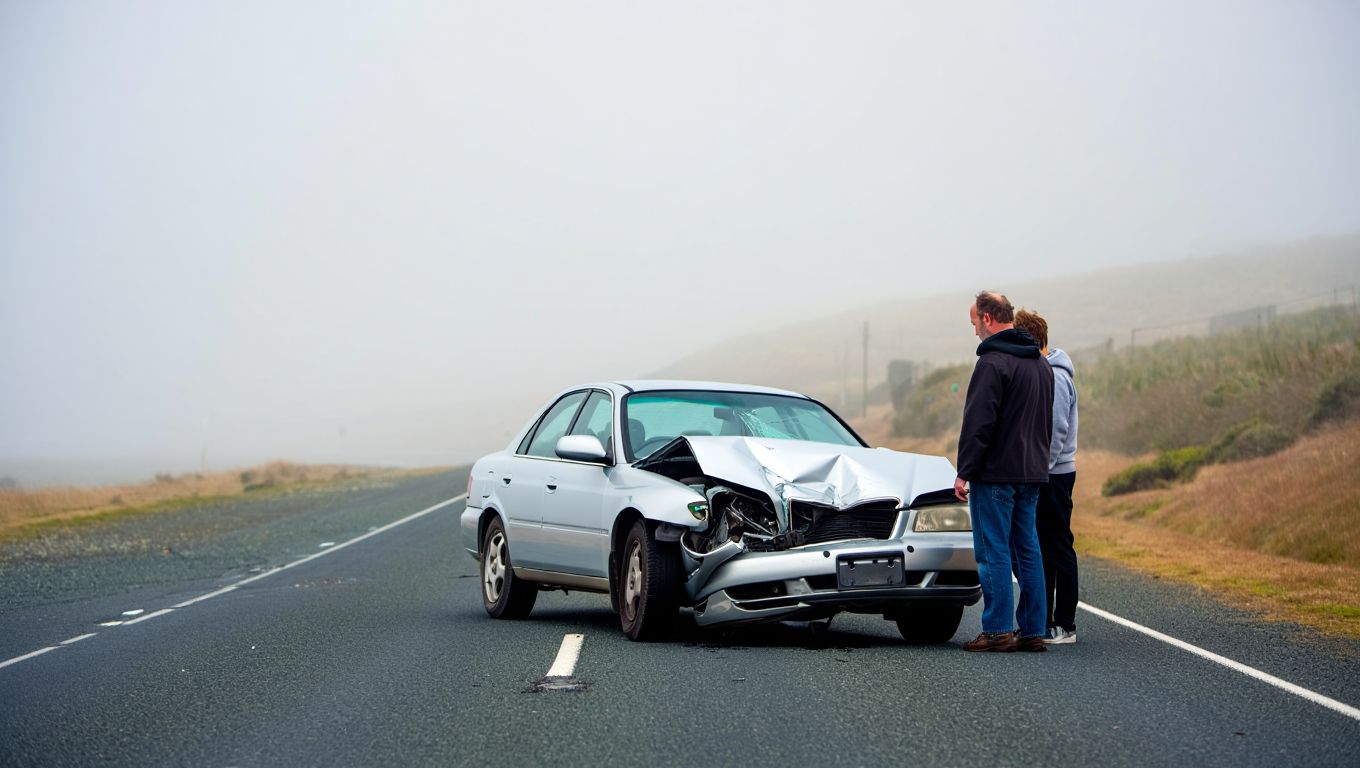
Headlights carved shallow tunnels through the grey as commuters crept along the central North Island corridor at dawn. Near the mid-point between Hawke’s Bay and the lake country, a multi-vehicle collision left three people injured and a stretch of highway hushed under emergency lights and low cloud.
Witnesses described visibility collapsing to a handful of car lengths, a blanket of fog that swallowed road markings and softened the edge of every bend. The crash unfolded in that half-light, when the road is awake but the day is not.
A scene wrapped in cloud
By the time first responders arrived, the air was thick enough to bead on jackets and windshields. Tyre tracks glistened. Hazard triangles blinked into the haze like distant buoys.
A police spokesperson said the conditions were “as close to whiteout as you get without snow,” adding that drivers had been “doing the right thing by slowing down, but the fog moved in faster than expected.”
What authorities say
Police, fire crews, and Hato Hone St John converged on the site within minutes of the first call. All three injured people were assessed at the roadside; at least one was transported to hospital for further treatment.
“The priority was stabilisation and traffic safety in very challenging visibility,” said a St John team lead. “Fog doesn’t just hide hazards—it delays how quickly you can see help arriving.”
The roadway was partially closed for a time while investigators documented skid patterns and vehicle positions. Contractors spread absorbent material and cleared debris before traffic resumed under temporary controls.
Why this morning turned risky
The route over the ranges is known for changeable microclimates. When warm, moist air cools quickly before sunrise, radiation fog can build from the ground up, erasing depth perception and contrast. Add a gentle breeze and the fog can drift across the carriageway in waves—clear one moment, opaque the next.
“Drivers can be lulled into false security in the clear patches,” noted a road safety advocate. “You round a corner at a safe speed for five minutes ago, not for right now.”
Conditions at a glance
Below is a simple comparison of travel conditions reported by motorists this morning versus a typical clear morning on the same corridor.
| Factor | Foggy Dawn (today) | Typical Clear Morning |
|---|---|---|
| Visibility | 20–60 m, variable | 1–2 km or more |
| Average speed | 50–70 km/h in fog banks | 90–100 km/h (where posted) |
| Braking distance feel | Extended and uncertain | Predictable |
| Overtaking | Strongly discouraged | Permitted where legal |
| Driver workload | High (constant scanning) | Moderate |
| Crash risk | Elevated | Baseline seasonal risk |
Detours, delays, and patience
Traffic was managed under stop/go paddles for a period while crews worked. Freight schedules slipped, school runs stretched, and locals rolled their windows down to listen for the road ahead. There were no long detours reported, but motorists were advised to expect slower progress and to build in extra time.
“We appreciate the public’s patience,” police said. “In dense fog, even a simple lane change becomes a coordinated operation.”
One checklist for low-visibility driving
- Use low-beam headlights or fog lights only; high beams reflect off droplets and make glare worse. Increase following distance to at least four seconds, more on wet surfaces. Keep speed matched to sight distance—if you can’t stop within what you can see, you’re going too fast. Avoid overtaking; if you must, do it only where legally permitted and when visibility is clear well ahead. Watch the left edge line as a guide; don’t fixate on the centreline or the taillights ahead. Signal earlier and brake more gently to alert drivers behind. If conditions feel unsafe, pull well off the roadway with hazards on, ideally at a designated bay.
Voices from the roadside
“You could see the fog pouring through the trees like smoke,” said a local who lives a few bends from the scene. “It went from fine to not fine in about two minutes.”
Another driver, shaken but unhurt, added: “The car ahead just vanished. Not turned—vanished. I backed right off after that.”
The weather window ahead
MetService guidance suggests patchy low cloud lingering in sheltered valleys after sunrise, thinning late morning as temperatures rise. Where the sun breaks through, fog should lift rapidly; where the wind stays light and the air cool, pockets may persist longer than commuters expect.
That uneven burn-off is the trap. A clear kilometre can be followed by a sudden wall of grey.
What happens next
Crash investigators will map the scene, examine vehicle damage, and cross-check witness statements against onboard data to understand the sequence of events. Their findings may feed into seasonal advisories or temporary speed management on fog-prone sections of State Highway 5.
In the meantime, authorities repeat a familiar winter mantra: slow down, lights on, eyes up. On mornings like this, caution is not just courteous—it’s protective. As the fog thins and traffic returns to its usual rhythm, the lesson remains etched in damp tarmac: when sight is shortened, judgment must grow.
