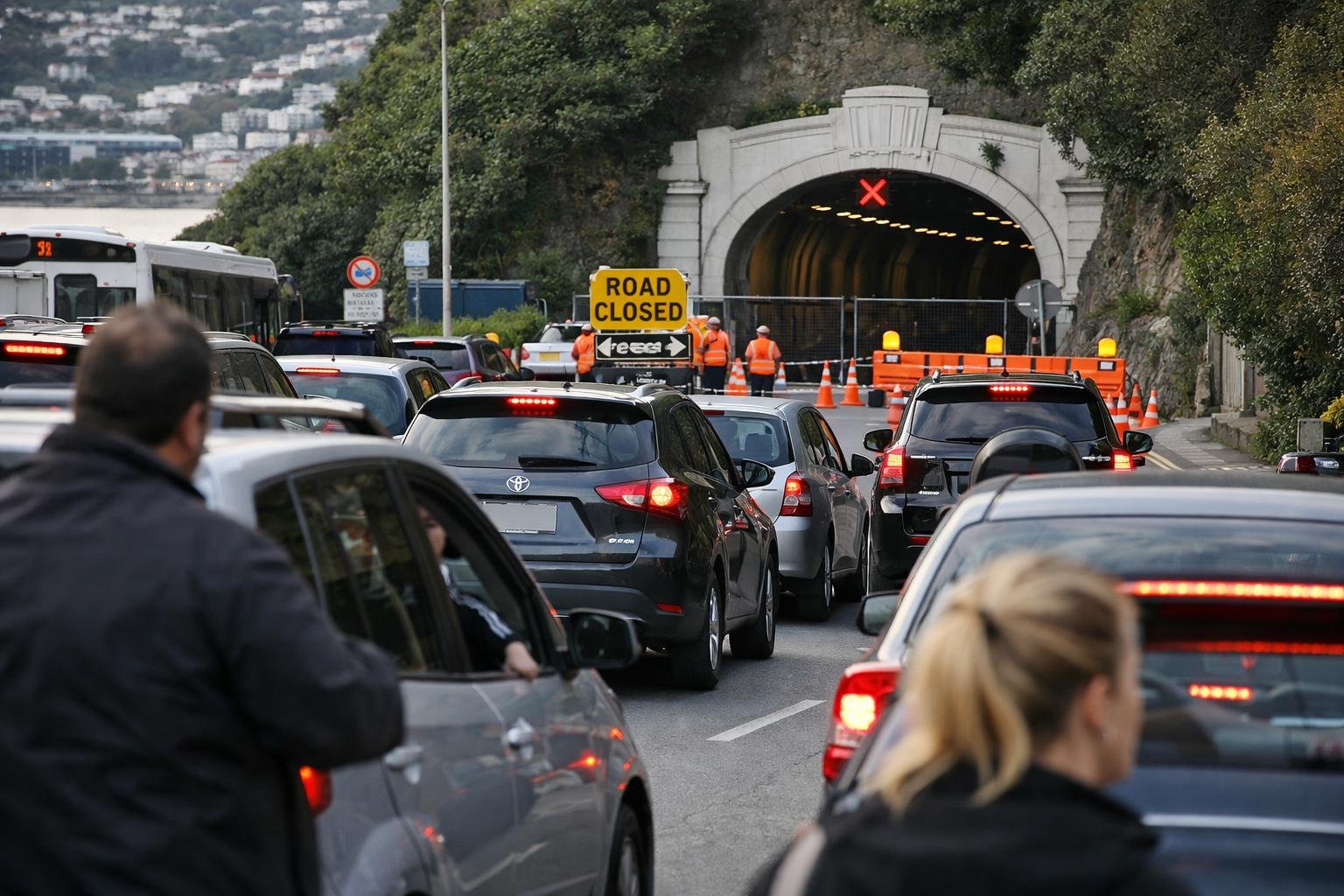
The city woke to a crawl. Headlights in a slow-motion parade, horns clipped back by resignation, and a chorus of sighs rolling through Wellington’s damp morning air. “I set out early, and I was still late,” said one commuter, clutching a takeaway coffee gone cold. With the Mount Victoria tunnel shut for works, the capital’s east–west heartbeat skipped, then stuttered.
A bottleneck with a long shadow
The tunnel is small on a map and massive in practice. It funnels Kilbirnie, Miramar, and Hataitai into the city’s core, guiding school runs, hospital shifts, office starts, and supermarket deliveries. When it closes—even temporarily—pressure reroutes. And that pressure doesn’t just spread; it concentrates.
Transport officials described the current shutdown as “essential safety and maintenance work”—a blend of fixes that, in plain terms, aims to make the route safer, brighter, and more reliable. It’s necessary. It’s also disruptive. Both can be true at once.
Detours that test patience
The detour around Evans Bay and Oriental Parade is lovely when you’re on a weekend amble. It’s less charming when you’re watching the clock. Another option via Newtown and the Basin serves in a pinch but quickly becomes a carpark once school bells ring. Buses are moving, but more slowly, and cyclists report packed lanes along the waterfront when the wind allows.
Here’s how the morning rush is stacking up, based on commuter reports and live traffic estimates:
| Route/Mode | Typical time (normal) | Typical time (closure) | Notes |
|---|---|---|---|
| Car via tunnel (SH1) | 6–10 min | Not in service | Closed for works |
| Car via Evans Bay/Oriental Parade | 12–15 min | 30–50+ min | Scenic, but chokepoints at roundabouts |
| Car via Newtown/Basin Reserve | 15–20 min | 35–60 min | Heaviest between 7:30–9:00 a.m. |
| Bus (rerouted services) | 10–15 min | 20–35 min | Priority at some intersections helps |
| Bike via waterfront | 15–25 min | 18–30 min | Wind and lane crowding can vary |
| Walking (eastern suburbs–CBD) | 45–70 min | 45–70 min | Predictable, if you’ve got the time |
“It took me almost an hour from Kilbirnie to the Terrace,” said a rideshare driver, tapping a dashboard clock like it owed him money. “Every extra minute is a dollar I don’t earn.” That calculation echoes across trades, childcare pickups, and meeting rooms where agendas go sideways.
The human math behind a traffic jam
Gridlock doesn’t just stall engines; it reshuffles lives. A Hataitai barista noticed her regulars arriving in clusters, late and frazzled, or not at all. “The early morning rush just… vanished,” she said. Parents adjusting school runs talk about leaving before dawn or switching to bikes and scooters when the weather cooperates. One office manager in the CBD admitted half her team logged in from home: “We got more done by 9:30 than we usually do by noon.”
Cyclists, meanwhile, are having a moment. More high-vis vests, more bells, more mutual nods at lights. Not all rosy—gusts across the bay still shove riders sideways—but the math is persuasive: thirty predictable minutes beats fifty elastic ones.
What officials are promising—and asking
City and transport agencies say crews are working extended hours to compress the schedule and are coordinating signals to keep traffic moving where it snarls most. Digital boards blink reminders before choke points; detour arrows multiply at dawn. “We know this is tough,” an official statement read. “Please plan extra time and follow posted guidance while essential upgrades are completed.”
There’s the ask: give more time. There’s also the offer: better lighting, smoother ventilation, stronger resilience when the ground shakes and the city needs corridors that can cope. Wellington knows why this matters. Storms, slips, quakes—the capital has been taught, and often.
Small strategies that help
No single fix cancels a closure, but a handful of micro-choices add up.
- Leave 20–30 minutes earlier than usual, consider bus or bike for the last leg, coordinate flexible hours with your employer, and check live updates from Metlink and Waka Kotahi before you set off.
“Honestly, starting half an hour earlier felt brutal,” said a public servant outside the Railway Station, “but I got my morning back on the other side.”
Silver linings, if you squint
The bays shimmer. Pedestrians reclaim the footpath in little surges. A city famous for resilience revisits its old trick: adapt, even if grudgingly. Offices rediscover hybrid rhythms. Teams stagger meetings. The school run becomes a walk-and-talk. It’s not romantic; it’s just workable.
And there’s a civic upside to a painful week: visibility. When the normal chain breaks, we see the links—where buses get stuck, where crossings bottleneck, where a protected bike stretch would take pressure off the road. Short-term nuisance can birth long-term fixes.
The next few days
Officials are signaling that the works will wrap later this month, weather and progress permitting. Some night closures may linger even after daytime traffic returns to something like normal. Expect updates to roll out in batches, with text alerts and social feeds doing the heavy lifting.
Until then, the capital breathes in shorter bursts. People inch forward, wave another car in, try a different turn tomorrow. “We’ll cope,” said a teacher hauling a tote up Lambton Quay. Then a half-smile: “We always do—just, preferably, with less queue.” In the meantime, pack extra patience next to the keep cup. The road will open, and the city will exhale.
