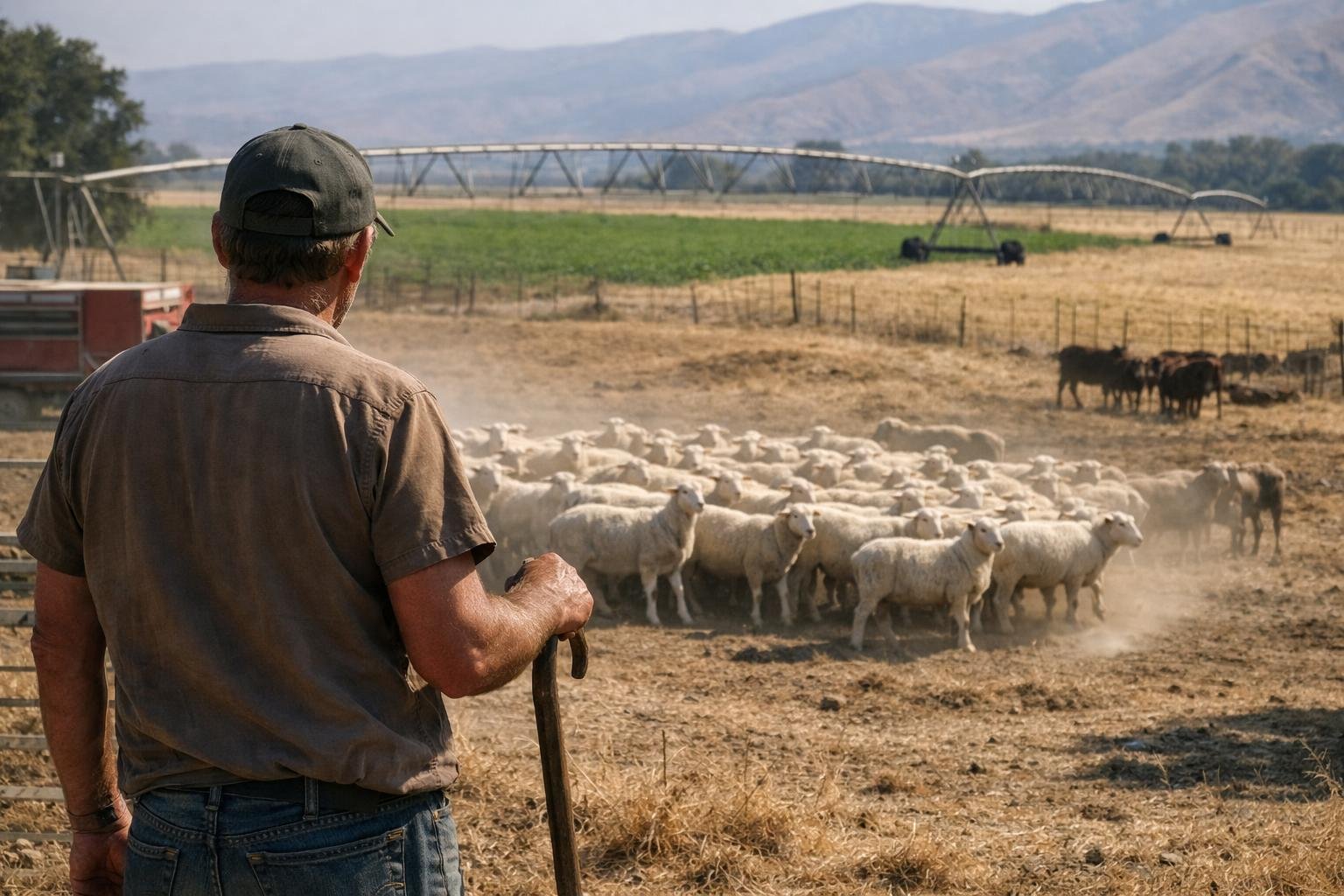
The nor’wester has been relentless across Canterbury, and the soil is telling the story. Paddocks that should still be humming with spring energy are browning off, and water meters are under constant watch.
Across the plains and foothills, farmers are quietly making the kind of hard calls that keep businesses alive: selling stock, drying off early, and trimming feed budgets. The aim is simple—protect the base, keep the pastures intact, and get to winter in one piece.
A drying landscape, faster than expected
This season’s heat arrived early and stayed. Windy spells have stripped moisture from the topsoil, and recent showers barely dented deficits on lighter country.
“Two weeks of hot wind did what a month of normal summer couldn’t,” said a Mid-Canterbury sheep and beef farmer. “We went from cautious to cutting numbers in a hurry.”
Forecasters had flagged a volatile pattern. On the ground, the translation is stark: pasture growth is lagging, crop irrigation has shifted from tactical to survival mode, and extra feed is expensive or simply scarce.
Irrigation squeezed by limits and logistics
Irrigation schemes and individual consent holders are working inside tighter allocation bands as river flows brush up against restriction triggers. That means shorter watering windows, more rostered turns, and systems pushed to their limits overnight to catch cooler evap conditions.
“We’re balancing a finite resource,” said a manager with a large Canterbury scheme. “Allocations are throttled back and compliance is tight. We need to keep the river healthy while giving farms enough to protect perennials.”
The squeeze isn’t just on water. Lower flows mean higher pumping hours and more energy cost per millimetre applied. For some, the maths doesn’t stack on late paddocks or marginal crops. The result: selective watering of high-return hectares and culling of underperforming stock to free up feed and labour.
Tough calls on stock and feed
Destocking is the lever many are pulling first. Older ewes and cull cows are moving, and store lambs are being traded earlier to cut daily demand. On dairy units, drying off the tail is happening weeks ahead of plan to shield pasture residuals and keep condition on the core herd.
“We sold 120 stores in a week,” one arable-livestock operator said. “It hurts the ledger now, but it saves the pasture engine. You don’t want to scalp paddocks you’ll need in July.”
Supplement strategies are also changing. Bales are being rationed with tight eyes on utilisation. Silage is stretched with straw. Some are locking in grain for autumn to hedge the risk of a late break.
By the numbers
Indicative snapshot from scheme advisories, sale reports, and farmer interviews across Canterbury. Ranges reflect farm-to-farm variation.
| Metric | Last season | This season to date |
|---|---|---|
| Topsoil moisture (top 100 mm) | 26–30% | 15–20% |
| Days under irrigation restriction | 8–12 | 20–35 |
| Pasture growth (kg DM/ha/day) | 45–55 | 25–35 |
| On-farm stock reduction | 3–5% | 8–15% |
| Pumping cost (NZ$/ha/week) | 35–45 | 55–70 |
Note: Figures are indicative and for context only; on-farm results vary with soil type, system, and scheme rules.
Ripple effects beyond the farm gate
Sale yards have been busier, with more lines of store stock moving sooner. Meat works bookings have tightened at times, then cleared, in a pattern familiar to anyone who has farmed through a dry swing. Transport and contracting outfits are juggling shifting demand—less baleage made on the margins, more groundwork to salvage moisture where possible.
Rural support networks are active too. Advisors talk about protecting “the engine”: pastures, breeding stock, and soil structure. Badly grazed paddocks now mean bigger bills later. “You can buy back animals,” a rural consultant noted. “You can’t easily buy back ground cover.”
What farmers are doing now
- Prioritising water to highest-return paddocks and perennials, pausing marginal hectares; lifting residuals to protect regrowth; offloading non-core animals early; front-footing processor and yard bookings; locking in supplement and freight while available; checking cashflow and revising budgets monthly; keeping a paper trail for environmental compliance during restrictions.
The policy and planning backdrop
Restrictions are not just meteorological—they’re regulatory. Consent conditions, audited self-management, and minimum flow rules all shape what gets watered and when. Most farmers accept the trade-offs as part of farming with limits, but the debate over storage is getting louder again: off-river ponds, scheme upgrades, and on-farm resilience builds.
At the same time, market signals complicate decisions. Beef schedules look steady but selective; lamb has pockets of strength; dairy payouts are watchful. That mix sets the tone for how far and how fast herds and flocks are pared.
Looking ahead
A single front can buy time, but it won’t reset a season alone. Watch for:
- Short, cool weather windows to push irrigation efficiently and stitch in cover.
- Autumn feed wedges—whether they grow or need to be bought.
- Processor capacity as more culls hit the chain.
- Winter grazing plans that protect soil while meeting animal needs.
“We’ve trimmed to our core,” said a North Canterbury grazier. “If we get a decent rain, great—we’ll rebuild. If not, we’ve kept options open.”
Across the region, that’s the tone: pragmatic, unsentimental, and focused on what can be controlled. When the wind won’t quit and water is scarce, resilience is a series of small, disciplined choices—made early, and made again tomorrow.
