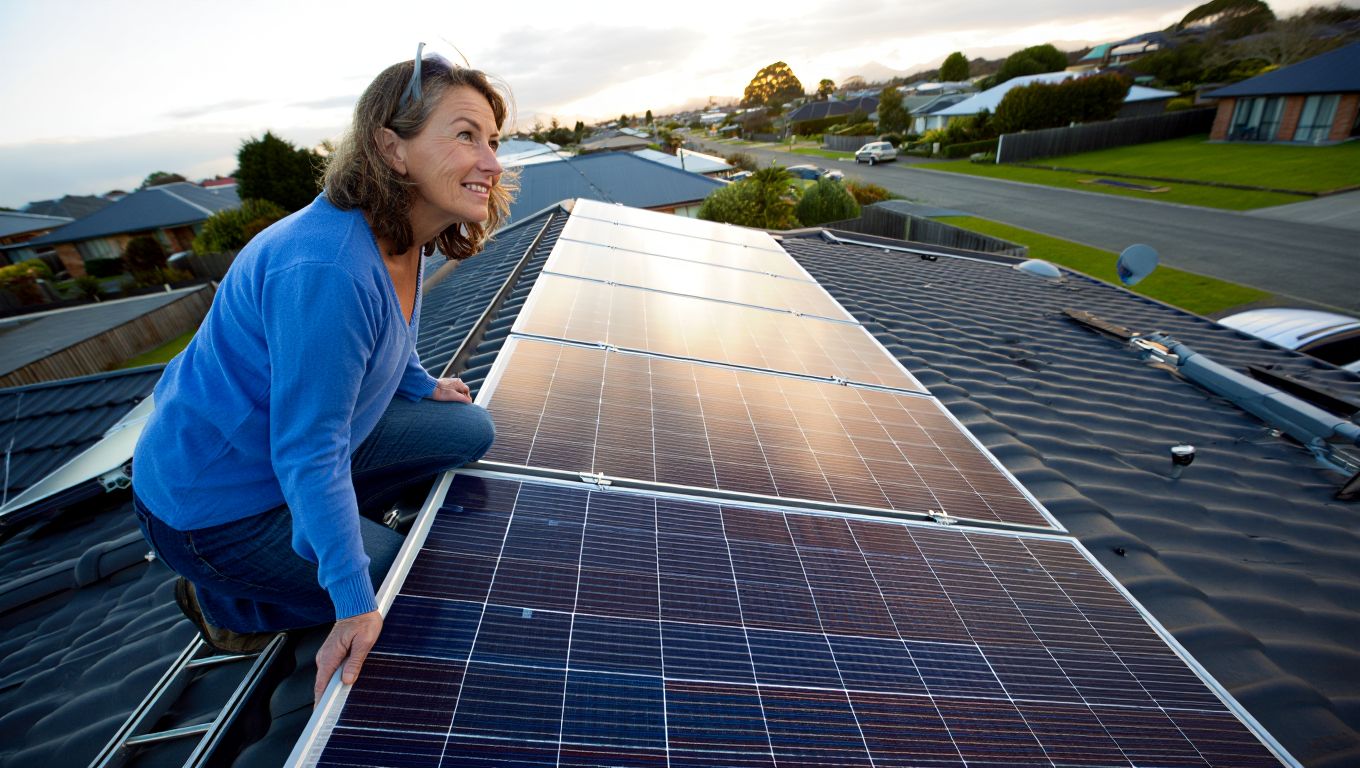
The economics of home solar in New Zealand just got a tailwind. With retailers widening time-of-use spreads and sweetening export credits, typical households can now look at a payback period that slips below five years—something that used to be the preserve of only the sunniest roofs or the most frugal homes.
“We’ve never seen paybacks this short in New Zealand.” That sentiment is echoing across installer quotes and homeowner forums alike. The tipping point isn’t only falling hardware prices; it’s the way new energy rates reward daytime production and smarter consumption.
Why the math flipped
Three forces moved almost at once, and their combined effect is larger than any one of them on its own:
- Rising retail power prices, especially in peak bands, boosted the value of every kilowatt-hour you don’t buy.
- Retailers introduced more aggressive time-of-use (TOU) structures and increased export credits, lifting the payout for surplus power sent to the grid.
- Equipment costs—from panels to inverters—kept nudging down, while installers standardized on faster, lower-friction workflows.
“As soon as households see the numbers penciling out in under five years,” one veteran installer notes, “the conversation shifts from ‘if’ to ‘how soon’.”
The new economics in numbers
A typical 5 kW system, installed on an unshaded, north-facing roof, will push out roughly 6,000–7,000 kWh per year depending on latitude. With today’s tariffs, even conservative self-consumption assumptions can unlock annual savings that previously took a battery to achieve.
Here’s a snapshot using standard assumptions for a 5 kW array, a mainstream inverter, no battery, and an 8–10 year warranty horizon for major components:
| Region | Typical 5 kW installed cost (NZ$) | Annual output (kWh) | Payback before new rates | Payback with new rates |
|---|---|---|---|---|
| Auckland | 12,000 | 6,800 | 7.5–8.0 years | 4.2–4.5 years |
| Wellington | 12,000 | 6,400 | 8.0–8.5 years | 4.5–4.8 years |
| Christchurch | 12,000 | 6,700 | 7.5–8.2 years | 4.3–4.6 years |
| Dunedin | 12,000 | 6,000 | 8.5–9.0 years | 4.7–4.9 years |
What’s doing the heavy lifting? Two things. First, the value of on-site usage during high-rate periods. Second, export credits that no longer feel like an afterthought. Households shaping demand—say, by running hot-water diverters or scheduling dishwashers at midday—are seeing returns that edge even lower. “If it pays back in under five years, I’m in,” is how one homeowner summed it up.
Who gains the most right now
- Work-from-home families with steady weekday loads. More daytime usage means less exporting and more peak-rate avoidance.
- Homes with electric water heating that can be time-shifted. A diverter acts like a low-cost thermal battery.
- EV owners who can plug in between late morning and late afternoon. Even a few weekly daytime top-ups can tilt the math.
- Properties with clean, unshaded, north or northwest roof planes. Orientation and shading still matter—no tariff can fix a bad site.
Add a small battery and the picture shifts again: while the upfront cost rises, TOU spreads let you harvest extra value by soaking up midday generation and discharging into evening peaks. Batteries aren’t required to crack five years, but they can stabilize bills and add resilience.
Regional nuance matters
Sun hours are a piece of the puzzle, yet not the only one. Auckland benefits from slightly higher irradiation and dense retail competition. Wellington and Christchurch ride better winter sun angles than many expect, and the latest export offerings help smooth seasonal dips. Dunedin proves the broader point: even where annual generation is lower, the economics can still come in under five years when consumption is well matched to production.
“We used to warn people that paybacks lived on the seven-to-ten-year horizon,” says an industry observer. “Now, in many suburbs, it’s closer to four-and-a-bit.”
A quick reality check
There are still caveats. If your roof is heavily shaded, structurally complex, or pointing the wrong way, modeled output drops and the payback stretches. If your household is empty during weekdays and can’t shift loads, you’ll export more and capture less value than your neighbor who can run appliances at noon.
Rates themselves can change. Today’s export credits and TOU spreads are compelling; they could tighten in future. On the flip side, panel prices can soften further, and batteries are trending down in cost per kWh, which could offset any tariff risk.
How to lock in a sub-five-year outcome
Start with firm numbers, not back-of-the-envelope hopes. A good quote will model your interval data (or at least a credible load profile), propose realistic self-consumption, and show sensitivity to different export credits. Ask for a roof layout that minimizes shading, an inverter sized for your goals, and options for hot-water diverters or EV charging schedules.
Three lines you might hear—and should welcome:
“We’re now quoting sub-five-year returns in most urban areas.”
“Midday load shifting is where the magic is.”
“Your export rate plus your self-consumption rate beats any one metric alone.”
In this new landscape, the smartest kilowatt-hour is the one you never buy, the second smartest is the one you export at a fair price, and the rest is simply momentum: a cleaner grid, steadier bills, and a technology whose time, at last, has arrived.
