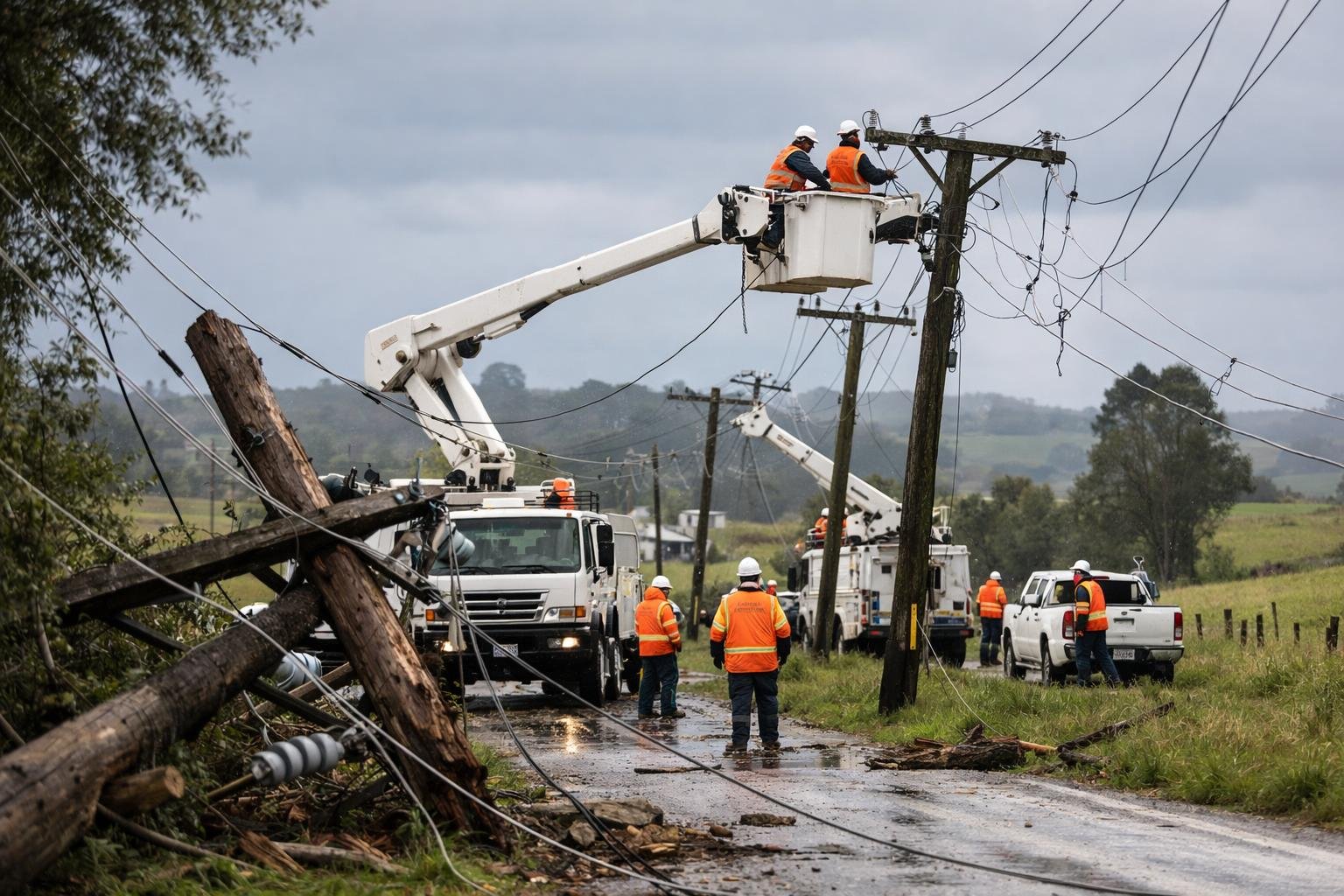
Sheets of rain, sudden gusts, and a crack of branches—then darkness. Through the early hours, a fast-moving system tore across Northland, toppling trees and slamming debris into overhead lines. By daybreak, several communities were still without electricity, and repair crews were fanning out across back roads and farm tracks to assess the mess. Timelines remain fluid; the priority is making lines safe before anything else.
What happened overnight
Meteorologists flagged a narrow but intense band of weather, with violent squalls punching above forecast strength. Wind gusts peeled limbs off mature pines, and saturated ground let shallow-rooted trees tip into spans of wire. Flash flooding compounded access problems for teams trying to reach faults.
“We had multiple feeders trip at once,” said a spokesperson for the regional lines company. “The initial blackout map lit up end-to-end, which tells you it was a network-wide event, not a single piece of equipment failing.”
Where the damage is worst
Crews say rural spurs took the biggest hit, but pockets of urban outage remain where branches damaged crossarms or insulators. Early counts indicate thousands affected at the morning peak, with numbers gradually falling as switching and repairs progress.
Comparative snapshot (preliminary, subject to change):
| Area/Zone | Approx. customers off | Main cause | Estimated restoration window |
|---|---|---|---|
| Whangārei | 2,000–3,000 | Tree strike on feeders | Staggered, today into evening |
| Far North (west) | 1,500–2,200 | Broken poles, road access issues | Multi-day for remote spurs |
| Kaipara | 800–1,200 | Flooded access, blown fuses | Today/tomorrow, weather-permitting |
| East coast | 1,000–1,600 | Salt spray, line contamination | Today after insulator washing |
“Think of it as a puzzle with certain pieces missing,” said emergency management staff. “You can light up whole neighborhoods by restoring a single lifeline corridor, but a snapped pole down a gravel track might take half a day for just a handful of homes.”
How crews are approaching repairs
The response follows a clear hierarchy: de-energize hazards, restore substations and feeders, then step down to laterals and end-of-line customers. Helicopter reconnaissance helped spot blown tops and conductor downed into scrub. On the ground, arborists moved in ahead of line mechanics where trunks were tensioning wires and creating a live hazard.
“We’re throwing everything we’ve got at the backbone circuits,” a field supervisor said. “Once those are solid, the smaller jobs fall faster. But the landscape still decides the pace.”
Supply is being reshuffled through network switching where safe, a crucial step that shaves hours off the wait for some suburbs. Portable generator sets were dispatched to a few critical community sites pending full restoration.
Impact on daily life
Traffic lights blinked out at several intersections, prompting manual control during rush hour. A handful of schools advised families to keep children at home. Dairy sheds and cool stores fired up contingency equipment to keep product chilled. Pharmacies reported surges in torch and battery sales. At least one rest home switched to backup supply without incident.
“I woke to the wind sounding like a freight train,” said Erin H., a resident on the east coast. “By the time it eased, the only light was my phone. The quiet was eerie—no fridges, no pumps, just the sea.”
Hospitals and emergency communications remained operational on protected circuits and standby systems, officials said.
Safety checklist for residents
- Treat every downed or low-hanging line as live; keep well clear and report it immediately.
Weather and the next 24–48 hours
Forecasters expect showers to linger with a stray squall possible this afternoon, then a tapering trend overnight. Ground conditions remain saturated. That means more slip risk and slower access for heavy trucks replacing poles. If winds freshen again, weakened limbs could cause fresh faults even as repairs progress.
Restoration windows will tighten through the day. Urban pockets near feeders often come back first; end-of-line rural customers may face a long-haul wait while crews rebuild hardware rather than patch it. Where damage is complex—burned crossarms, multiple conductor breaks—the fix shifts from “find and fix” to “strip and replace.”
The lines company urged patience but also promised frequent updates. “We’ll post rolling ETAs as assets test healthy,” the spokesperson said. “If your neighbor has power and you don’t, log it—sometimes the final step is a blown service fuse we can resolve quickly.”
Staying informed and helping the response
The best source of truth remains the live outage map and official channels. Phone lines are busy; digital reporting speeds triage by pinning faults on a map. Where cell coverage is patchy, community hubs will post paper notices once restored.
Residents can make a measurable difference by clearing loose branches from driveways—only after the all-clear on electrical hazards—and by keeping pets contained while crews enter properties. In farming areas, unlocking gates saves repeat trips.
“Northlanders are resilient,” the emergency manager added. “Give us safe access, and we’ll move faster than the weather can knock us back.”
Behind the scenes, planners are already logging what failed and why. Salt contamination on coastal gear. Trees too close to wires. A feeder that picked up more load than ideal. After the immediate scramble, those notes become upgrades—stronger crossarms, better clearances, smarter switching—so that the next burst of weather hits a tougher grid.
Until then, the hum of generators, the beep of bucket trucks reversing, and the slow return of streetlights will map the region’s climb back to normal.
